23 minutes ago
The pardon of 100 euros for property tax, Constitution suspends implementation of the disputed article
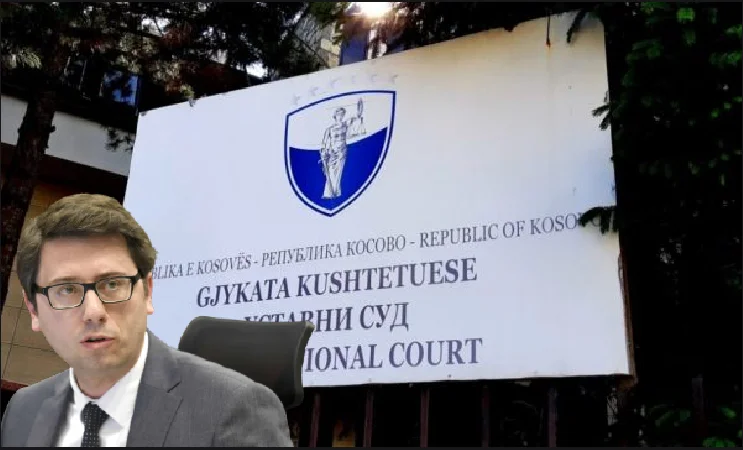
Periskopi(3 years ago)
(3 years ago)The Constitutional Court has approved Prizren's Commission's request for a temporary move regarding the assessment of Article 5 constitutionality of the Law for Taxation in real estate, which has entered into force on 16 August 2023. The interim move has been adopted by November 30th. “-Yykata, unanimously, has decided that (i) requests [...]
The interim move has been adopted by November 30th.
“Gjycatta, unanimously, has decided that (i) the requirement for setting up the provision of the provision in terms of the above act adopted in length until November 30, 2023; and therefore (i) the implementation of Article 5 of the No.08/L-224 Law for Change and Fulfilling of Law No. 06/L-005 for Taxation in the Realm and implementation of decisions issued under this article by the top deadline. ”
The Constitution finds that Article 5 of the Property Tax Law envisions the forgiveness of 100 euros.
The controversial “Noni stipulates that (i) any taxpayer who is obliged to pay real estate tax to 2023, qualify for tax forgiveness; (ii) the amount of property tax forgiveness for all taxpayers is allowed up to the height of the tax bill in real estate for 2023, but not more than 100 (100) euros (i); (ii) the decision to pardon property is made by the municipality of any municipality more than 30 days from the law (in the case) that the payment fee on this property is calculated in the 20 years; (i) that is to be applied to the payment of the payment of the property to the property in charge of the next year; and that is responsible for the execution of the 20 years; and that is to execute of the government in charge of the 20 years. ”
The court stresses that the adoption of the provisional mass until November 30, 2023, does not prejudge the availability and/or merit of the demand, estimates that the presumption requirement for a temporary measure on the effects of implementing Article 5 of the contrary Law should be adopted, because it serves the possibility of <x0-eviation of risks or irreparable damages” and is in “public interest<3>.
Full communication:
The Constitutional Court of the Republic of Kosovo has largely ruled on the provisional measure requirement in the case of KO 177/23, in terms of assessing the constitutionality of Article 5 of Law No.08/L-224 for the Change and Fulfillment of Law No. 06/L-005 for Taxation in the Realm, which entered into force on 16 August 2023. The demand for assessing the constitutionality of Article 5 of the Supreme Law of the Parliament has been submitted to the Court by the Prizren Community, based on authorisations defined through Article 113. [Juridision and Authorised Pals] of the Constitution of the Republic of Kosovo.
The court, unanimously, has decided (i) that the demand for the provision of the provision of the provision in terms of the above act be adopted in length until November 30, 2023; and therefore (i) the implementation of Article 5 of the No.08/L-224 Law for Change and Fulfillment of Law No. 06/L-005 for Taxation in the Realm and implementation of decisions issued under this article by the top deadline.
The Court's decision initially explains that based on Article 113 of the Constitution, the municipality is authorised to contest the constitutionality of the laws or acts of the Government, which violate municipal responsibilities or reduce municipal revenues, should the respective municipality be affected by that law or act. Based on this provision, the petitionors require assessing the constitutionality of Article 5 of Law No.08/L-224 for Changing and Fulfilling Law No. 06/L-005 for Taxation in real estate. The contested article stipulates that (i) any taxpayer forced to pay real estate taxes for the 2023 tax year will qualify for tax forgiveness; (ii) the amount of property tax payment for all taxpayers is allowed up to the bill
Property tax for 2023, but no more than a hundred (100) euros; (ii) the decision to pardon property is made by the municipal assembly of every municipality farther 30 days from the law's entry into force; (iv) in the case that the taxpayer has paid a tax bill on property for the 2023 year, the pardoned sum accounted for years to be pre-priced; (v) the pardon being implemented only for the 2023 year; and (vi) the implementation of this duty remains in any condition responsible for the implementation of the real estate process within the country's reach and the ministry is responsible for the implementation of this commission.
The applicant claims that the high-level provision violates municipal responsibilities and reduces municipality revenues contrary to (i) constitutional guarantees set out in paragraph 2 of Article 12 [Local State], paragraphs 1 and 3 of Article 123 [General Principles] and paragraphs 2, 3 and 5 of Article 124 [The Organization and Function of Local Self - Governance] Constitution; (ii) the European Charter for Local Self - Government; and (ii) Law No. 03L-40 for Local Self Government, Law No. 03L-49 for Local Power Finances and Law No. 06/L-005 for real estate tax, ordination and, among other things, interfered with the exercise of the municipality's own competencies in terms of real estate revenues and reduces the corresponding municipal budget to the value of three (3)m euros, while at the local level of power in the Republic of Kosovo, up to the value of twenty-sevenm euros by data referred to the Kosovo Commission Association. According to the clarifications provided in the Court's decision, the predeceiver also requests from the Court that, until its final deployment regarding the constitutionality of Article 5 of the controversial Law, suspend its provision by suspending its effects.
In liaison with the request for the provisional measure, as long as it is relevant to the concrete circumstances, the Court's decision makes clear that the criteria for its deployment are defined with Article 116 [The Constitution's Judiciary Effect] Constitutional Court Act, Article 27 (immediate steps) and rules 44 (Persistance Request) and 45 (The decision regarding the provisional requirement) of the Court's work regulation. Under these provisions, it is determined, among other things, that setting the temporary measure is connected to (i) “the question that is the subject of the procedure before it [the Court] ”, with the condition that the side requiring temporary measure to testify that (i) the provisional measure is necessary “to avoid irreparable risks or damage<3> or that the temporary measure is in “public interest. ”
In the above context, the Court's decision to be published explains that the investigation before the Court is Article 5 of the controversial Law and that the same, based on the facts and the stated claims, raises constitutional-level issues that, among other things, are related to exercising the individual competencies of municipalities, as well as their right to establish, gather and spend their own revenues under the definitions of the Constitution and relevant laws in the Republic of Kosovo. Moreover, implementing Article 5 of the Law Contacted Within the Terms Specificed in it, respectively thirty days from law access (i) on one side could affect the exercise of municipal competencies in connection with incomes from real estate tax for 2023; whereas (ii) on the other side could also affect the rights and obligations of all citizens of the Republic of Kosovo in relation to real estate taxation for 2023.
The Court's decision also explains that under the concrete circumstances, the suspension of the effects of Article 5 of the controversial Law, it can <x0evate risks or irreparable damage” that are linked to constitutional guarantees pertaining to the organisation and functioning of local self-government as a result of the local government's action company under specifications and specific deadlines in Article 5 of the controversial Law. Furthermore, assessing the constitutionality of Article 5 of the controversial Law before its implementation is in “public interest” because it serves the judicial security principle in connecting with the judicial consequences of the controversial Law (i) the exercise of municipal responsibilities and management of municipal revenues from real estate taxes; and (ii) rights and obligations due to real estate tax duties for the 2023 taxpayers, respectively, the citizens of the Republic of Kosovo.
Moreover, imposing the provisional measure to Article 5 of the controversial Law, respectively, suspending its effects until the final decision-making of the Court, enables the avoidance of municipal responsibilities and reducing relevant municipal revenues, in case the Court through final decision making finds that the upper entity is not compatible with the constitution. On the contrary, if the Court, after its final assessment and decision-making, finds that Article I higher is in accordance with the Constitution, municipalities will be able to implement Article 5 of the contrary Law, and citizens will still be able to take advantage of the forgiveness of real estate taxes according to the assessments and respective decisions of the municipal assembly, while the amount being pardoned for the tax year 2023 will be counted as preparities for the years following by the very definitions of the upper article.
Consequently, the Court, in light of higher clarifications, stressing that the adoption of the provisional measure until November 30, 2023, does not prejudge the availability and/or merit of demand, estimates that the pre-requisite requirement for a temporary measure of application to the effects of the non-conventioned Article 5 should be approved, because it serves the possibility of <x0eviation of risks or irreparable damages” and is in the “public interest>>