22 minutes ago
Act in the north an extraordinary opportunity for dialogue and recognition by five EU countries, analysts say
Periskopi(3 years ago)
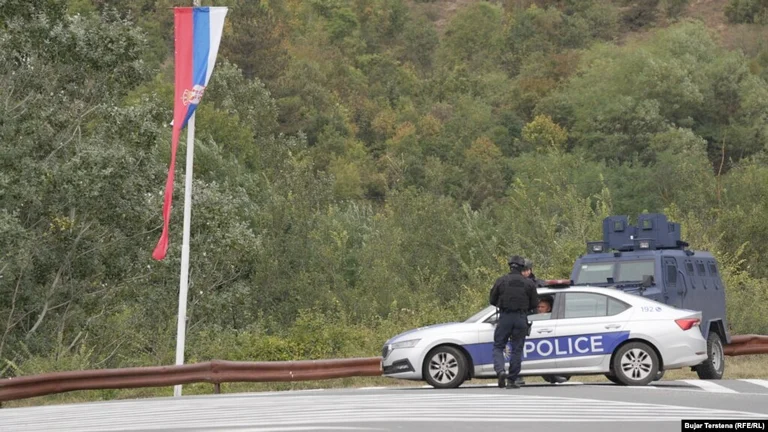
(3 years ago)Awareers of the political circumstances in the country are praising that the police action on September 24th has given Kosovo an extraordinary opportunity not only in the process of dialogue but also in foreign relations, thus introducing the country as a very serious state and respecting all human rights. They have [...]
Awareers of the political circumstances in the country are praising that the police action on September 24th has given Kosovo an extraordinary opportunity not only in the process of dialogue but also in foreign relations, thus introducing the country as a very serious state and respecting all human rights.
They have added that the EU will immediately need to remove the measures imposed on Kosovo and enable the same recognition by the five EU countries, as they say, only in this form Kosovo and the region is guaranteed a peace and a safer journey in Euro-Atlantic integration.
They have stressed that from the recent terrorist attack on Banjska, which they believe was supported by Serbia, where even one member of the KP was killed, has made it clear to the international factors who is the destabilisator in the region.
University professor Dritro Arifi said that despite recent events in the country's north, the process of dialogue will have to continue.
But according to him, Kosovo will now have to have dialogue only with the EU and the United States about how it will need to continue with the agreements reached.
Kosovo Police have, in fact, given an extraordinary chance and opportunity to Kosovo, not only in dialogue but also in external relations as a very serious state and respects all human, religious rights. Now the dialogue has to continue, but I think there should be a change of dialogue or, rather, the format of how it has been run so far. Kosovo should only have a dialogue with the EU and the US about how it should proceed away with those agreements, because Serbia can no longer be part of the dialogue until it is distanced from terrorism. Because Serbia has subsequently sponsored terrorism or terrorist groups that attacked the KP unfortunately with a murder of Kosovar police”, he said.
He has stressed that the country cannot escape the agreements reached so far, but in this case the state must be smart and receive recognition from countries that have so far not recognised Kosovo.
Kosovo must be more active, faster and more determined that with the EU and the United States agree on implementing the Ohrid Agreement, because it cannot go away, here we must not be naive but we must be active and intelligent, the agreement will come, but Kosovo must get recognition from the EU, because the EU can no longer close its eyes that Kosovo does not exist and cannot close its eyes because any recognition of Kosovo destabilises the Balkans, he said.
Professor Arifi said that after the terrorist attack, the EU has had to immediately lift the sanctions it imposed on Kosovo, as only thus can the EU gain lost credibility.
He argued that Kosovo should seek recognition from the five EU nations, as according to him, only in this form Kosovo and the region is guaranteed a more secure peace and travel in Euro-Atlantic integrations.
On the basis of this case logically, therefore it was necessary for the EU to lift sanctions or measures for Kosovo, they no longer have any sense of measures against Kosovo. But it is not the goal there, the measures must be removed as soon as the EU gains a incomplete credit. Kosovo should seek to sanction Serbia, but it is not our primary goal there. What we need to ask for and what we have to insist extremely much and crucial that it should be recognition by the five EU countries, in this form Kosovo and the region are only guaranteed a peace, a safer path to Euro-Atlantic integrations, and at the same time we have the defictorisation of Serbia. Only in this way can the EU win a most powerful creditor”, he said.
The recogniser of the political circumstances, Albinot Maloku, confirmed that entry into the dialogue process, following the terrorist attack in the north, without clarifying the positions of the parties involved will have no effect.
He said the latest situation has given Kosovo a more favourable position to clarify before international institutions who is the destabilisator of the normalisation process.
The “Re-enter into the dialogue without a clarification of positions after recent events, of the parties, including the particular facilitator in relation to Kosovo, I do not consider that dialogue will not have its effect and weight. The dialogue, however, is the way of the fact that this is also the instigation of higher institutions even than the EU, but I think that Kosovo really should have a more clarified position and maintain a trajectory in relation to steps related to dialogue. So it's not as it has been so far where there have been surprising changes in certain moments of attitude, approach, or like. The recent situation gives Kosovo a more favourable position in understanding clarification before international institutions of who the destructor of the normalisation process is and who is pushing these reports back. This case Kosovo would have to seek even better transparency, clear from the facilitator”, he said.
Maloku said the EU, knowing who the detritator is, would have to remove the measures imposed on Kosovo, according to him, Kosovo should follow its path that has been central recognition.
The fact that the international factor is becoming known to him in this process let him understand that in a rational situation the EU would have to remove measures and impose measures for the destructor. The EU would have to remove these measures as Kosovo continues to follow what was regularly its political that has been the central recognition, which would have closed the deal. Association and other issues of agreements that have occurred since 2011 on the parties are binding. Despite the circumstances, of certain incidents be both those of the terrorist-level calibre dialogue and the respect of the agreements produced by the dialogue is binding on parties”, he said. /EO