25 minutes ago
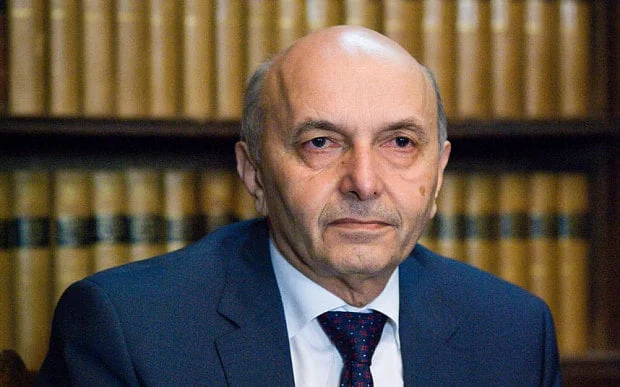
Mustafa: Kurti to be careful with statements to Lajcak, is not the arena of tear gas
Periskopi(3 years ago)
(3 years ago)Following Prime Minister Albin Kurti's statements to the mediator of negotiations, Miroslav Lajcak has also reacted to former Kosovo Prime Minister Isa Mustafa, where he says Kurti's statements are unwise and unbased. Mustafa, in a proposal for Blic newspaper, has said Kurt's statements are unmatched, as Lajcak proposes positions [...]
Mustafa, in a proposal for Blic newspaper, has said Kurt's statements are unmamatable, as Lajcak proposes positions in line with Borrell, where he says they don't take sides with Serbia, but if they do then, trouble oil for Kosovo.
“Mr. Kurti's statements, however, are reckless. They're also baseless because it's very clear that Mr. Lajcak presents attitudes in line with Mr. Borell, EU and US countries. If they all side with Serbia, which I think they don't, then trouble oil for Kosovo”, Mustafa said.
Except Mustafa said Kurti would have to be more careful with his statements, because this is not an internal campaign either of tear gas, as Prime Minister Kurti's accusations are taking on the proportions of disagreement with the Aletats with no personality.
“Kurt would have to be careful in his statements, because it's not this internal campaign or tear gas arena. In this case, Kosovo prime minister's charges take on extent of disagreement with allies not with a personality”, he added.
He says dialogue has lost its way, as enforcement of sanctions has turned dialogue into condition, where Kosovo is now not asked because leadership has lost international confidence.
“In my opinion, dialogue has lost its way. The implementation of sanctions has turned the dialogue into conditioning. Now Kosovo is not questioned because leadership has lost trust in internationals. Kosovo now has conditions; it is not operated with the stick and carrot, but only with the stick”, Mustafa said.
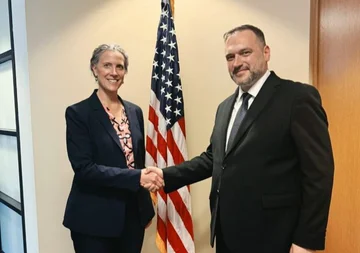
Otherwise, US Ambassador to Pristina Jeffrey Havenier, during a speech given at the second edition of the Peace and Democracy Summit being held in Pristina, has stressed that the US has full confidence in the EU in its mediation of dialogue.
“The US has full confidence in [EU High Representative Josep] Borrell and the special representative [for the Kosovo-Serbia dialogue, Miroslav] Lajcak, as objective implementers of this” policy, said Hovenier.
Hownier's statement comes two days after Kosovo Prime Minister Albin Kurti addressed the prosecution against Lajcak, who named him a unilateral mediator.
Kurti said there seemed to be a co-ordination between Serbia's president, Aleksandar Vuciq, and Lajcak for, as he said, the creation of an alternative “skenar, where half of the agreement applies”.
He said that at this meeting, where Kosovo prime minister presented a plan for implementing the Agreement towards normalisation, which he said was rejected by the EU and Serbia, Lajcak “positioned” against Kosovo.
It's important that all actors in this operation, in this process, accept the process in which they are and play poker with the letters they have dropped. And have this vision in mind, work on normalising reports, on full implementation of the Ohrid and Anex Agreement, on both sides, which is our reception, is the way ahead. This brings Kosovo closer to the vision we share for full integration into Euro-Atlantic structures”, Hovenier said on September 20th.
The European Union on September 19th said it does not comment Kurti's statements, which according to the bloc contains unbased “acles”. EU spokesman Peter Stano said Lajcak and Borrell European dialogue mediators have supported EU member states.
Kurti-Wukic's meeting on September 14th -- which ended without result -- was the first among dialogue carriers since tensions in northern Kosovo rose in late May.
After the meeting in Brussels, the European Union said Kosovo Prime Minister Albin Kurti has not been willing to move forward, unlike Serbia's president, Aleksandar Vuciq, who has accepted their “proposal for implementation of the basic Agreement for normalising Kosovo-Serbia relations.
EU foreign policy chief Josep Borrell said Kurti has insisted on formalising, initially, Kosovo's de facto recognition of Serbia.
Kurti in Brussels said that Serbia's “cation of” for the formation of the Association of Serb majority municipalities “has turned into the attitude of EU emissionaries”.
According to Vuciqi, Kurti, simply, “avoids forming association... that's the essence of everything”. Kosovo and Serbia reached the agreement towards normalisation earlier this year and the annex for its implementation. The EU has demanded that the agreement be implemented according to a plan it has proposed.
The agreement towards normalisation of the reports, consisting of 11 provisions, envisions, among other things, a level of self-advancing for the Serb community in Kosovo and mutual recognition of state symbols, while calling for Pristina and Belgrade to implement, as well, all previous dialogue agreements. For forming the Association of Serb majority municipalities, Kosovo and Serbia have reached agreement since 2013.
Despite continued international and Serbian demands, Kosovo has never implemented that agreement, fearing it could affect the functionality of the state.