23 minutes ago
Nearly four months after attacks against KFOR) north: Where did they get the investigation?
Periskopi(3 years ago)
(3 years ago)Nearly four months after violence in northern Kosovo, KFOR says it expects Pristina and Belgrade to bring all perpetrators of attacks on its soldiers to justice. More than 90 members of the NATO mission in Kosovo were injured in late May, when protests by the local Serbian population against the mayors [...]
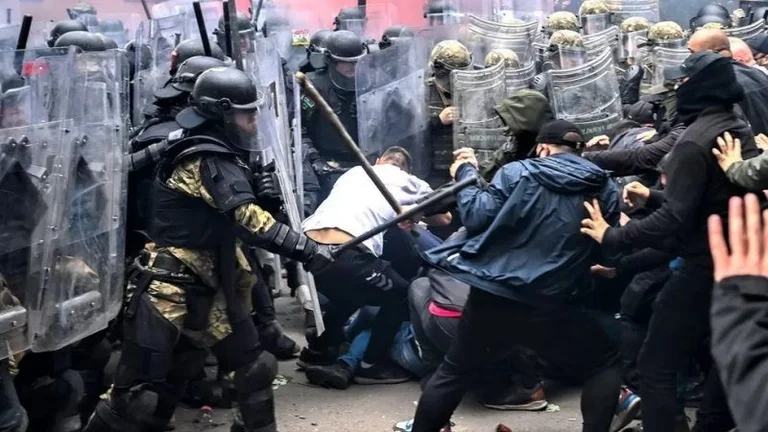
More than 90 members of the NATO mission in Kosovo were injured in late May, when local Serb population protests against Albanian mayors turned into violent clashes.
In Kosovo, so far, ten people have been arrested for “participating in violent protests” and attacks on KFOR members.
KFOR Commander Angelo Ristuccia said on September 19th that there is no new information about the investigations, but that he knows Kosovo authorities are working on them.
He said he hopes even authorities in Belgrade will investigate those persons who “returned to Serbia” after the riots.
Riztuccia said KFOR also expects all perpetrators of violence “immediately prosecuted”.
What do they say in Belgrade?
Serbia's Ministry of Internal Affairs did not answer Radio Europe's free questions as to whether the perpetrators of violence in Serbia are working on this case and will be arrested.
REL also asked the Office for Kosovo in Serbia's Government about claims that those who have participated in violent protests in northern Kosovo are found in Serbia, but received no answer.
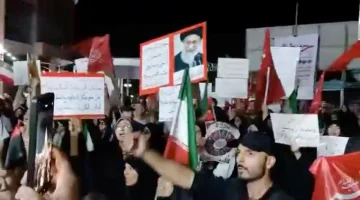
Tensions in the north of Kosovo were initiated in the Serb-run majority area on May 26th, when groups of local Serbs gathered in front of municipal buildings to oppose the entry of new Albanian mayors into these buildings.
The situation escalated 29 May, when demonstrators in the municipality of Zvecan clashed with KFOR members.
Ninety-three KFOR soldiers were seriously and easily injured, as were some protesters.
You know exactly who was there, what it is and where it came from. It is also known that they have not been able to act without co-ordination with the Serbian List and with Serbia”, Free Europe Radio Dusan Janjic, from the non-governmental Forum for Ethnic Relations, headquartered in Belgrade.
The Serbian List, the largest Kosovo Serb party, which has the backing of authorities in Belgrade, condemned attacks on KFOR, but also the arrests of Serbs linked to these attacks.
Following the violence in Zvecan on May 29th, Serbia's president, Aleksandar Vuciq, called on demonstrators not to enter into conflict with NATO” and protest peacefully. He blamed Kosovo Prime Minister Albin Kurti for the riots, saying Kurti “agrees to have conflict between NATO and Serbs”.
The Kosovo government, on the other hand, insists that following the recent riots in northern Kosovo lies official Belgrade and the “criminal groups close to Vucicin”.
What do they say in Pristina?
The Ministry of Interior Affairs and the Kosovo Prosecutor did not answer REL questions about the ongoing investigation into the attack on NATO soldiers, how many people are being investigated and whether they are all available to judicial authorities.
Of the ten persons arrested in connection with the riots, some were released to defend themselves in freedom, while two members of the Serb community were expelled from Kosovo.
On June 2nd, Kosovo Prime Minister Albin Kurti told MPs in the Kosovo Assembly that the institutions have identified 45 people, related to the riots and attacks on KFOR, and publicly read their names.
He, too, said that among those assembled in the Zvecan protest on May 29th, there were fans of the Belgrade football club “Cervena zvezda”.
Ehat Miftaraj, director of the Kosovo Institute for Justice, which monitors the work of police, prosecutors and courts, tells Radio Free Europe that several cases have been initiated in connection with attacks on KFOR.
Such “Rasts are being investigated and several persons arrested are being investigated through regular judicial procedures”, he says.
Who are the people who attacked NATO soldiers?
As key participants in attacks against KFOR, Kosovo authorities appointed members of organisations “Civil Protection” and “North Brigade” both declared terrorist by official Pristina.
As leader of the violent “demonstrest> and organiser of the attacks on KFOR was identified Milun Milenkovic ledune, who was arrested 13 June and is still in custody.
He is charged with three acts: terrorism, violent change in Kosovo's constitutional order, and the endangerment of personnel with international protection.
Kosovo Interior Minister Xhelal Svecla said Milenkovic “is one of the leaders of the criminal formation -- Civil Representative and leader of criminal groups that terrorise citizens for years -- attacks Kosovo Police members and the institutions of the Republic of Kosovo”.
Protests were held in northern Mitrovica following the arrest of Milenkovic.
The Serbian List demanded amnesty for all Serbs arrested who have participated in protests against Kosovo Government decisions.
Are there co-operation between Kosovo and Serbia?
At the end of June, Kosovo's prime minister asked Serbia to withdraw its violent “rs before municipal buildings and countries around”, as well as co-operate in prosecuting those who have violated Kosovo's laws.
Kosovo and Serbia do not directly co-operate in investigations.
The EU's Mission for Rule of Law in Kosovo, EULEX, EULEX told the REL that the issue of co-operation between Kosovo and Serbia over investigations of attacks on KFOR soldiers is “outside EULEX's mandate”.
In describing the mandate of this mission, which is located on its website, “is said among other things EULEX supports the Kosovo Police in the field of international police co-operation, facilitating the exchange of information between the Kosovo Police and Interpol, Europol, or Serbia's Ministry of Internal Affairs”.
Miftaraj, from the Kosovo Institute for Justice, believes Serbia is a “advance for individuals performing criminal acts in Kosovo”, because Belgrade refuses to co-operate about their extradition or prosecution.
Such an approach also represents violations of the standards of rule of law. There should really be more pressure from the EU”, Miftaraj says.
Even Janzic, from the Belgrade Forum for Ethnic Relations, says Serbia should provide information and hand over those responsible for attacks on NATO soldiers.
If you need KFOR to convince you publicly of this, then you have a big problem in the country and even greater political consequences from your non-action”, Janjic says.
Janiq adds that Serbia has avoided KFOR's “severe response”, to the fact that no soldiers of the NATO is not dead despite severe injuries.
“This is a very serious crisis of distrust in Belgrade. Of course, there is no greater consciousness than we are in a dangerous game, which is called a security crisis”, he says.
This is not the first and only case where participants in the riots or accused of crimes in Kosovo are sheltered in Serbia, where they live at large.
The deputy head of the Serbian List in Kosovo, Milan Radojic, has been in Serbia for years, where he also attends meetings with senior officials, even though the official Pristina accuses him of involvement in the “Brezovica” case, which concerns construction without permission.
Earlier, a warrant had been issued for Radocicin under suspicion that he was linked to the murder of Serbian opposition politician in Kosovo, Oliver Ivanovic. However, this arrest warrant was withdrawn without explanation in March 2021. Radociq was still in Serbia at the time.
Radojevic is also on the US blacklist, along with businessman from Kosovo's north Zvonko Veselinovic, and ten other Serbs, under suspicion of belonging to networks related to international organised crime.
Kosovo Institute calls on politicians not to comment on investigations
Miftaraj says the Kosovo Institute for Justice repeatedly urges politicians not to comment publicly on developing cases, which are subject to criminal investigations or judicial procedures.
“Such behavior can be understood as an impact on the independence of the work of the judiciary, but also affect the impartiality and privacy of the investigations”, he points out.
This, Miftaraj says, refers to Prime Minister Kurti, who publicly read the names of persons for suspected involvement in the attacks, but also to the Serbian List, which consistently condemns the arrests.
“Politicians in Kosovo must send messages promoting a peaceful environment and contribute to co-existence, not the opposite”, Miftaraj says.
KFOR continues to guard the buildings of three municipalities in northern Kosovo.
On 27 June, the European Union's special representative in the Kosovo-Serbia dialogue, Miroslav Lajcak, presented a plan to reduce tensions there.
The plan includes withdrawing Kosovo special police units from municipal buildings in the north, shifting municipal mayors from these facilities to alternative buildings, announcing early elections and launching judicial procedures against demonstrators who attacked KFOR troops.
Serbia is expected to enable the participation of Serbs in the elections and ensure that they will not fear because of their personal elections to vote, as well as to provide support to the responsible authorities in the proceedings against the attackers during the protests in the north.
Riots and violence in the north hampered dialogue between Pristina and Belgrade on normalising relations, which has taken place since 2011 with the European Union's mediation.
Without progress, the meeting of Kosovo Prime Minister Albin Kurti ended with Serbia's president, Aleksandar Vuciq, on September 14th in Brussels. / REL