5 minutes ago
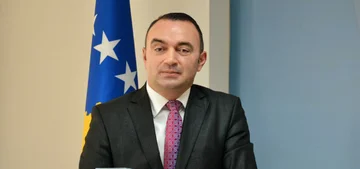
Kurt before meeting with Vucinqi: I hope we get back to the basic agreement implementation tracks.
Periskopi(3 years ago)
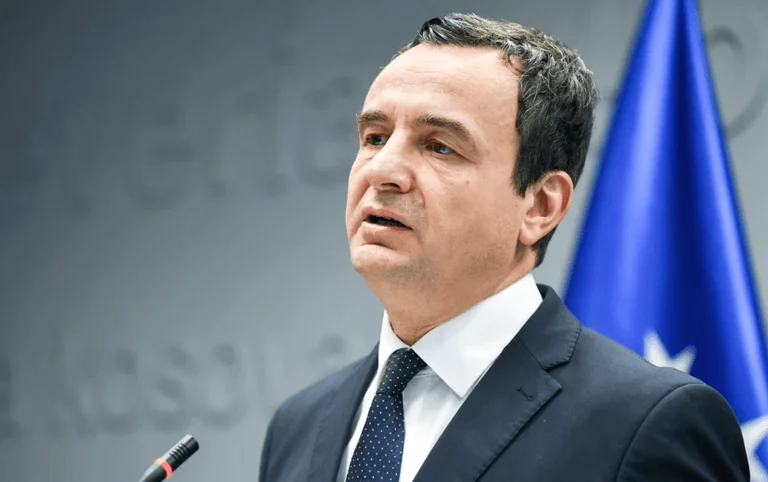
(3 years ago)Kosovo Prime Minister Albin Kurti, in an exclusive interview for DW, has spoken of the September 14th meeting with Vuciqiqi, EU punitive measures towards Kosovo and isolation, the situation in the north and its EU bid. DW: Prime Minister Kurti, on September 14th you will meet in Brussels with Serbian President Aleksandar Vuciq, and it is the moment [...]
DW: Prime Minister Kurti, on September 14th, will meet in Brussels with Serbian President Aleksandar Vuciq, and is the key moment for Kosovo, for the fact that you are now isolated from the international community. Yesterday, the German ambassador to Pristina said there is an end to gamma noise, where games should end and concrete solutions are required, what do you offer?
Kurti: Last week, it was a year since Germany's special emissary Jens Plotner and France's Emanuel Bonn, along with European Emissar Lajcak, introduced the Franco-German initiative that then became the EU proposal for a normal agreement between Kosovo and Serbia, with de facto recognition in the centre. A year is not short and this year we have been constructive and creative. The next week is six months since the European Commission's vice president and high representative for foreign and security policy, Josep Borrell, in Ohrid, North Macedonia, said we have a deal, so we have agreements, because the annex of implementation was also accepted. So six months isn't a bit, and here we are today, on the eve of the September 14th meeting and we haven't implemented the agreement.
DW: But it seems that the problem between this and the conflicted person is you, because in the west you are interpreted with many that you are the founder of the Serbian municipalities' Association, which does not offer a way out of the crisis in the north. So what do you offer in this respect?
Kurti: I would not say that the West is homogene to the government of the Republic of Kosovo, there are also very different voices about what's going on and what needs to be done, but that we should not forget the fact that we were willing to sign the 27 February agreement in Brussels, while on March 18th, also in Ohrid, and that the Serb side has rejected the signing.
As far as the situation in northern Kosovo is concerned, we have said we are engaged in deespasses and I have to realise that the transition has practically occurred. We should not have the passage, but the potential reservation is rooted only in Belgrade and in Pristina. I believe it has become unfair to Kosovo. We have accepted agreement with 11 articles and six preamble points, the 2013 Serb majority municipal Association agreement is considered among 39 agreements, at Article 10 of the basic agreement we have made. So Article 10 says that past 39 ssh agreements that are valid and binding should be implemented, but there are 39 and not only two.
DW: But ultimately politics is the art of compromise, and even at these two points compromise must be found. So, will there be a compromise on these two open issues in Brussels?
Kurti: The art of compromise on us has been done by Martti Ahtisaari, who has practically been laid the foundation of the Kosovo Constitution. On the other hand, we have Serbia, which has Kostunica's Constitution since he was president. Seeking from Kosovo to compensate Serbia for losing territory at the time of Slobodan Milosevic's genocide and fascist regime is a great injustice. I am prime minister of all Serbs in Kosovo, as do Albanians, Roma, Ashkalis Egyptians, Turks, Bosniaks and Gorani. 93 % are Albanian, while Serbian are 4%. I am the prime minister of all to hear the rights they demand, the needs they have, but I cannot accept demands of territorial ethnicity. I have told both President Vuciq and European mediators that I do not accept territorial demands, citizens' rights requirements, and not new structures that want executive power and a president as Dodik's kind in Kosovo.
DW: But I don't believe that territorial issues will be discussed in Brussels, but a compromise is needed on those open points, especially the Serbs' association and straining the situation. What are the specific points where you will move to reach the right compromise?
Kurti: The basic agreement, which has the de facto recognition between Kosovo and Serbia in the centre, is an agreement that must be implemented immediately so without any delay, completely and unconditionally, it does not have the central recognition, so it has been introduced on 9 September last year in this office and thus must be implemented. I do not deny that my ancestors have made agreements, but those agreements have either not been implemented by Belgrade, or passed the Constitutional Court test. I have offered in Ohrid to write draft status for Article seven which is the sole management of the Serb community regarding Article 10 and previous agreements with three pillars: The Constitutional Court of Kosovo Constitutional Constitutional Court, the letter of Mrs. Federika Moghrini, which says there can be no third level of power with executive power, and Derek Scholet's position and Gabriel Escobar from the US State-Department for co-ordination of these municipalities, but Serbia's president has rejected it.
DW: But still sanctions have been implemented against you, against Kosovo, and it is Germany that has always been very close to Kosovo that imposed additional sanctions, then it takes something to regain Germany's trust and support, what do you offer?
Kurti: With Germany we have excellent bilateral relations. From 2022 compared to 2021 we have increased exports to Germany for 42% and increased German investments for 60%. These are sanctions that are damaging to us, are damaging to us as regards the deal that Stabilisation and Association, are damaging us in terms of loans and grants and are damaging us in terms of high-level meetings. Imagine, my minister Nenad Rassic has been cancelled on the meeting in Brussels. He is a Serb from Kosovo, a minister in my government for the campaigning of communities and returns. But they haven't called them sanctions, but they have called them measures so they won't be forced to vote in the European Union. If they were to vote, I am convinced that the overwhelming majority of states would not be meant for, but have used a method of silent consensus with an email sent from Brussels and imposed measures on us.
The table in Brussels has thus been damaged and dialogue has been damaged with these measures, and I believe that as soon as they are removed, it is also good for the European Union to present values to Kosovo that need development.
Again what do you offer to remove measures, because you need a concrete step on your part?
Kurti: I've taken three concrete steps. First I have reduced the presence of police in municipal buildings in the north for 25%, then I have reduced by 25%, so gradually and proportionally to the removal of violent extremists or their arrest, and I have also made the important step of administrative instruction that allows for early elections in four municipalities in Kosovo, so that there we can have new mayors in a few months, thus implementing Article 72 of the local self-government law that says that the citizens with the new 25% of the electoral body can make a petition that leads to a vote that then ends the mandate of these four municipalities. I know their legitimacy is weak because there's been low elections, but others have no legitimacy at all.
DW: But it seems outwardly like a solution that takes time. Don't you think the resignation of Albanian mayors would be easier?
Kurti: Four months we have postponed elections in the north, five days we have extended the deadline for registering political parties to participate in Serb lists in the elections. They abandoned the institutions, boycotted the elections badly, made a mistake, shouldn't we pay. Those who err pay, not those who have rule of law, fundamental values democracy. Kosovo in terms of fighting corruption, rule of law, political rights and civil liberties, organising elections, collecting taxes according to the IMF, and media freedom is champion in the Balkans. Why, we would have to be punished for the maliciousness of the Republika Srpska list, which may even have repented.
Aren't we back in the blamme-game, but, I'd say what you're offering Serbs to gain your trust?
Kurti: First the Serbs in Kosovo, which are 4% of the population, have 10 reserved seats in the Kosovo Assembly, which are not exploiting them, 17 % of municipal councils from 38 municipalities are Serb, 10 out of 38 municipalities are Serb in majority, Serbian is official everywhere in Kosovo. So we have treatment for the Serb minority what is nowhere in Europe. See what happens to the Albanian minority in Serbia. At the Vranje Hospital, which also covers Presevo, Bujanovac and 70 employees are not Albanian, nor does the University in Bujanovac have the university and since they have their addresses, which is a kind of bureaucratic and silent ethnic cleansing. But we don't measure up to Serbia, but we measure up to European standards, so we also want to enter the Council of Europe. Kosovo Serbs would be interested in becoming members of the Council of Europe to exploit the European Court for Human Rights, but Serbia voted against it. So the interest of Serbs in Kosovo and Serbia's interest do not match.
DW: Unfortunately, the integration of Serbs has not been achieved so far, and it is said that if the situation in the north is not resolved, the best solution would be an international protectorate for the north, how do you see that?
Kurti: Nationalism of measures as fuel for the dictators' war machine that existed 30 years ago in the Balkans is no longer among us. The violence is not being done by citizens, the violence is making certain structures that imitate the Wagner group. Two organizations we've declared terrorist, the so-called Civil Protection and the North Brigade threatening my ministers and me every week, so we have the problem with specific structures, not citizens. Serbs today need protection from Serbia. Only this year have some 15 Serb cars been burned because they have turned plates into those of the Republic of Kosovo. From whom to protect them, they must be protected from Belgrade. Kosovo is a democratic state, while Serbia is an autocratic state, Kosovo is with the EU and NATO, while Serbia is with Russia.
DW: So ask for more support from KFOR and European structures to fight crime and aggression and such crimes?
Kurti: Criminality is fighting Kosovo police successfully, 16 illegal routes we've closed in the north, and a dozen drug labs and the cryptovas are closed. A total of over 32,000 people have been arrested in Kosovo, of them around 10%, are officials of institutions for corruption and crime. Crime and corruption have never been fought in the Republic of Kosovo more than it has now. I offer all citizens indiscriminately the law, order, justice, and now international factors have to help us because Serbia is with Russia. By September 2021, it's been two years since we security architecture have begun to rethink it. When Alexander Herqenko, the Russian ambassador to Belgrade, came to the border point between Kosovo and Serbia and top of it, there was a Mig-29 fighter plane, meanwhile, below inspecting Serbia's armed troops, this indicates that you only do with Serbia here. As for these violent extremism, their fascist militia, they fear too much the Kosovo police, so they also demand that Kosovo police leave the north, but the north is part of Kosovo, the essence of our territorial integrity.
DW: You also had a meeting with German MP Michael Roth, one of the letter signatories calling on the EU to change Serbia's approach to dialogue with Kosovo. Then what are you asking from the international community about politics towards Serbia?
Kurti: The EU would have to not tolerate those who have not imposed sanctions on the Russian federation and at the same time would have to ask Serbia to recognise Kosovo, not destabilise Bosnia and its hands off Montenegro. Belgrade has a wheelchair policy in these three states, because it is unhappy with the violent breakup of Yugoslavia that has caused it itself. Yugoslavia was also created at the beginning of the 20th century and destroyed at the end of the 20th century for the same goal for large Serbia, now it is unhappy and their discontent cannot be paid by Bosniaks, Montenegrins and Albanians or Kosovars. So it is imperative that the EU plan to integrate the Western Balkans quickly into the large European family for those who want to integrate. In Serbia 1/3 want to integrate, others don't, so those who accept, embrace European values should be rewarded, not punished. These measures against us would have to be lifted an hour and earlier, meanwhile, against Serbia sanctions would have to be imposed from attracting investments of EU member states to returning the visa regime, because, as you know, they are giving many passports to Russians who are going to Serbia.
DW: What will we expect Thursday after meeting with Vuciqi in Brussels? What will be the news?
Kurti: I hope we'll get back on the track to implement the basic agreement, and that means a sequenced plan to implement the agreement. The first six sentences of preamble, 11 articles and 12 points of application from Brussels and Ohrid would have to be implemented in full as soon as possible. And every time there are violations of the agreement, the referrals Borrell and Lajcak would have to roar for the violation that took place, not as on April 24th, when Serbia in the Council of Europe voted against Kosovo membership, and although this was a violation of Article 4 of the agreement we have made, there was no voice heard from Brussels, no whispering, no further.