20 minutes ago
Why were the floods in Libya so catastrophic?
Periskopi(3 years ago)
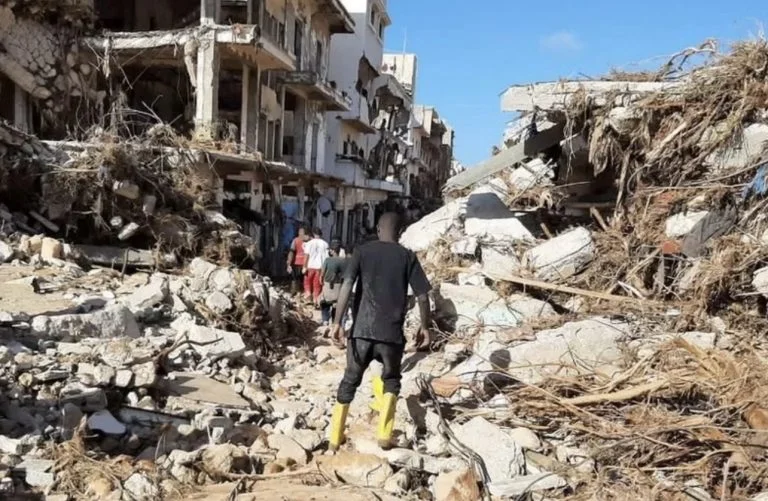
(3 years ago)More than 11,000 people have died and thousands more have disappeared after the devastating floods involving the Libyan port city of Derna. All the neighborhoods disappeared at sea as the tsunamilike water invaded the city. Whole families were scattered, according to a Libyan journalist who spoke to survivors [...]
More than 11,000 people have died and thousands more have disappeared after the devastating floods involving the Libyan port city of Derna.
All the neighborhoods disappeared at sea as the tsunamilike water invaded the city.
Whole families were distributed, according to a Libyan journalist who spoke to survivors in the city, and described the situation as “beyond the catastrophic”.
BBC Verifu and the BBC visual journalism team have analysed some of the reasons the floods caused such catastrophic damage in Derna.
Record crash
The clouds were caused by the storm Daniel that hit Libya on Sunday.
A Mediterranean storm similar to the hurricane known as the medican brought more than 400m of rain to parts of the northeast coast within a 24-hour period.
This is an extraordinary flood for a region that usually sees about 1.5mm of rain throughout September.
Libya's National Meteorological Centre says it is a new record of rainfall.
Satellite data shows the extent of rainfall throughout the region although in many countries the amount recorded on earth was higher.
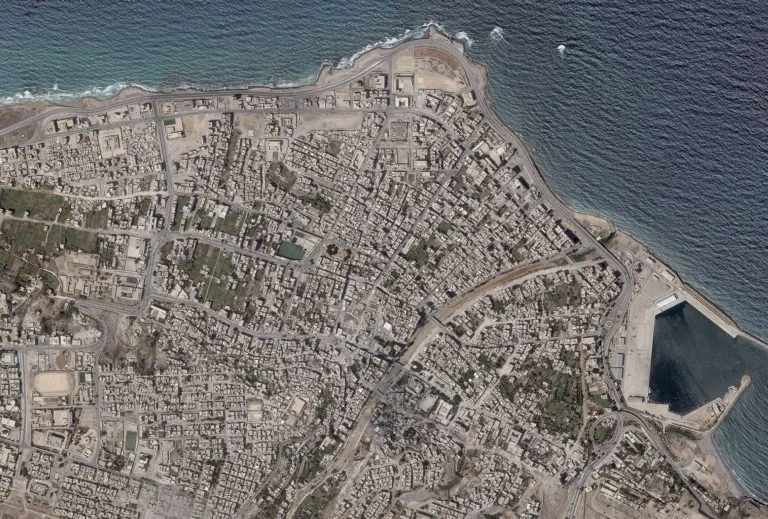
Money
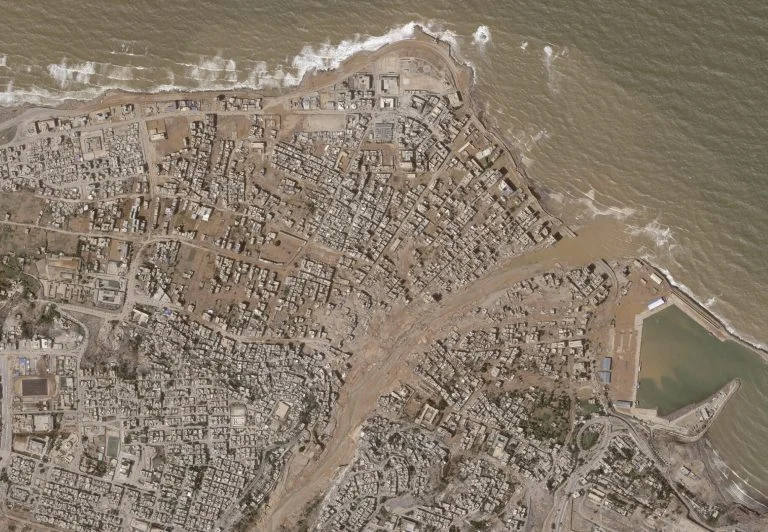
After
It is very early to attribute the force of this storm to the rise in global temperatures.
However, climate change is thought to be increasing the frequency of such strong events.
Prof Liz Stephens, an expert on climate risks and sustainability at Reading University in the United Kingdom, says scientists are convinced that climate change is increasing the rainfall associated with such storms.
Two overloaded dams
The Wadi Derna River flows from Libya's interior mountains through the city of Derna and the Mediterranean.
It is dry for most of the year, but heavy rain flooded two important dams and destroyed several bridges.
The city residents, who were ordered by local authorities to stay at home, reported that they had heard a sharp explosion before the city was conquered by water.
And their explosion has released all the water with one movement. The remains in the flood waters have increased the devastating force”, says Prof Stephens.
The upper dam had a deposit capacity of 1.5 million cubic metres of water, while the lower dam could hold 22.5 million cubic metres.
Each cubic metre of water weighs about a ton of 1000kg), so 1.5 million cubic feet [1.5 million m] of water weighs .5 million tons.
Add that weight to the downward movement and a tremendous power can be produced. Witnesses have said that the waters have been nearly three feet [3 m] in some lands.
It is estimated that 30 inches [20 cm] of water from fast - moving floods are enough to knock someone down, and a 60cm [60 cm] is enough to swim a car. It is no wonder, then, that whole buildings were destroyed by floods.
Experts say it is too early to know whether extreme rainfall was simply too much to deal with by dams, or whether the state of the facilities also played a role.
Based on their observations, dams are likely to be made from soil or hard - pressed stones that are not as strong as concrete.
“These dams are sensitive when water exceeds their capacity and while concrete dams can survive, stone-load dams usually cannot,” says Prof Dragan Savic of Exeter University, an expert on plumbing engineering.
Looks like the upper dam split first, according to structural engineer Andrew. Barr.
He says that the water then has certainly flowed down the rocky river valley towards the lower dam before breaking it and, resulting in the sudden and catastrophic flooding of the city that lies trapped between the mountains and the sea.
A study published last year on the hydrology of the Wadi Dernas basin stressed that the area “has a high potential risk of floods”, based on possible historical flood volumes and that the “dams needed periodic maintenance”.
The report, by civil engineering expert Abdhelwanoees AR Ashor from Omar Al-Mukhtar's Libyan University, said the current “situata in the Derna Valley basin requires officials to take immediate measures, conducting the regular maintenance of existing dams, because in the event of a major flood, the result will be catastrophic for residents of the valley and town”.
Some experts have stressed the possible role political instability has played in Libya in maintaining the dam.
As rescue efforts continue in the city, Libyan journalist Joh Ali, who has spoken to survivors in the city, told the BBC: “People are hearing baby cries underground, they do not know how to save. They're using shovels to get bodies from below the ground, using their hands. Everyone says it's like Judgment Day.” / BBC world.al