2 minutes ago
Escobar warns consequences for Kosovo by European Union, says it will block integration
Periskopi(3 years ago)
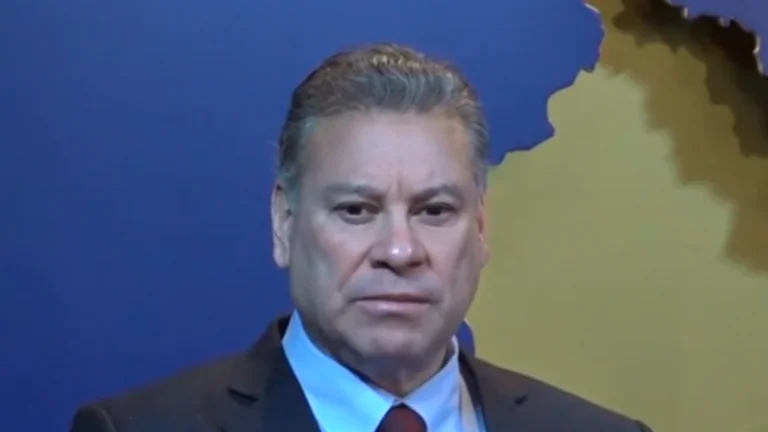
(3 years ago)The United States' envoy (SHBA) for the Western Balkans, Gabriel Escobar, said in an interview for Radio Free Europe (REL) that he is concerned with messages coming from Pristina, in which the European minister for dialogue is criticised, Miroslav Lajcak. Escobar said he sees no “evidence of bias” on the mediator [...]
Escobar said he sees no “evidence of bias” to Kosovo-Serbia dialogue mediator Miroslav Lajcak.
“I see no evidence of secret deals in the work to advance Serbia's interest in this.”, Escobar said.
After the recent unsuccessful round of dialogue for normalising relations between Kosovo and Serbia in Brussels, the European Union (BE) held Kosovo Prime Minister Albin Kurti responsible for the fact that there has been no progress in dialogue.
Kurti later declared that the EU special representative “positioned against Kosovo”.
Esobar stressed that the US expects both sides “to strengthen their commitment and that Kosovo show more pragmatism and realism in its approach to the EU”.
Mr. Escobar, let me start with the Serbia-Kosovo dialogue. What do you see as a way out of Serbia-Kosovo dialogue?
Gabriel Escobar: Look, there's no alternative right now but dialogue. So the important thing for both sides is to continue to hold to dialogue. Now, I'm sure you've seen Mr. Borrell [Joseph]. We, indeed, are calling on the Kosovo side to be more constructive. And, I have to say, I'm a little worried about messages coming from Pristina. I have worked with the special representative of the European Union [Miroslav Lajcak]. I see no evidence of bias. I see no evidence of secret deals in work to advance Serbia's interest in this.
What we are trying to do, what the EU is trying to do is create conditions for normalisation and also for harmonisation for integration into the European Union at the same time. So I think the answer is that both sides double the effort, but the Kosovo side shows more pragmatism and more realism in its approach to the European Union.
So, do you think there might be additional measures on both sides if they don't move forward with the implementation of the Ohrid Agreement and its Annex? Are the United States considering possible measures on both sides in that case?
Gabriel Escobar: I wouldn't say mass. I'd say consequences. Now, I tell you that the consequences that Kosovo faces, if they refuse to engage with the European Union, the European Union will not engage in additional assistance and additional measures for integration.
See, I think these measures are having an impact on Kosovo and Kosovo's economy. I hope that at least bilaterally, the United States can work with Kosovo to find a way to remove those measures in 2024. So, we will continue to work with Kosovo to draw it closer to the European Union. But we would like to see a political will and movement in that direction, too.
Is there a deadline for this?
Gabriel Escobar: No, no... This is for pity. So, I mean, these measures are indefinite until there is a movement towards progress in both [the Ohrid Agreement] and an enlargement plan.
Are the United States and the EU on the same line when it comes to that the Association of Serb majority municipalities should be in line with the Constitutional Court's decision? I'm asking this question because EU spokesman Peter Stano rejected today that the EU's stance is that the Constitutional Court's decision should be taken into account during the establishment of association.
Gabriel Escobar: We have repeatedly said that the Association of Serb majority municipalities should not create problems within Kosovo for functionalisation, must be in line with its legal code, in accordance with the Constitution. So within this, I still think there is a great capacity to allow Serbs to manage their municipal services in a way that best suits their citizens, without becoming Republika Srpska.
We've addressed it repeatedly. And I'm disappointed that point of conversation continues to rise that this will be Republika Srpska. There will be [a Republika Srpska]. It's really about municipal authorities doing what municipalities already do in Serbian.
I'd like to spend some time in Bosnia and Herzegovina. The Republika Srpska Assembly, the entities of Bosnia and Herzegovina, has moved towards adopting a law for foreign agents, similar to what is already in power in Russia. How do you comment?
Gabriel EscobarWell, first of all, I wouldn't say it's like the one that's applied in Russia. It's identical to the one that applies to Russia. So we see it as anti-democratic, we see it as dangerous, and we see it as [an initiative] desperate by authorities trying to silence independent journalists not to point out all the shortcomings the Government has already shown. So by telling people, by telling reporters that they cannot tell the truth, he does not hide the truth.
So, I think there is no way this law can help bring Bosnia and Herzegovina, and especially Republika Srpska, closer to Europe. But I think that's the plan. I don't think Republika Srpska President Milorad Dodik aims to help bring the Republic of Srpska and Europe closer.
Does the high representative, Christian Schmidt, enjoy sufficient support considering recent developments and statements coming from Republika Srpska President Milorad Dodik, that Mr. Schmidt would be expelled if he tried to enter Republika Srpska?
Gabriel EscobarWell, first of all, he doesn't have that authority. But let me just say that “High Representative” is described in the Dayton Peace Agreement. So he's an important part of Dayton. His legality stems from Dayton and he has our full support, and he has the full support of the European Union. And not only that, but also the full support of [Peace Implementation Council], PIC.
A question for Northern Macedonia and a question for Montenegro. Is the US satisfied with the fight against corruption in northern Macedonia? So I'm asking this question in context of changes in the Penal Code, with which the penalties for misuse by officials were reduced.
Gabriel Escobar: Well, I'll say, for starters, corruption is the biggest problem for the Western Balkans. And, I think all Western Balkan countries can do more, including North Macedonia. And this is one of the reasons why we are constantly pro [it] for countries to initiate reforms that the European Union requires.
In terms of specific information on changes to the Penal Code, what I can say is that there are many levels of control and multiple balances, including through the European Union, that would require that Northern Macedonia ensure that its laws are not only in line with its constitution, but also in line with European expectations and standards.
When it comes to Montenegro and the formation of the next government, in your last statement you said the United States was very clear that they wanted the Government to consist exclusively of parties focused on European integration, parties dedicated to NATO and sharing the Western stance regarding Russia. If part of the pro-European forces or parties in Montenegro make a political agreement that would bring the entry of anti-Western and pro-Russian political forces into government, what could be the possible consequences?
Gabriel Escobar: All I can say is that now with Montenegro we have a very close relationship. Montenegro has proven itself not only a solid ally NATO, but also a good candidate for the European Union. We are extremely excited about the level of partnership we expect to enjoy with the new president and the new prime minister.
Montenegro's president was well received in New York and he left a very positive impression on all of those with whom he communicated from the American government. And we all agreed in every statement that the biggest challenge for European security now is unprotested aggression against Ukraine. And, even yesterday, on the morning [organised by Adriatic Charter countries] A5, we made a statement about the need to support Ukraine against aggression from Russia.
So, in the context of all of this, I think all of our Balkan co-talkers, our Montenegrin co-ordinators realize that now is not the time to give Russia a platform for intervention in the Western Balkans.