7 minutes ago
Chinese companies discipline Serbian workers, force them to line up, recite every morning
Periskopi(3 years ago)
(3 years ago)The strict rules imposed in a Chinese mine east of Serbia have caused contradictions and negative reactions in the Balkan country, due to concerns that the company is violating Serbian labour laws. According to an internal document by the Chinese firm Jinshan Construction, which came to the Serbian media in the middle of [...]
The strict rules imposed in a Chinese mine east of Serbia have caused contradictions and negative reactions in the Balkan country, due to concerns that the company is violating Serbian labour laws.
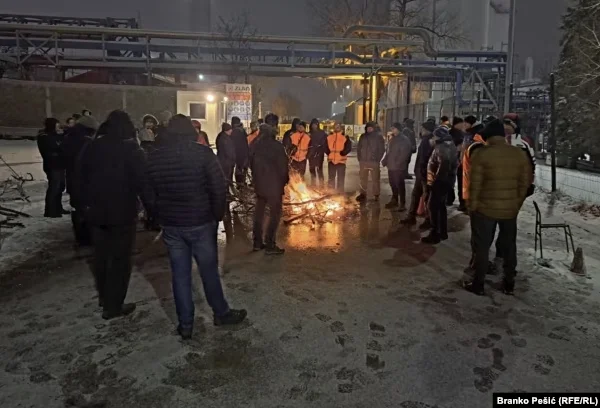
According to an internal document by the Chinese firm, Jinshan Construction, which came to the Serbian media in mid-August, workers in the mine should start any work shift by listing for inspection by their managers, as well as unanimously greet their supervisors.
Jinshan Construation Company employees who manage a copper mine in the eastern town of Majdanpek told the Balkan Service Free Radio Europe that at meetings before the start of the shift, workers were sometimes publicly reproved for minor violations and were required to recite company safety regulations.
According to the company's document, employees are then required to make “the safety battle”, in which they pledge they will honour the company's rules in the best way they can. The workers at the mine, however, told REL that only Chinese staff participate in the public oath.
We're required to form three lines [for beginning each shift], it's like the army”, a Serbian worker at Jinshan Construsion in Majdanpek told REL, fearing it could be punished by its employer.
News of strict rules has prompted major reactions in Serbia, with groups and working unions saying such working conditions may be in conflict with local laws, such as forcing employees to swear and work under unfavourable conditions. In response to public reactions, Serbia's Ministry of Labour, Employment, Veterans and Social Policy conducted an inspection at the firm Jonshan Construction in August.
Reactions have also revealed a growing division in Serbia between local and Chinese labour cultures, as well as a growing public perception that the country's authorities are turning a blind eye to illegal labour practices by Chinese firms, which are becoming extremely vital to the Serbian economy.
All these rules are made to make you obey and think like [the Chinese managers]. You are expected to honor all rules without conditions. It looks like brainwashing”, another Serbian employee in Jinshan Construction told REL.
In his view, missing meetings risks getting paid less and even getting fired.
“
Such feelings are especially relevant when it comes to the mining sector in Serbia.
Jinshan Construction is a subcontractor who leads the mine in the name of the Chinese mining giant Zijin, who took control of a copper smelter working with a loss in the city of Bor in 2018 and has since opened gold and copper mines throughout eastern Serbia.
Jinshan Construction and Zijin have not responded to REL's demand for comment, but these companies insist they follow local labour practices and maintain high standards for their actions in Serbia.
Serbia's president, Aleksandar Vuciq, has enthusiastically welcomed Zijni and other Chinese companies in his country, though some companies have an international bad time for labour practices and environmental regulation violations.
While Vuciqi and other Serbian politicians have praised Zijni and other companies that are keeping the productivity in Serbia's trouble, these companies have been mired in scandals in recent years due to environmental degradation, salary delays for Serbian workers, and the mistreatment of Chinese and foreign workers who have brought them to work in Serbia.
Mario Reljanovic, president of the Centre for Scientific Work, a Serbian nongovernmental organisation that lobbies for greater protection at the workplace, said in a public letter that recent controversy shows that Zijin and its subsidiary Jinshan Construction clearly feel comfortable during their activities in Serbia according to their interests, whether it is in accordance with the law or not.
It seems that [these companies] have no sense of cultural differences. They [opposit] as if they are not in Serbia, but in China, and for that, our country is”, Reljanovic told the Serbian newspaper Danas.
According to figures released in August following the flow of the document to Serbian media, Jinshan Construction has 414 Serbian and 158 Chinese employees.
Zijin has acknowledged that the rules in the document are hers, but said they do not apply to mines where this company operates in Serbia.
“These rules apply only to the employees of Deputy contractor Jinshan Construction”, Zijin said in a media communique on 14 August.
Goran Antiq, president of the Independent Union of Copper Mines in Majdanpek, told the REL that a similar document had circulated among the workers directly employed by Zijin, but that the giant mine had finally decided not to apply them.
The “decided they were not in line with our legislation and that they were not appropriate, because we are neither police nor military formation”, Antiq said.
Antiq said it is not clear why Jinshan Construction decided to use these rules when the large company Zijin does not use them, but he added that it is common for this company and its subsidiary to try to pulse “when it comes to applying contradictory policies and testing union response.
In Zijin's case, Antic said the reaction from the mining union was rapid when the document was released and the company eventually gave up this policy.
In response to public response to the new rules for the workers of Jinshan Construction, Serbia's Ministry of Labour, Employment, Veterans and Social Policy conducted an inspection and said the company has not violated the law.
The ministry told REL that the company's deputy director had explained to the inspector every rule written in the document that employees were expected to respect. According to Jinshan Construction, regularly concerned the employee's “health and security situation” and “the raising of employees”.
While, regarding the employee's obligation to swear to you as testified in the document Jinshan Construction told the ministry that the oath applies only to Chinese workers working in mines, and not to Serbian citizens.
The ministry said it is still inspecting the company.
Past Conflicts
Such explanations by Jinshan Construction and Zijin will not like labour activists in Serbia who continue to criticise the practices of both companies in this country.
Both companies have faced contradictions in recent years, specifically about how Chinese and non-Serb workers have dealt with them.
In 2021, Chinese workers employed by Jinshan Construction told the REL that they faced restrictions in motion, as well as threats from managers if they would talk publicly about poor working and living conditions in eastern Serbia, including lack of hygiene and heating in labor camps, in addition to poor quality food. Several Chinese workers also said that their managers had told them they had banned contact with the local Serb community.
Jinshan Construction rejected the worker's claims.
China Labor Watch, a New York-based NGO that contributes to the rights of Chinese workers, told REL that over the years it has received information about continued violations of the rights of Chinese workers in Serbia, including “passport receiving, non-paid wages and overtime work, and limiting freedom of movement”.
Another controversy occurred in 2021, including Chinese company Linglong, which is building a nearly $1 billion tyre company in Serbia, and poor living conditions for Vietnamese workers who came to help complete the construction project.
As documented by evidence from workers and by images distributed in local and international media at the time, about 500 Vietnamese workers were placed in improvised barracks near the airless construction area, hot water, or access to proper food.
Most of the workers had received passports from their managers had just entered Serbia.
International human rights groups said these practices constitute exploitation, and in some cases, human trafficking.
After the media storm, Vietnamese workers were sent to a new country with better living conditions, and some of the workers said about REL had returned their passports at the time. / REL