17 minutes ago
Borrell calls on Serbia to withdraw military from border with Kosovo
Periskopi(3 years ago)
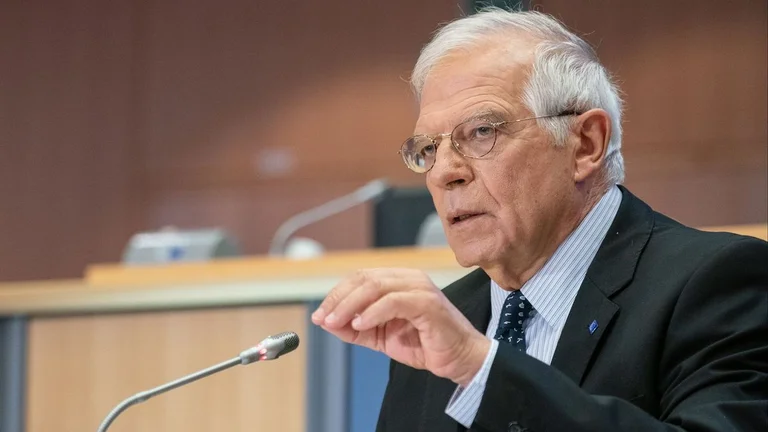
(3 years ago)The European Union's high representative (BE) for Foreign Policy and Security, Josep Borrell, called on Serbia Saturday to stop the military's shift along the border with Kosovo immediately and to withdraw troops deployed so far. The shift of Serbian troops along the border with Kosovo comes about a week after the September 24th attack. [...]
The European Union's high representative (BE) for Foreign Policy and Security, Josep Borrell, called on Serbia Saturday to stop the military's shift along the border with Kosovo immediately and to withdraw troops deployed so far.
Displacement of Serb troops along the border with Kosovo comes about a week after the September 24th attack on the Kosovo Police in Zvecan Banjska, where a police official was killed.
The chief of EU diplomacy told some international media that the bloc is discussing with its partners and allies about the current northern Kosovo situation, where the amount of weapons found by Kosovo Police “is very serious”.
Kosovo police found and confiscated an arsenal of weapons after the attack.
The responsibility for organising the attack was taken by Milan Radoic, deputy head of the Serbian List, the largest party of Serbs in Kosovo.
Serbia has denied Kosovo's accusations that it is involved in this attack, named terrorist by Kosovo authorities.
Serbia's military gathering in the vicinity of the border administrative line is very disturbing at the same time. This should stop immediately”, Borrell said.
He insisted that “has no room for army collection and security forces on the continent of Europe. Forces must withdraw“.
On Friday, the United States urged Serbia to withdraw troops from the border, calling their shift “very destabilising” development.
Borell expects those responsible for the September 24th attack to be punished and Kosovo and Serbia to return to dialogue.
We need to go back to the situation in which the parties are negotiating and return to the EU-launched dialogue, which is the only platform for normalising their reports“he added.
The attack took place about two weeks after Kurti and Vuciqi failed to reach agreement on normalising relations during the European Union-brokered summit in Brussels on 14 September.
Pristina believes it must be a mutual recognition, while Belgrade insists on a compromise solution.
Serbia does not recognise Kosovo's independence, declared in 2008, and has the support of allies Russia and China against it. / REL