20 minutes ago
Berlin Process, Challenges of EU Integration of Balkan Countries
Periskopi(3 years ago)
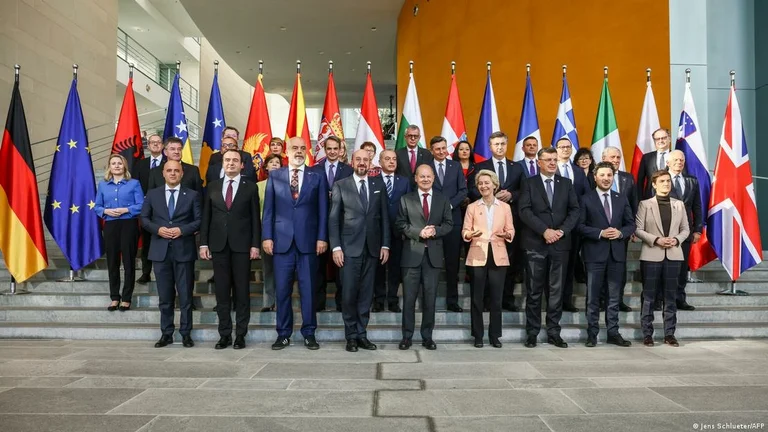
(3 years ago)Tirana is expected to host the upcoming Berlin Process summit next month, the first to be held outside a European Union country. Born in 2014 as a proposal by then German Chancellor Angela Merkel to speed up the European integration of Balkan countries, the initiative deserves [...]
Born in 2014 as a proposal by then German Chancellor Angela Merkel to speed up the European integration of Balkan countries, the initiative is credited with managed to lower the leaders of the countries of the region around the same table.
In the bow of nine years, the Berlin Process recognised the upgrade, while the circle of member states that joined you came extending.
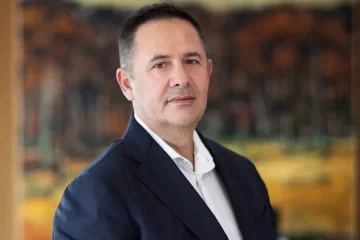
A detailed look at the performance of this initiative, in light and in the new geopolitical and security view, after Russian aggression in Ukraine, as well as the challenges facing both the European Union and the Western Balkan countries themselves in the enlargement process were part of an analytical document drafted by former Foreign Minister Ditmir Bushati and two other experts Albana Merja and Gin Dervishi.
The document was presented Wednesday during an organised meeting in Tirana by the Friedrich Ebert Foundation.
Berlin's “Process changed somewhat the routine of enlargement format by putting emphasis on regional economic co-operation, where, along with the classic vertical structure of the enlargement process, added horizontal elements, with issues such as the common regional market, transport, energy and regional economic zone, thus promoting conditions for sustainable development and relations between different social agents”, the study underlines, while noting that another key dimension of regional co-operation is the Green Age for the Western Balkans<3x>.
The Berlin process is not an alternative to the European integration of Western Balkan countries, but has been intended to serve as a booster of the latter. German Chancellor Olaf Scholz, early in his assignment, promised to revive this initiative.
While Russian aggression in Ukraine led to a more active approach of the EU itself to the region. The EU- Western Balkans summit, held in Tirana last December, called for speeding up the integration process.
“The fight in Ukraine and the awareness that Europe is not complete should be seen and as an opportunity to life the vision of EU membership for Western Balkan countries”, the study is highlighted.
Even European Union Delegation Ambassador Luigi Soreca said during the meeting Wednesday that “crisis always turns into opportunities. I've never heard so much talk about expansion as last year and this year. The reason is inevitably related to the fact that a new measure of security is on the table. We discuss prosperity, convergence at an economic level, but expansion in the region is also a security requirement to ensure that the region is stable”.
For authors of the study “region's path towards the EU continues to be deepening and without a clear deadline of” and that there are some related challenges that need to be addressed in the function of democratic stability, welfare and EU membership. The first challenge concerns the level of democracy and rule of law.
Although Western Balkan countries are estimated to have made reforms and to have advanced on the path of European integration “this progress is not in the correct report with the empowering of the rule of law. Based on the assessments of international organisations monitoring democratic developments, a <x1 democratic rowing “ --” -- in recent years except for Kosovo” -- is said in the document.
Another concern relates to the region's development gap in relation to the EU average, but to the bloc's poorest countries.
The gross internal production of all Balkan countries is roughly equal to Slovakia's, or less than 1 per cent, of the EU. Despite the benefits that have brought about different regional or potential initiatives carrying the Common Regional Market, the region's economic development remains limited”, the authors of the study noted.
A challenge that has obviously affected the Western Balkans is that in the analysis presented, it is defined as “demographic threat” or the massive exit of citizens towards the EU.
The countries of the region must embrace welfare policies related to investments and opportunities in education, health and housing, creating a more suitable ground for a more dignified life. The approach of the Western Balkans as part of the EU is an effective way to ease the development gap and contain as little depopulation”, the study stresses.
As the European approach to the region seems to have changed positively, however, the analysis of the situation notes that a clear vision of how it will need to move forward in the enlargement process is needed. The “region must take priority, where the EU must prove genuine commitment.
Alternatives to full membership should not be turned into a permanent state for the Western Balkans”.
The Tirana summit next month has increased expectations. Prime Minister Edi Rama stated two days ago, during the Euro-Balkan ministerial of the economy ministers from the EU and the region, organised under the Berlin Process, that the “sam will have to discuss something completely new that 5 years ago was unthinkable, the European Union's future plan to support the Western Balkans by opening up in some ways that will bring us closer to the EU.
So we've been waiting for so long and that's why we have such high expectations for the promised new growth plan for the Western Balkans that we are so eagerly waiting for”. /voa