11 minutes ago
How Yugoslav Wars Changed German Army
Periskopi(3 years ago)
(3 years ago)Yugoslav wars were a catalyst for the transformation of the German Army and the international role of Germany. It was ranked side by side with the US, France and Great Britain. “Vit 1990 was a key decade for Germany's foreign and security policy during this period, its international role was redefined. United Germany has [...]
“Vit 1990 was a key decade for Germany's foreign and security policy during this period, its international role was redefined. United Germany has regained its old geopolitical position as a central power in the heart of Europe, but has redefined it in a conscious break from the past,” writes Michael Staack at the entrance of his review for the book “Bundesehri in the Balkans. Between the war and the preservation of peace” of Agilolph Kesselring, published in the Frankfurter Legendine Zeitung (FAZ) newspaper.
In a brief section of the book, for the post-World War II period until the country's reunification, the author points out that Germany (Western) through “voluntary integration” in the European Community, NATO and the OSCE “wanted to contribute to the unification of Europe as a whole, including Russia and all of Central and Eastern Europe”. At the same time, Germany's largest leading role in Europe “was developed, although still strongly anchored in the coalition with France, established in 1963. Berlin's role in international defence and security policy “was defined primarily as a response to crises and conflicts. ”
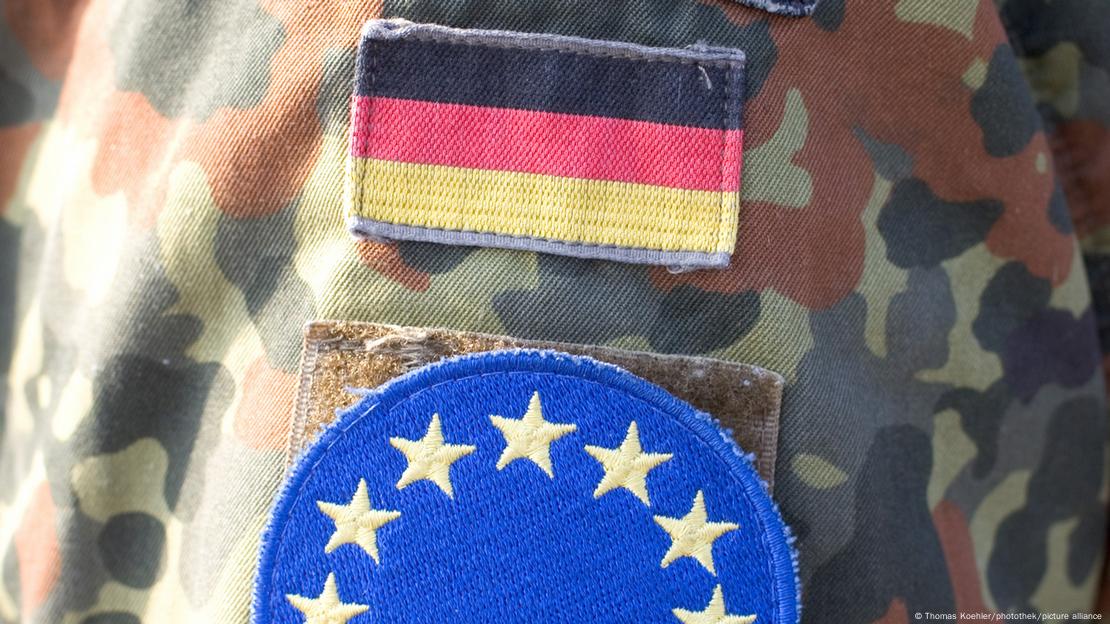
In 1991 the war returned to Europe
“In 1991, the war returned to Europe with the aggression against Slovenia and Croatia by the Serb-led JNA,” writes Staack and stresses that “the international commitment dominated by the West, with the aim of ending Yugoslav wars, became a catalyst for transforming Bundesehri from a preventive force in the East-Western conflict, to an army that is actively involved in combat operations”.
The author later writes that in his book Agilolf Kesselring wants to present a military-historic reconstruction of Bundeswhert missions in the Balkans, and that he is particularly interested in ♫ “if those 25 or more individual missions were based on Germany's own strategy for Southeast Europe”.
The focus of this study is on Bundeswehri's engagement in Bosnia and Herzegovina by 1998. The extremely important conflict in Kosovo, and the conflicts around modern North Macedonia, are addressed only superficially. In this sense, the title of the book is wrong because there is no general description of Bundeswehr operations in the Balkans”, believes the author of the text for FAZ, Michael Saack (1959), politicalologist and professor at Bundeswehri University in Hamburg.
Staack says that in the 1980s, following Josip Broz Tito's death (1892-1980), experts from the West “saw the scenario of the breakup of Yugoslavia as the most likely development, including the risk of violent escalation”. He writes that events in Yugoslavia were under the shadow of ageic unrest in the Soviet Union and then all over the former Eastern bloc. “When collapse actually happened, the international community was largely unprepared. Diplomatic instruments turned out to be as useless as blue helmet missions”.
1994. ) turning year
Further in the text, it says that the international “ans had to increase the extent and intensity of military engagement step by step always in response to the escalation of the violence that Serbian leadership under Milosevic committed extremely brutally, including the ethnic cleansing criminal strategy”.
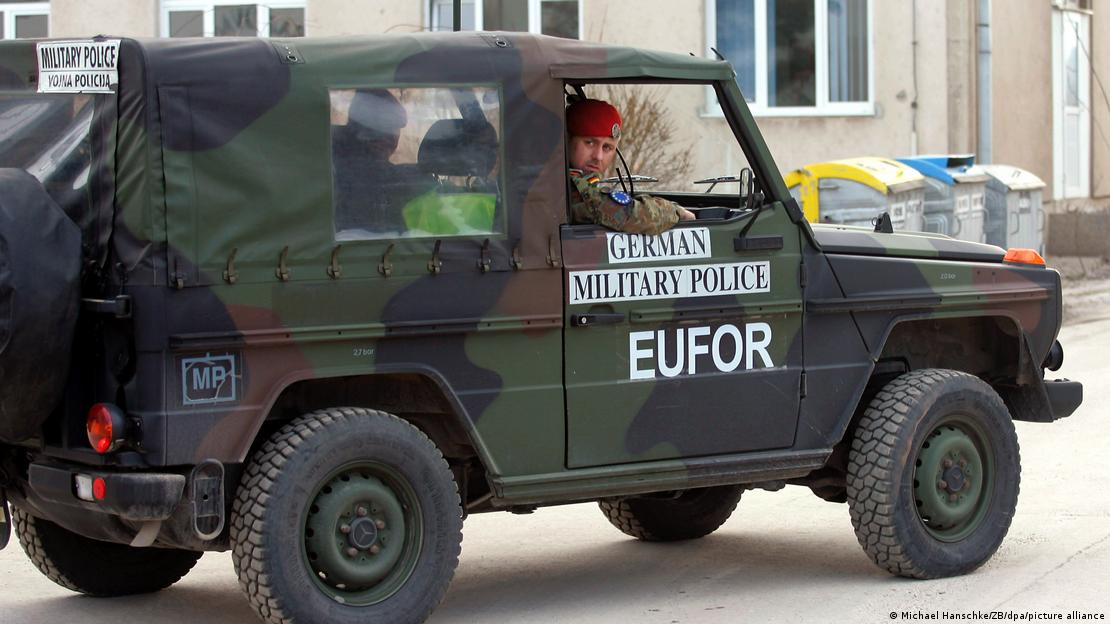
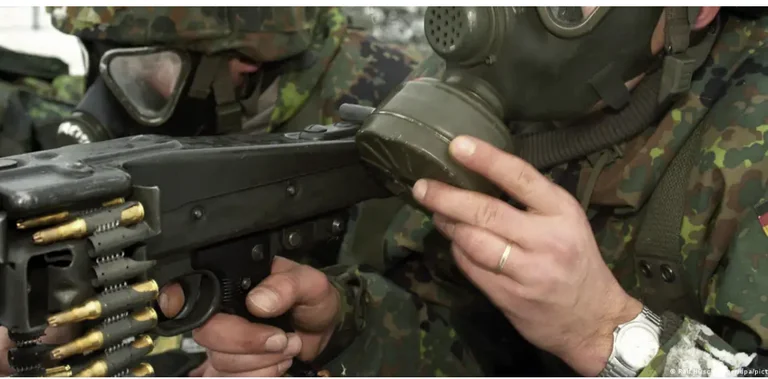
NATO thus received a new task. Bundeswehri was not involved in blue helmet missions, but participated in NATO operations almost from the beginning, writes FAZ. For this Germany first had to create political and legal preconditions. After Germany (Western) joined the UN (1973), Berlin's position was always that, “Bundeshower can only protect NATO territories”.
Staack then emphasises that the <x0-point curve came with the decision of July 12, 1994, when Germany's Federal Constitutional Court opened the way to all spectrum of German military missions abroad”.
The End of Kohli's Doctrine
The text goes on to say that “in its portrayal of heated debates on the issue, Kesselring makes it clear that belonging to a certain generation was more important than party-political lines”.
The so-called “Doctrine Kohl”, the expulsion of Bundeswhir operations in countries occupied by Nazi Wehrmacht during World War II “could not be held in”. Germany has managed to side-by-side with the US, France and Great Britain in security policy”.
The FAZ writes that Kesselring “strongly claims that German politics in the Balkans was not based on any comprehensive strategy.” However, “during the mission, Germany was held by an actor in the military events frameworks of an important diplomatic and military player, especially in the Kosovo conflict”.
Staack also says Kesselring rightly stresses that, with all the major involvement of the EU and NATO in Bosnia and Herzegovina and Kosovo, now “has no war, but there is no lasting peace”. Therefore, another lesson from Bundeswher's Balkan experience is, “since they start missions abroad, they have to take into account the limits of their effectiveness”, concludes Mihael Staack in an article for Frankfurter Alliance Zeitung.
“Bundesver in the Balkans. Between War and Peace”, a study created for the German Armed Forces Centre for Military History and Social Science, published by V&R, Göttingen 2023. (386 pages, 45 euros)
The author of the book, Agilolph Kesselring (1972), is subcolonel of Bundeswehri, lynx specialist and historian. At the University of National Defence in Helsinki, it legalises the history of European war, deals with Finland and the Baltic countries, as well as the history of Southeast Europe, particularly Kosovo, Bosnia and Herzegovina and North Macedonia. His father, Rainer Keserling, worked at the German Embassy in Tokyo, where the author was born and later was deputy head of the BND. His grandfather, Albert Kesselring (1885-1960), Wehrmacht's Fedmarshall, and aviation, was Hitler's loyal war criminal. He was sentenced to death by a British military court in Italy, but later he was forgiven several times, so he died in freedom. / DW