4 minutes ago
The numerous crises of recent years have made apparent the weaknesses of the German business model
Periskopi(3 years ago)
(3 years ago)The many crises of recent years have made apparent the weaknesses of the German business model. Industry and export with big problems. It was just before the beginning of the millennium when the British business magazine The Economist came to a devastating conclusion of the German economy. “German is The Like man of the Europe ) the sick man [...]
It was just before the beginning of the millennium when the British business magazine The Economist came to a devastating conclusion of the German economy. “German is The sick man of the Europe Europe's sick man. At the time, it sounded like a wake-up call even for German politicians who, still drunk from economically strong years after reunification, had refused any reform. These reforms were compensated by the government of then Chancellor Gerhard Schröder (SPD), for example, with labour market reform known as Hartz IV.
The situation changed for the better, and it lasted 14 years. A group of economists from Berlin and London wrote an essay about Germania entitled From Europe's sick man to an economic superstar.
Decreasing the Situation and Bad Predictions
But now again, it's rolling the then expression “Europe's”. The German economy is failing to recover from the last crisis. Economic production has marked impasses in the first six months, which economists call “technical recession”. In the last quarter, gross domestic product stalled at the level of the previous quarter. While all important indicators lead to the conclusion that the German economy will score a decline this year. That is what the Institute's important business climate index from Munich Ifo shows. In July, survey data was released with 9,000 German company managers saying that “situata in the German economy is getting dark” and that there will be a drop in the year of 0.3%.
Ifo researchers are not the only ones who are sure that the gross inner product will likely fall back in the third quarter. This is also clear to Komerzbank's chief economist, Jörg Kramer: “Unfortunately, there is no improvement on the horizon,”, Kramer told Reuters news agency. Global interest rates are affecting the situation, especially since German companies have problems with their whereabouts.” Krämer's colleague, Alexander Krüger from Hauck Aufhäuser Lampe Privatebank, sees the situation similarly: “The problem is that economic production is still only at the pre-contain level. ”
“German is also restrained by European economic cycles,” says Jens-Oliver Niklasch from Landesbank Baden-Wurtemberg (LBBW).
Industry and Its Problems
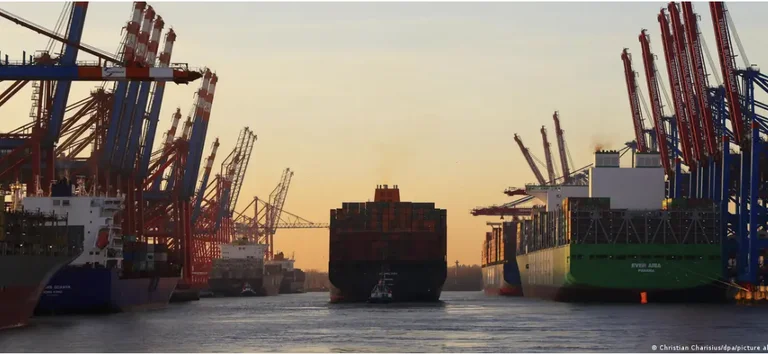
Germany is currently worse compared to other industrialized countries. According to estimates by the International Monetary Fund (FMN) this year, Germany will be the only country from major countries to have an economic contraction. What worries most is the industry, which by about 24 percent, makes up a large part of the German economy. The lack of orders from other countries is especially evident in sectors that depend heavily on exports, such as mechanical engineering and the automotive industry. The important Chinese market after the coronary pandemic is not recovering with hoped - for momentum.
Companies are still working well because of previous orders, but it seems these orders will also be processed soon. However, other orders have little between March and May, for example, had about six percent less orders than in the previous three months.
A range of Causes
The fall of the German economy has many causes. One of them is the monetary policy of central banks. Monetary overseers want to curb inflation with considerable growth in interest rates. This makes the loans more expensive for companies and consumers, which hinders and slows down the construction industry, which is also very important for Germany, which slows down the will of companies to invest.
Other countries, such as France and Spain, also have credit problems, but they are currently in better shape. “All our European neighbours have a higher economic development dynamic,” confirms Moritz Schularch, the new president of the Keel Institute for World Economic Research ( IfW).
Germany also slows down some structural problems. The once successful business model (free energy export particularly Russian but also raw materials) no longer works. The many crises of recent years (corons, problems in supplying raw materials and products, Russia's war in Ukraine...) have ruthlessly exposed the weaknesses of the German economy. The list of difficulties continues: Companies are suffering from high energy costs, while those who have shifted production to other countries are not returning.
Courageous Solutions Required
A current study by DZ Bank views high-sized companies commonly called “the backbone of the German economy” as particularly endangered. The authors point to a true cocktail of local disadvantages: Apart from energy prices, the lack of qualified workers is cited, but also excessive bureaucracy, high taxes and a weak infrastructure of digitalisation. In addition, Germany has an elderly population. The big “Piety of our economy is not confident that investments will be rewarded due to high costs, as well as sometimes contradictory regulations, Peter Adrian, president of the German Chamber of Industry and Trade for the German Press Agency, said recently.
While Schularik writes in an article on his institute's website: “if Germany does not want to become the Europe patient “ “ ”, it must courageously invest in sectors that might grow tomorrow, not try to preserve yesterday's industries with billions of euros. ”
According to Schularch, this also means the rapid elimination of the deficits of the past decade and the elimination of them. Rather, it should be worked on: “Elimination of backlog in all digital fields, in creating state capacities and public infrastructure, building necessary housing, and increasing the number of foreign workers to counter the impact on the aging economy”. /dw