15 minutes ago
Why didn't the Nazis build the atomic bomb before Oppenheimer?
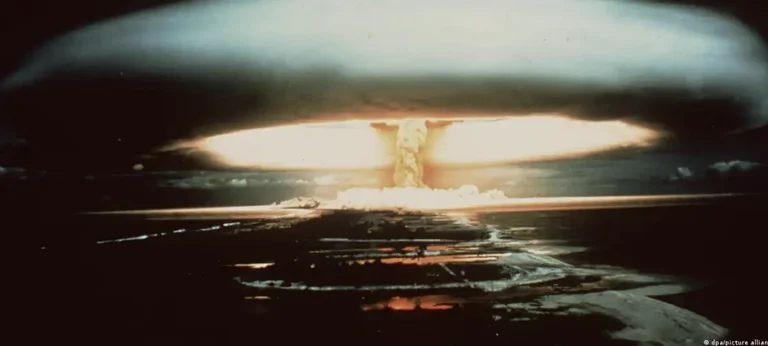
Periskopi(3 years ago)
(3 years ago)Fear of a German atomic bomb pushed her forward in 1942 American Manhattan Project. In 1945, U.S.A. dropped atomic bombs on Hiroshima, Nagasaki. But how far did the German search for the atom bomb go? At the end of 1938, two German chemists, Otto Hahn and Fritz Strassmann, discovered nuclear division - the process with him [...]
At the end of 1938, two German chemists, Otto Hahn and Fritz Strassmann, discovered the nuclear divide - the process with which an atomic nucleus is divided into two or more smaller cores, thus releasing large amounts of “ergy”. Use this force, said physicists, and you can develop a powerful bomb capable of destroying entire cities.
German scientists immediately began working on the atomic bomb project. Supported by powerful industry and military interests, the specially built uranium club linked contracts to some of the best nuclear researchers in the world.
Although the project was kept a secret, scientists who left Nazi Germany discovered information. Among them was Albert Einstein, who warned then president of the United States in 1939, Franklin D. Roosevelt. Worldwide, concern was growing that the Nazis were developing a secret weapon.

The US response was Project Manhattan. It was in the middle of World War II that this program, led by J. Robert Oppenheimer began to examine in the summer of 1942 how to build an atom bomb using uranium and plutonium elements.
Fear of the competitive Nazi project prompted the American government. Thanks to massive financial support, it took only three years for Opsenheimer and his team to successfully complete their first nuclear weapons test. The first atomic bomb actually hit the Japanese city of Hiroshima three weeks later.
Records on Farm Hall tape
I don't believe a word of all this,” said Werner Haysenberg, director of the German uranium project, when he heard the news from Hiroshima.
At the time, Heisenberg and nine other leading nuclear physicists who had conducted research in Germany were being held in prison at the English residence of Farm Hall. The British secretly recorded their conversations to learn more about Nazi nuclear plans.
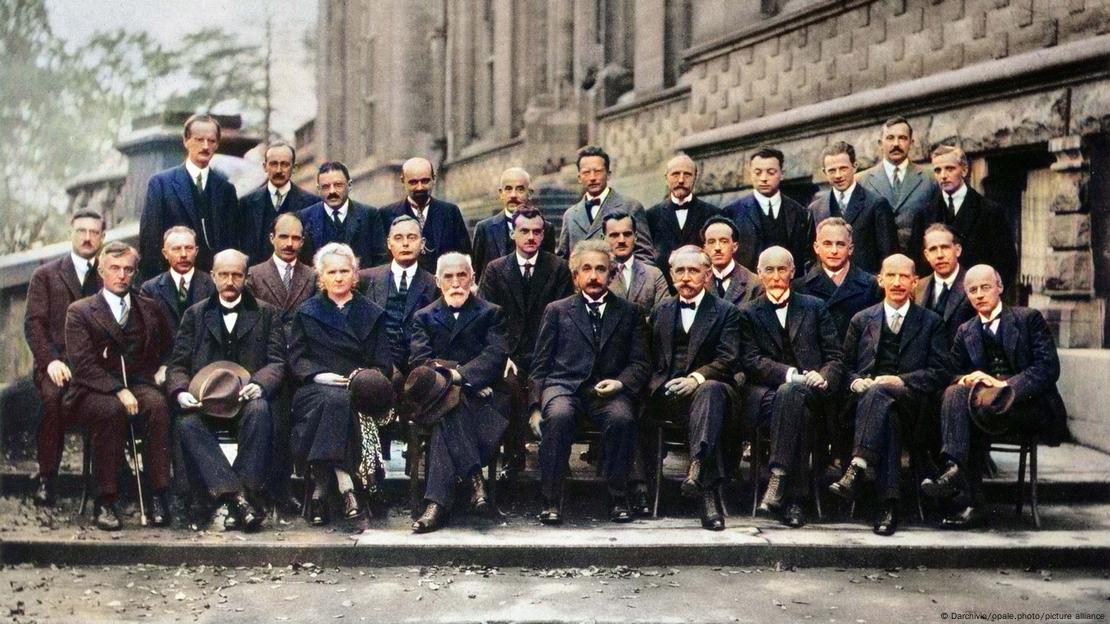
Other physicists supported Heisenberg's disbelief. Most of them doubted a blog intended to lead Japan to surrender. Otto Hahn had stressed that he did not think building such a bomb would be possible in the next 20 years. Heisenberg and Hahn's reaction shows that the German program was actually far from developing a nuclear weapon.
The United States had greatly overestimated the state of the progress of the German uranium project, and only thanks to Farm Hall records did they understand it, explains German - Japanese historian Takuma Melber of Heidelberg University.
abandoned nuclear program
When the Manhattan Project was on its way, Germany's nuclear weapons program was already dead. German scholars knew that they would not be able to divide the isotopes to make an atom bomb for several years. They had failed to start a chain reaction with nuclear division, and they did not know of any form of uranium enrichment. The nuclear weapons programme was cancelled in July 1942, and its search was divided into nine different institutions in Germany.
Until 1942, the program was a military project, explains historian Melber, but later turned into a civil project. The new goal was to build a nuclear reactor capable of handling nuclear division on a smaller scale. Heisenberg and his team experimented with a research reactor in a rock- carved basement beneath the castle church in Haigerloch, Baden-Wurttemberg. The uranium cubes climbed the wire and were lowered into a reservoir of heavy water, the chemical compound oxid deuterium.
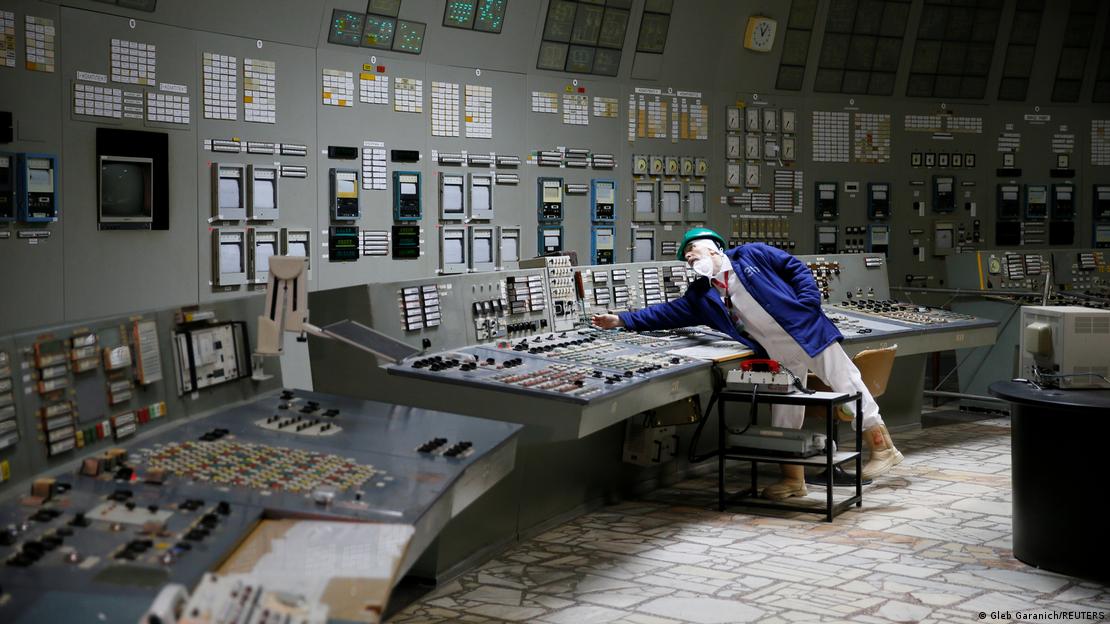
The German nuclear program never went further. There wasn't enough uranium in the reactor core to cause a chain reaction.
But scholars were not far away. Scientists now believe that if there had been 50 percent more uranium in the reactor, Heisenberg could have developed the first nuclear reactor.
German Disaster and Fugitive Researchers
Why did the German nuclear program fail despite its fine advances and scientists?
On the one hand, because Germany ran out of scientists. Many Jewish and Polish scientists fled persecution, such as Jewish physicist Lise Meitner, which was important in discovering nuclear separation from Hahn and Strasssmann. Some of these refugees went to Great Britain, or the United States, where they cooperated in the Manhattan project. Other scientists were recruited as soldiers.
The war also caused some of the first materials needed for research to be reduced, says Takuma Melber. These included enriched uranium and water to cool the reactors. Heavy water was produced in conquered Norway, but Allied and Norwegian troops attacked production sites.

But in the end, it was the lack of political support that prevented progress. Adolf Hitler did not understand everything and stopped his support in 1942, reports historian Melber. There was practically no financial support then, especially in comparison with the Manhattan Project. It employed 500,000 people, about one percent of the U.S. workforce, and cost the government about two billion U.S. dollars. Today, this would correspond to $24 billion. By contrast, the German Uranium Association and its successive projects had fewer than a thousand scientists working for an eight million-dollar budget of Reichsmarks, which would now total some 24 million U.S. dollars.
Build reactors instead of bombs!
Farm Hall's data provides another reason for German failure: scientists themselves rejected the atomic bomb for moral reasons and secretly sabotaged its development. The future physicist and peace researcher Carl Friedrich von Weissäcker said: “I think we failed because not all physicists really wanted her to succeed. If we all wanted Germany to win the war, we could have done it.” / DW