21 minutes ago
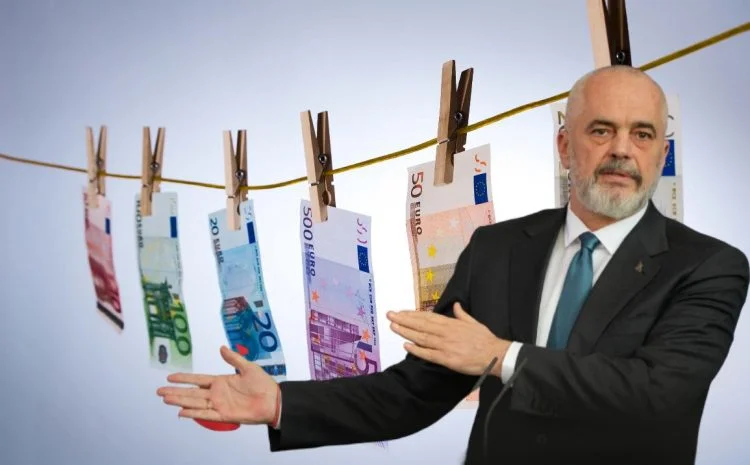
Money laundering, the EU urges Albania to set a ceiling for “cave payments”
Periskopi(3 years ago)
(3 years ago)The European Commission recommends that Albania set up a sum of ceiling for fees with physical money. In the latest report on Albania's compliance analysis with the legal and communitative framework, the European Commission estimates that our country is only partially in line with the European Union's framework in terms of [...] cleansing investigation.
The European Commission recommends that Albania set up a sum of ceiling for fees with physical money.
In the latest report on Albania's compliance with the legal and communitarian framework, the European Commission estimates that our country is only partially in line with the European Union's framework in terms of money laundering investigations.
Despite recent progress, Albania's legislation is partly related to the EU acquis in this area.
Albania has been on the list of added monitoring of the Financial Action Force (FATF) since February 2020. In February 2023 estimates, The FATF praised Albania's work to address strategic shortcomings and identified that our country had essentially completed its action plan to address FATF recommendations. However, due to concerns about the draft fiscal and criminal amnesty the government has warned about, Albania remains in the FATF's “ilist grey”.
Money payments remained dominant in the Albanian economy, though in recent years an increase in payments with alternative instruments, mainly with bank cards, is being seen. High use of physical money in economic transactions favours informality and financial crime, including money laundering from criminal activities.
A similar requirement for setting up a ceiling for cash payments has been voiced for years by the Albanian Bank Association. According to the Banking Association, lowering physical money in circulation and commercial transactions is a challenge and demand for a more organised, measurable, disciplined and sustainable economy.
Currently, Albania has no restrictions on the value of payments that can be carried out with physical money for the purchase of goods or services.
According to the Bank Association, setting up a ceiling for individual cash payments would help reduce tax evasion and help fight money laundering and financial crime in general. The Bank Association has also asked the government that businesses in Albania be forced to accept at least one alternative payment method, besides physical money.
According to data from the Bank of Albania, mid-year the number of active bank cards reached 1.4 million, increasing by 2% since the beginning of the year.
The number of debit cards reached 1.21 million, increasing 2.5% since January. This product remains dominant and accounts for approximately 87% of the total number of bank cards. The debit card is a basic payment instrument, linked to the current accounts of businesses and individuals.
Meanwhile, positive developments this year are being recorded in the credit card segment. In the middle of this year, the number of active credit cards in the banking sector reached 116 thousand, with an increase of 3.4% since the beginning of the year.
The total amount of payments per six months has reached 26.3 billion dollars, with an average monthly average of $4.7 billion, up from $4.2 billion, which had been the monthly average of 2022.
Given that the July-August tourist peak periods are accompanied by increased card payments, it is expected that the average payment period for the second half of the year will increase. It is believed that strong tourism growth is one of the main factors affecting the rapid growth of bank card payments in the Albanian economy./ MANITOR