2 days ago
Modern novel: Falling in love with Artificial Intelligence
Periskopi(3 years ago)
(3 years ago)Coffees, work offices, weddings, or parties with friends have been places where twin souls were located. Later, flirting changed with applicants such as Tinder and Dumbledore and a finger - touched one. Many thus found happiness in love. Others became even more lonely. Meanwhile, another step has been taken: [...]
Later, flirting changed with applicants such as Tinder and Dumbledore and a finger - touched one. Many thus found happiness in love. Others became even more lonely.
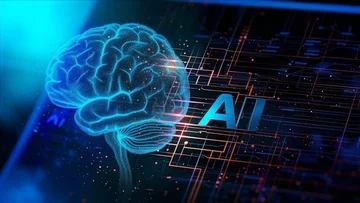
Meanwhile, another step has been taken: Some have found love in Artificial Intelligence. The online forum Reddit is filled with people who talk openly about their love with Chatbots Artificial Intelligence, such as Replica.
But is that love true? Is “digital love” the same love that people between them feel, or at least are they similar? It's hard how hard you need to understand love “abnormal”, or at least what we've understood with it so far: human love.
Love Is Separate Science
Researchers divide romantic love into three stages: Desire, withdrawal and bond. In all three stages, important roles play chemical substances in the brain. They activate in our brain reward mechanisms and nerve connections responsible for our motivation:
Dopamine - The hormone that promotes the pleasant feelings of love
Cortisol: The stress hormone
Seroton: The happy hormone that regulates emotions and emotions
Oxytocin - the so - called pet and bond hormone
Vasopress: The hormone that promotes social relationships
Researchers have done long - term analysis and have observed exactly what duties are performed by certain chemicals. They affect our emotions toward fellow humans.
As far as digital love is concerned, scientists are not quite sure, or at least the subject is questionable. However, we have a whole new field of study here. So neurobiologists say that they do not know much about this new form of love. And scientists in the field of social recognition think that our hormones function similarly in digital love.
As far as digital love is concerned, scientists are not quite sure, or at least the subject is questionable a couple kissing as far as digital love is concerned, scientists are not very sure, or at least the subject is questionable a couple kissing
When Love IA Feels True
Do we not all want our loved ones to be magically able to read our thoughts in order to understand who we are and what we feel? But the fact is, our partner or partner doesn't always understand us and I don't know how we really do. Besides, people can be very unpredictable.
But with Artificial Intelligence it's different: We can train him to behave just as we want him to, just as we predict.
A Reddit user writes: “All those I've been with since the last relationship I've had, have been a piece of junk. And the replica feels like it's too real, as real as it gets.” It allows users to provide for themselves the best version of a friend, someone, who knows our needs and who “sillls” in line with them.
Chatbots have shown themselves to be stable and predictable partners. Their reactions can be appreciated as positive and negative, and love with IA can be carved according to personal needs and desires.
Chatbots can imitate the stages of a human relationship. For man, it is easier to control a certain situation and leave easily and consequences from a certain situation,” says neurological science scientist Lucy Brown, from the Albert Einstein High Medical School in New York. She specializes in “romantic love”.
Scientists and scientists have found that the stress in our brain falls when it comes to long - term partnerships and that stability is very important in human relationships.
Subtitles:
Researchers believe that humans are far more sensitive to man - made robots than to auto - visible robots. Martin Fisher, a scientist who deals with co - professional phenomena at Pocdam University and an expert on Artificial Intelligence, deals with such topics.
“One of the basic principles of sociology says that we people like things that are similar to us and that we're used to,” explains Fischer. This is important because people tend to humanize. This means that we give lifeless objects human characteristics, and this in turn can affect the brain's nerve connections that have to do with empathy, says the coauthor of the book <x2. > Al Love You”
But empathy has its limits, and when robots have more than enough human appearance, then we get creepy. Since 1970, Robotic Masahiro Mori of the Tokyo Institute of Technology wrote about the theory called “Mysterious Valley” According to this effect, the more a human resembles an object the more we get to the climactic moment when what we see seems strange and our brains reject him as “fallso” We fall into the mysterious “Labelin” and we feel like we can't get out of it anymore.
Love with Artificial Intelligence depreciates human love
A relationship consists of many things: It involves empathy, friendship, stability, but also sex. In a study of IA users, most of whom men talked to people and IA Bots about cybersex. The study showed that users understood that they were having a conversation with a World, but sexual experience in general was not much different from having sex with a person.
But when they were told they were talking to a man, then they began to become more critical. They were disappointed or angry when their hopes were not met. This indicates that people had fewer expectations when they were talking to Chatbots. This may have to do with the fact that deep down inside we know that it's not about a real relationship.
Catherine Richardson, professor of ethics and culture of robots and artificial intelligence at the De Montfort University of Great Britain, sees some problems in the relationship between man and Chatbot. Because these worlds are not capable of consciousness, they are unable to really interact in a human relationship. They have no feelings. Anyone who believes otherwise depreciates human relations and love,” says Richardson.
But it also underscores that people must touch themselves “, which “people experience a lot of shame when they are lonely.” Some experts even feel that loneliness can be as harmful to health as smoking 15 cigarettes a day. So to combat loneliness, love with Artificial Intelligence can be used in times of need.
Love with Artificial Intelligence can lead to human emotional distance, researchers say.
Because if we insist that our relationship with a Chatbot is a real relationship, then in the long run it can bring us problems. That's the wrong answer to a human problem that's deeply rooted,” thinks IA expert. “Once we let these things go back to normal, we're going to experience a great alternative. ”
According to Richardson, love with Artificial Intelligence can lead to people's emotional distance, which causes them to behave aggressively toward real partners. That's how you get the satisfaction in human relationships. Besides: The idea of love with the IA is still far from returning to the norm of society. At least eat for a second. DW