25 minutes ago
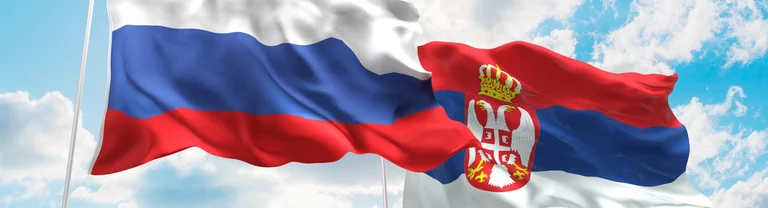
Major influence of Russian propaganda in Serbia
Periskopi(3 years ago)
(3 years ago)The impact of Russian media propaganda in Serbia is evident at every step, which goes to Vuciqi in favor. There's always enmity with the West. Even more than a year and a half after the start of the war in Ukraine, Serbia's citizens still feel that Russia is not guilty of starting it. About 66 [...]
The impact of Russian media propaganda in Serbia is evident at every step, which goes to Vuciqi in favor. There's always enmity with the West.
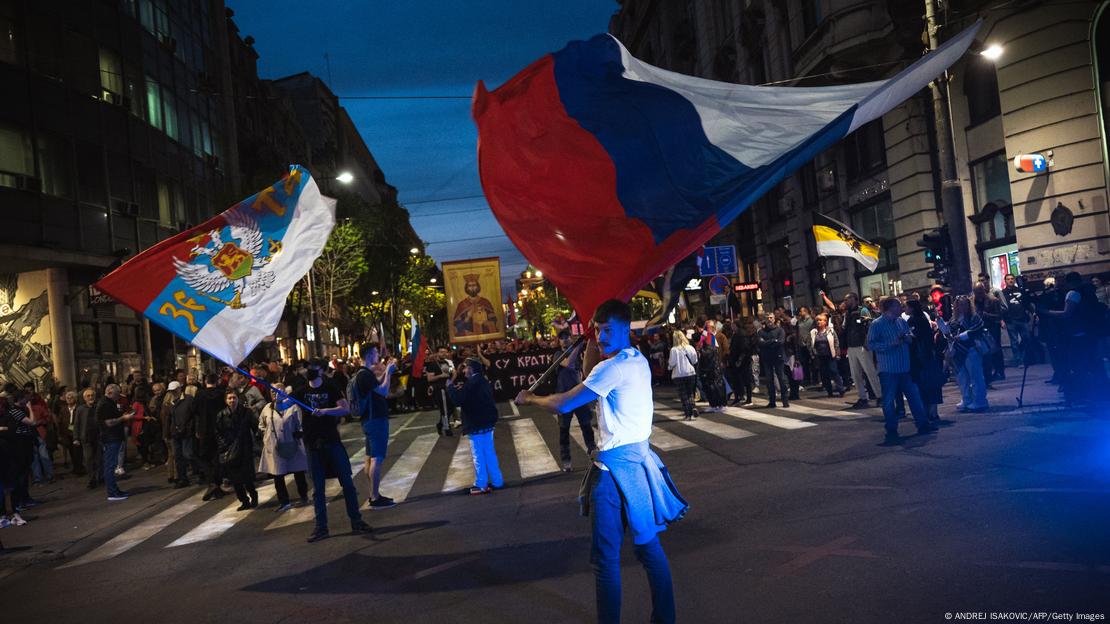
Even more than a year and a half after the start of the war in Ukraine, Serbia's citizens still feel that Russia is not guilty of starting it. About 66 percent of Serbia's citizens believe the West is responsible for the war in Ukraine, while only 21 percent blame Russia and Putin for the war. While just over three percent view Ukraine as guilty. Other “do not know”. So says the latest survey in Serbia, titled “The orientation of Serbia in Foreign Policy” published early in April by the Serbian non-governmental organisation “New Road”.
According to this survey, 47.5 percent of respondents believe Russia is Serbia's most important political partner. Only 30 percent say that it is the European Union, while 19 percent are convinced that it is China.
On the other hand, more than half of the population views the EU as a more important economic supporter for the future, while only 21 per cent believe their main economic support comes from Russia. Finally, China as its main supporter is viewed by 26 percent of Serbia's citizens.
Real economic data is very clear about the actual situation. The EU has been a leader in foreign direct investment in Serbia for years. According to data from the National Bank of Serbia, available for the first six months of 2022, investments from European Union countries made up a third of the total investment in the country.
“Skizophrenia” of society in Serbia
It is about “skizophrenia” of a large part of the public in Serbia and in those parts of the Western Balkans where Serbs live, such as Republika Srpska in Bosnia and Herzegovina, says Thomas Brey, former director of the Deutsche Presse Agentur (dpa) section of the Balkans and author of the study “The Russian media in the Balkans and their role in the aggressive fight against Ukraine”, made for the Friedri Naumann Foundation.
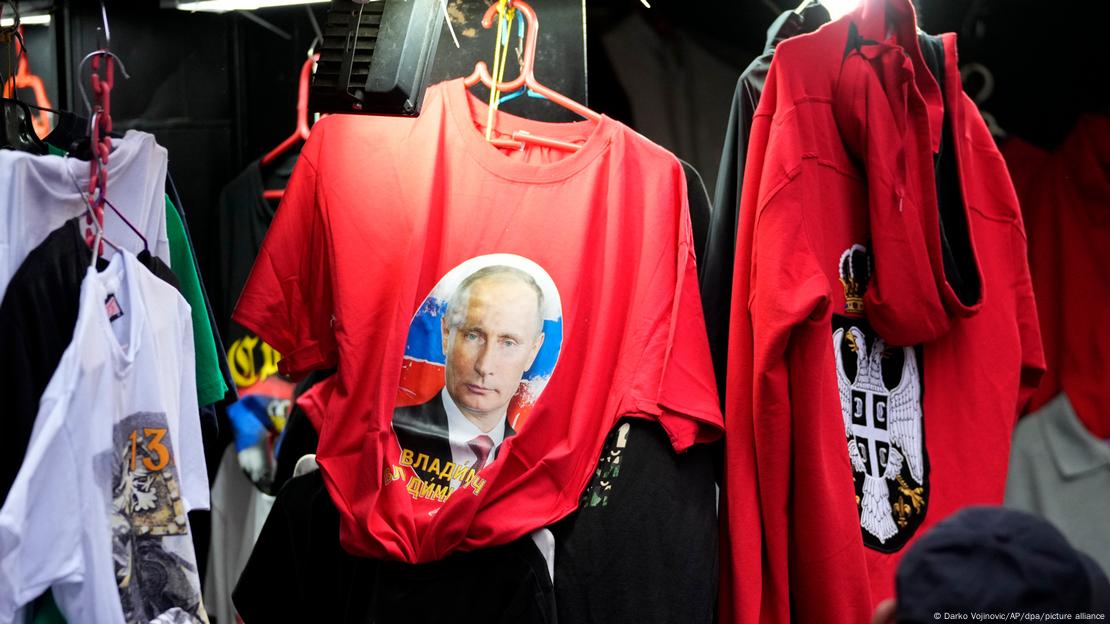
When something affects them personally, people in Serbia do not look for jobs in Russia, and don't go to China to study, but in the West. While when it comes to official politics, people are convinced that Russia and China are the best, and the West is negative is against Serbia and wants evil for Serbia”, Brey explains in an interview for DW. According to Brey, Russian propagandistic media RT (formerly Russia Today) and Sputnik play a key role in spreading that gear for Serbia as the victim of some Western plot that is identical to the Russian official policy rrugation.
They have well-equipped editorials in Belgrade and spread Russian propaganda daily, and this finds a fertile land in Serbia. “has a traditional connection between Russia and Serbia. From the time of the Balkan wars, until recent Yugoslav wars, Russia was presented as Serbia's brother country. This, of course, includes the cultural points of contact, such as Slavic or Orthodox religion”, says Brey.
He notes that one of the main focuss of Russian propaganda is to promote interethnic tensions in the Balkans, always underlining that “Russia stands without reservation on Sebi's side in any dispute, especially when it comes to Kosovo”.
Political elite backs Russian concept
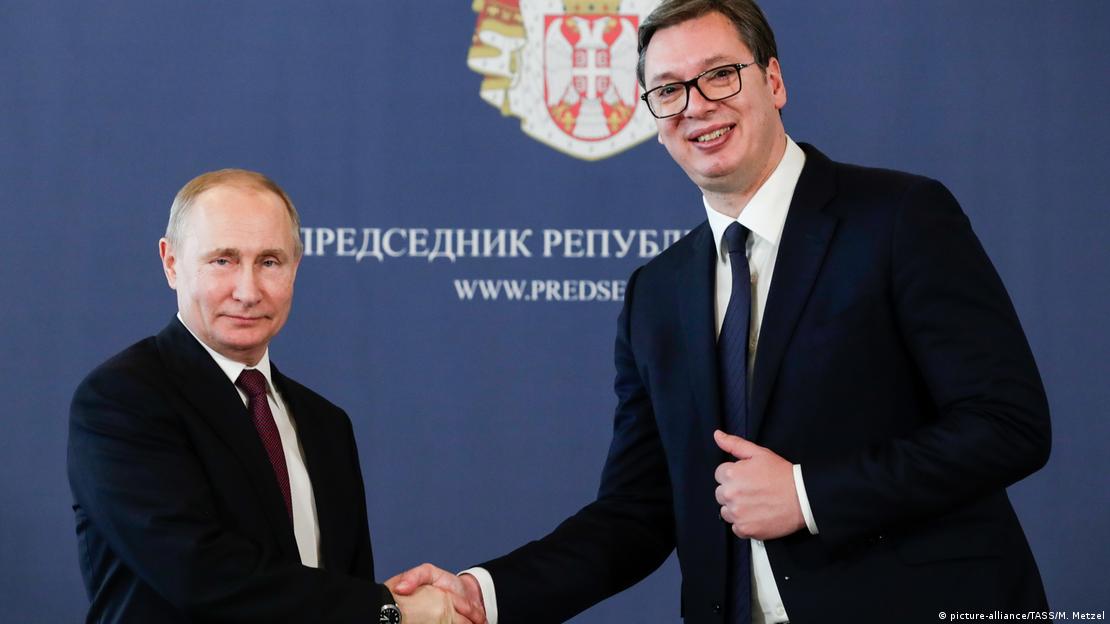
But the influence of Russian media in Serbia would be limited if they did not have the strong support of the political elite in Serbia led by President Aleksandar Vuciq. He sees Putin and his model of state management as a good model, as a nation's father struggling to preserve traditional values, and it is an obstacle to modern, liberal tendencies, such as respect for LGBT movement or efforts to distort and suppress the role of religion in society coming from the West, Brey says. Without the support of the political elite, the media in Serbia could not broadcast Russian deninforms.
And how it seems in practice when it comes to war in Ukraine, Brey shows numerous examples from Serbian media in his study. The headlines, both from pre-war time in Ukraine and after the Russian invasion, look like they're from a parallel universe and they're written directly on the Kremlin: “The new world order ♫ Putin defeated the EU and NATO” (Srpski telegraf, 15,11,2016.); “Blicrig A Russian hurricane has landed in Ukraine: Putin arrived in Kiev in one day” (Hello, 25/02/2022); “Russian crackdown in response to NATO threats” (Vecernje Novosti, 25/02/2022); “Ukrainian attacked Russia!” (Informer, 22.02.2022); “The fascists are hunting Serbs while Europe is silent and looks at” (Informer, 16,01,2023 theme: Kosovo); “The EU's dirty fight against Serbia” (Informer, October 7, 2022); “Americans and British people agreed: Putin won the war! (Srpski Telegraf, 7.4.2022); “Putin: The fall of Western hegemony is irreversible” (Pecas, October 7, 2022)
A Successful Movement Policy
At the same time, Vuciqi, who according to Brey, has full control over the most influential media in the country, officially advocates a friendly policy towards the EU. He stresses that Serbia is still a candidate for EU membership and is trying to attract as many European investments in the country as possible.
Brey calls it the “the shaking policy”, which originated in the bloc of the uncoordinated from Tito's time, which was continued in Serbia later, for example, at the time of President Boris Tadic. The “This maneuver between East and West is a tool with which Vuciq and the people around him ensure they stay in power. He did not invent it, but he perfected this system. By taking a position between these two blocs, Vuciq is trying to position himself as an interesting partner for both. “Serbia is a small country, both for population and economic power. But there is a far greater role on the international stage than it would normally have been”, Brey says.
Vuciq with his policy is very successful and has no interest in changing anything. Any serious reform, any attempt to suppress corruption, would threaten Vuciqi's position of power. Therefore, according to Brey, it is unrealistic to expect that the government itself can change current policy.
From the Western perspective, Brey emphasises in his study, the concept of unconditional co-operation with so-called “stabilists” in the Balkans, which has been going on for years, is a serious mistake. Besides Vuciki in Serbia, for example, there have been Milo Djukanovic in Montenegro, Bakir Izetbegovic and Dragan Covic in B-H or Nikola Gruevski in northern Macedonia. Toleration of autocratic models of government did not draw these countries closer to the West in terms of accepting the fundamental values of democracy, rule of law, and the will for compromise. Instead, they copied the type of government created by Putin in Russia. They introduced control of the media and judiciary, the power of secret services and police, as well as the elimination of political competitors.
Now what?
Brey is convinced that changing this dominant nature is only possible by raising youth awareness. Therefore, he engages in creating and expanding a programme of exchange between young people from Serbia and their peers from Western countries.
In addition, school texts, above all those in history, need to be discussed critically, to counter the unilateral and false presentation of events from the past and therefore the indoctrination of young people.

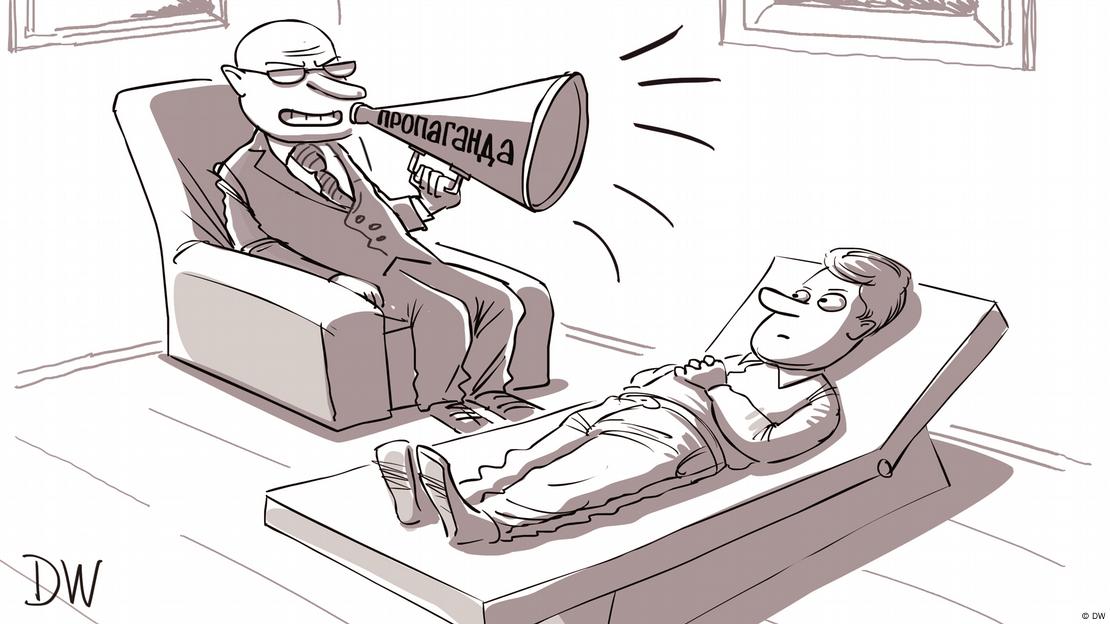
The key role, however, belongs to the media. Brey here advocates the idea of helping educate new journalists and providing financial and technical support to independent and critical media.
Finally, the EU has concrete instruments of pressure on authorities in Serbia: “Since the EU is so far the biggest investor and Serbia's main trade and financial partner, a link should be established between the major transfer of EU money and implementation of reforms already agreed on in principle regarding judicial independence and media freedom”.
How this can work can be seen within the EU in the example of Poland and Hungary. “What is at least partially possible to achieve for threats of financial sanctions with these EU members would have to work even better when it comes to a candidate country, such as Serbia”, is convinced German expert on Balkan issues Thomas Brey. / DW