8 minutes ago
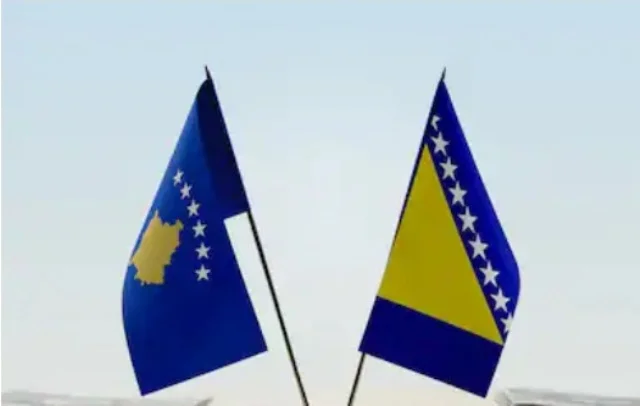
Freedom of movement for Kosovars in Bosnia and Herzegovina is blocked by Serbian politicians
Periskopi(3 years ago)
(3 years ago)When the agreement issued by the Berlin Process was signed in late 2022 by the prime ministers of the six Balkan countries, which includes the agreement on freedom of movement of citizens of Western Balkan countries; the agreement on recognition of academic qualifications; agreement on mutual recognition of the professional qualifications of medical doctors, dentists and architects [...]
When in late 2022 the agreement was signed by the prime ministers of the six Balkan countries, which includes the agreement on freedom of movement of citizens of Western Balkan countries; the agreement on recognition of academic qualifications; the agreement on mutual recognition of the professional qualifications of medical doctors, dentists and architects in the context of the CEFTA agreement was not meant that they would not be lived that long after.
This agreement, issued by the Berlin Process, which was launched in 2014 with the initiative of the former German cancerals, Angela Merkel was meant to facilitate even the most impressive political obstacles among Western Balkan countries, and the main goal is to connect and integrate these countries before they were to join the European Union. Kosovo, Albania, Montenegro, Northern Macedonia, Serbia and Bosnia and Herzegovina as signatories would also have to pass agreements on domestic state bodies such as Government, the Convention and Publishing in Official Newspapers.
The first country that has passed all these phases is Kosovo and the first to implement them in practice, despite Bosnia and Herzegovina, except that it has not passed those phases, and despite the signing given, the Assembly of Republika Srpska entity, at the same time the presidency member has vetoed it. Do not implement the Berlin Process Agreement from Bosnia and Herzegovina, despite the reasons it would have to be considered unacceptable and punishable by the European Union.
Of the countries in the region, it is the citizens of Kosovo who cannot travel to Sarajevo because Serbian politicians Milorad Dodik, the head of the Republika Srpska entity, and Bosnia and Herzegovina Presidency member Zelka Cvianovic oppose the free movement of Kosovars in Bosnia and Herzegovina.
This opposition cannot only be considered political, as well as racist, since among the explanations is that “what we need for Albanians coming to Banja Luka”. When the agreement was signed chairman of Bosnia and Herzegovina's Council of Ministers, it was a member of Dodik's party, SNSD, Zoran Tegeltija. Bosnia and Herzegovina's current Foreign Affairs Minister, Elmedin Konakovic, had said in case the RS People's Assembly backed the veto, “Berlin Process agreements would be dropped”.
Their decline, of course, conflicts with the will spirit of the Western Balkan countries for integration into the European Union. The meeting of the prime ministers of the Western Balkans, which is being held in Bled, Slovenia's BSF2023, would have to be called not just from Kosovo, but primarily from the European Union that respect agreements preserving and empowering the Euro-integration spirit of the six Balkan countries to be imposed. While the actions of the Serbian politicians of Bosnia and Herzegovina preventing the implementation and implementation of agreements signed by the Government in Sarajevo were condemned with concrete measures by the EU.
Freedom of movement of citizens is human right and any mechanism preventing it is contrary to European values. The key to success of the Euro-integration goal for Western Balkan countries should be to respect and implement signed agreements. First of all, this should be worth BiH. / The Geopost