15 minutes ago
France: Green Energy Instead of fossil fuels
Periskopi(3 years ago)
(3 years ago)France is seeking to solve energy problems by means of small projects that confront themselves and produce green energy. Supporters of this idea say, that this change will democratise electricity production and reduce dependence on fossil fuels and energy bought out [...]
France is seeking to solve energy problems by means of small projects that confront themselves and produce green energy.
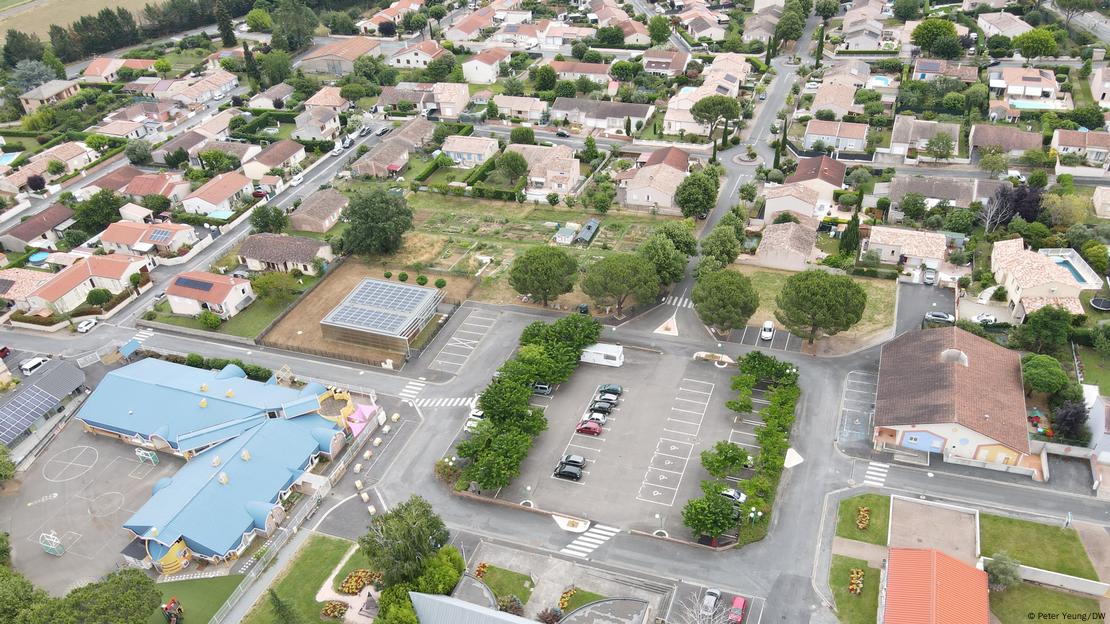
Supporters of this idea say, that this change will democratise electricity production and reduce dependence on fossil fuels and energy purchased abroad. With his calmness, the main square surrounded by trees, school, gym, low - price restaurant, and the municipality, Le Sequestre, seems to be like many More French cities. But the municipality of 2000 of the city's inhabitants near Tulouse, southwest France, is a leader of a revolution seeking to solve energy problems in the country.
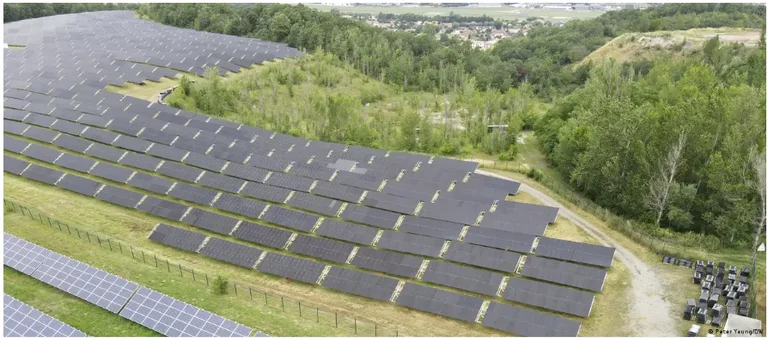
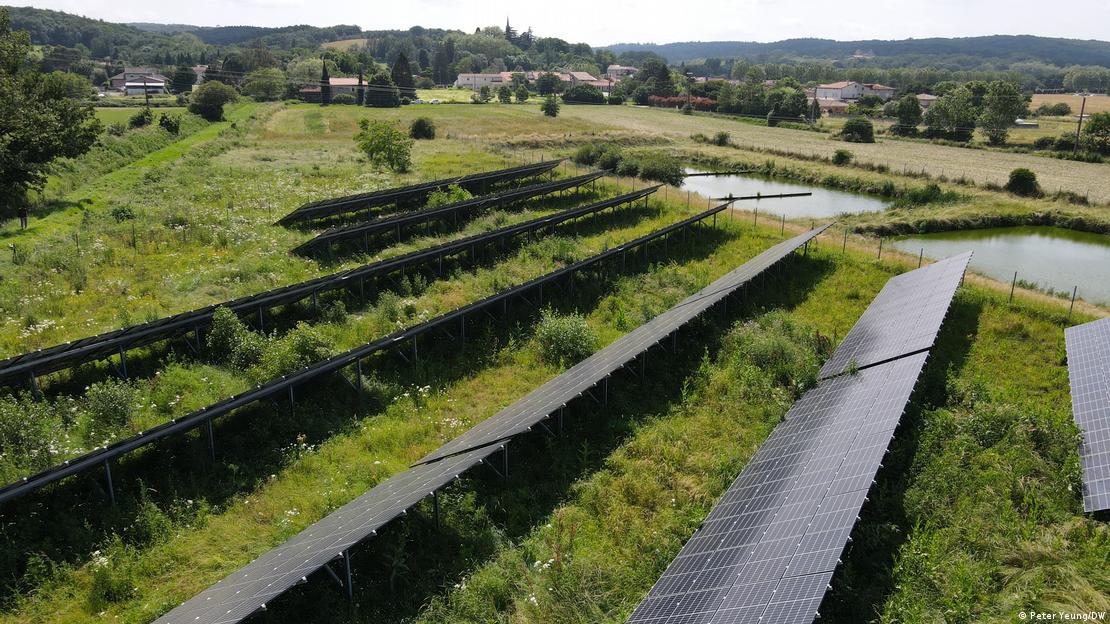
Last year, local authorities inaugurated a park Solar energy with maximum output in standard terms of 250 kilowatts. The park is located in an abandoned area on the outskirts of the city and produces and distributes enough energy for its 250 inhabitants living within a two - mile [2 km] radius.

“Solar Park is helping us in many ways”, says of Deutsche Welle, Gerard Poujade, mayor of Le Sequestre. It's giving our lights green energy, but it's also empowering us to be more resistant and independent. ”
Green energy projects challenge for big players
Le Sequestre's hyperlocal solar park is the first project of its kind in France. And it's a project that the European Commission promotes as “collective self-consumption” (self-consuming target) project connecting consumers and producers of the same area, in an effort to make Europe's energy system stable, and to create opportunities for local communities to benefit from them.
The 240,000-euro project has been funded by Enercop, a French co-operative that started operating in 2005, and distributes energy 100 per cent renewable across the country through a network of small producers. The company, which marked a $134 million drive in 2021, has 61 thousand co-operative members and 100,000 consumers.
Enercope views itself as alternative opportunities in the face of capital - based conglomerates, which dominate the market and often to produce electricity burning fossil fuels and nuclear fuels. In an interview with Deutsche Welle, Loic Blanc, co-ordinator of the Middle Forest region, says Enercop requires “to change from the foundation the relationship we have with energy. ” “is not a matter of money. It's a matter of the future of our planet,” he says.
The energy produced itself can be the key to zero carbon dioxide balance
World energy authorities also think that future years will require major changes in the energy sector. The International Energy Agency predicts that to get the world on track to achieve the zero balance target of carbon dioxide, it will take investments in renewable energy to triple by 2030, reaching $4 trillion ($3,63 trillion). This intergovernmental body has said that the creation of resistant power supply chains could help smooth down <x0-seconds in security issues” energy, given the Russian attack on Ukraine.
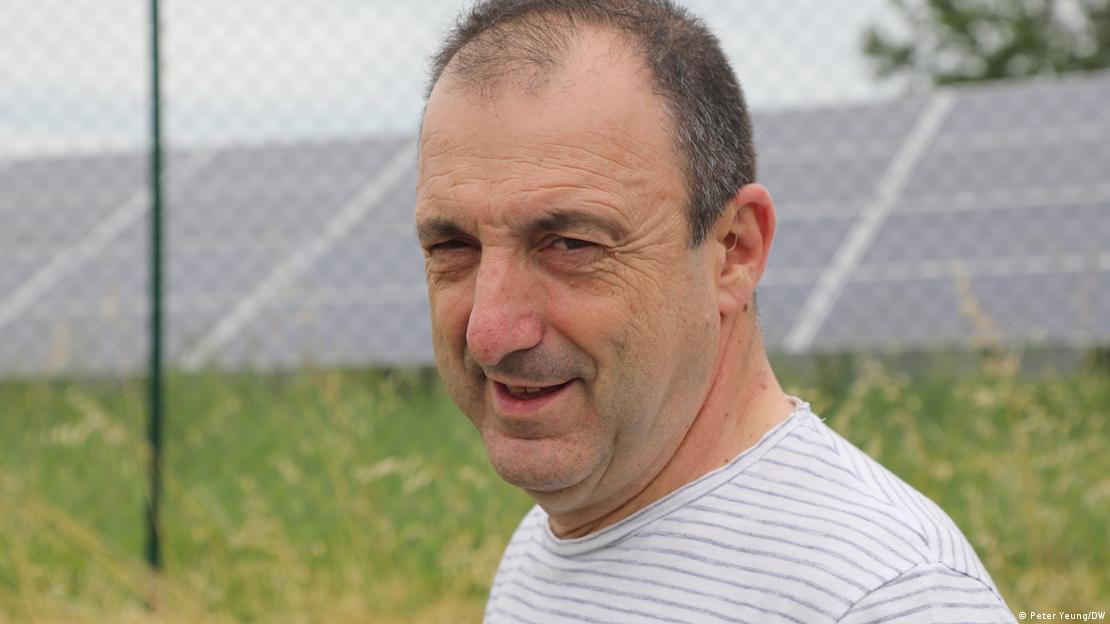
In 2021, 26 percent of the electricity consumed in France was renewable energy, while in Germany it was 45 percent. France aims to increase the amount of renewable energy by 2040 to 40 per cent of consumed energy. Independent, local initiative run by citizens such as Enercop's initiative will be the key to achieving that goal, advocates of that idea say.
A study conducted by the Dutch consulting firm CE Delft predicts that by 2050, half of the EU's domestic economies, which are about 113 million domestic economies, will manage to produce energy either individually or collectively.
This transition to clean energy decentralisation will also help overcome the obstacles created for large central energy networks when the requirements reach the peak,” says Dirk Vansinstein, president of REScop, a 22000 civic energy co-operative federation, distributed throughout Europe.
Success depends on local support
Experts say that success of the transition towards green energy depends on the purchases made by communities. “There is a large amount of investment in renewable energy, but often they are not exploited,” says of Deutsche Welle, Richard Warlenius, a lecturer at the University of Gotenburg, who has studied basic energy initiatives. “To succeed, they must also include local residents who must have benefits. ”
Enercope, which to give stability to producers offers long-term contracts of up to 30 years, works with regional companies such as Courant Naturel, which does install solar panels, thus targeting local economies. At the same time, about 5 percent of the company's electricity, which in 2021 was 642 giga wattt hours, is currently sold at the cost of production rather than at the price of the market, which is more expensive. And the goal is that by 2030, this figure is 40 percent.
This is a democratic model,” says Martine Le Lostec, mayor of the village of Saint-Quirc and a co-operative member. “It's about how to achieve prosperity,” he told Deutsche Welles.
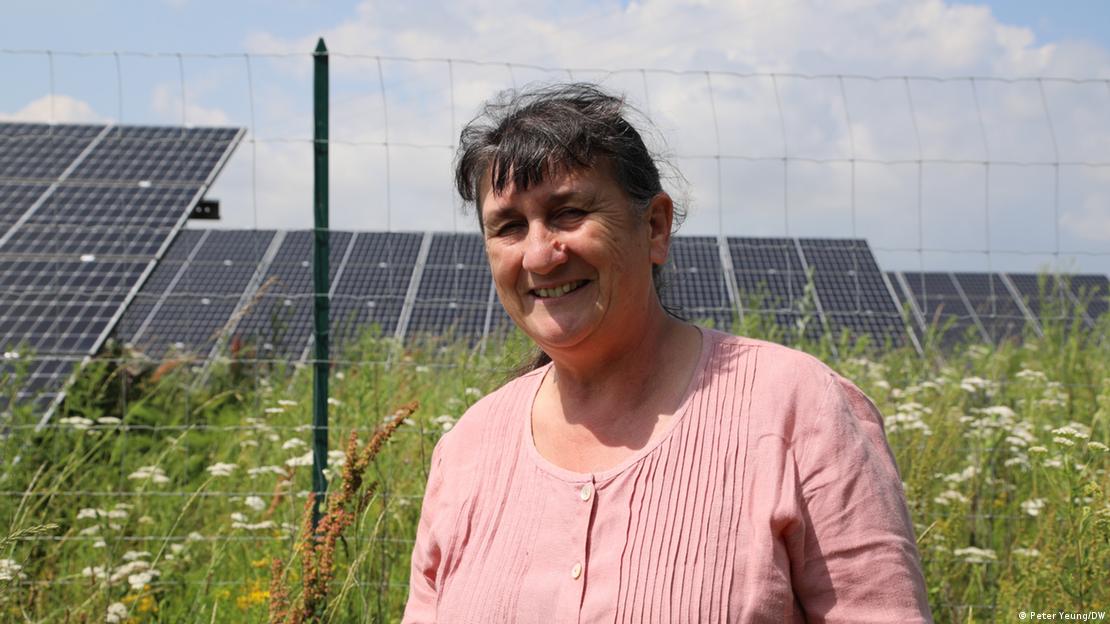
Le Sequestre pays 0.08 euros for kilowatt hours, compared to 0.11 euros for kilowatt hours paying for state power distributor The EDF, which means that in 2022 energy expenditures decreased by nearly 10 percent. And the plans are to double the number of solar panels next year.
It's very easy and there are areas throughout the country where it can become such a thing,” says Poujade. If everyone did so, we would be less dependent on Russian gas and gas from Qatar and Saudi Arabia. The only problem is preparing documents. ”
EU delivers mixed messages with bureaucratic obstacles
In 2018 and 2019, the European Union gave directives for promoting so-called “civic and renewable energy communities,”, but critics say, large expenditures and bureaucratic barriers do not allow the creation of these initiatives. “The road is not easy for small producers,” says Goncalo Pinto Mendes, an analyst at Finland's University of Technology, Lappeenranta University and investigation of the European Commission's project to operate on the transition to green energy, project G RETA (Gren Energy Transition Action.
Enercope, despite success, has not been without difficulties. In 2021, although manufacturers produced enough electricity to cover 108 percent of consumer needs, in time only 80 percent of demand was achieved.
Facing high market prices, Enercop was forced to use a government protocol, known as ARENH, with which competitors are allowed to buy nuclear energy, which is problematic for some people, and bought energy from the expensive EDF. In response, in the fall of 2021, Enercoop temporarily halted the acceptance of new customers when it began to be difficult to supply electricity. But now the co-operativa has become fully operational, and in February, it announced that it will invest an additional $1.5m to build more solar panels and farms that produce energy from the wind, with the aim of converting energy to humans. “We are creating sustainability,” adds Blanc. “and we're building our own supply.” / DW