21 minutes ago
Delawi: Kosovo integrates Serbs to overcome tensions with Washington
Periskopi(3 years ago)
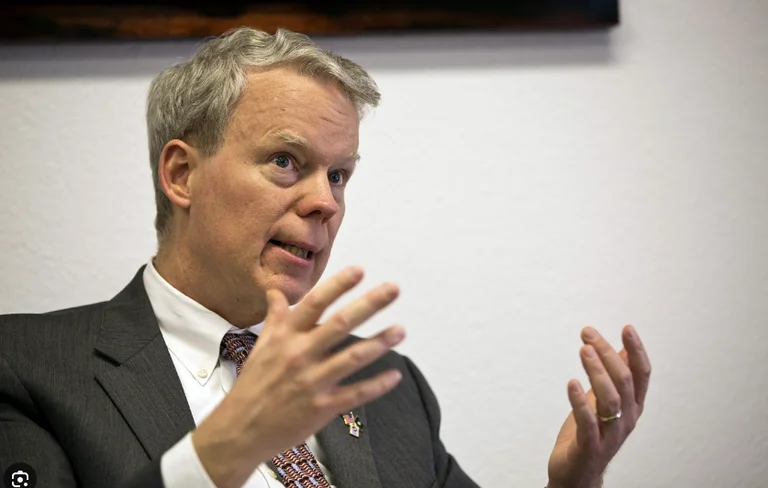
(3 years ago)Former US Ambassador to Kosovo Greg Delawi says relations between the United States and Kosovo are strong, but acknowledges that the government's recent actions in Pristina have put these ties to difficulties. In an interview for Voice of America, Ambassador Delawi also voiced criticism of [the...] approach.
Voice of America: Many voices in Kosovo and abroad as was the case with a letter recently attributed to politicians and Western lawmakers to top diplomats in Washington and the EU are calling for a change of approach from what they consider Washington's mild approach to Serbia at the expense of Kosovo, even under conditions where Belgrade has refused to impose sanctions on Russia. What is your view of such criticism?
Greg Delaway: I don't think it's likely that the connection established since 1990 during the Kosovo war for independence, which is more than government policy, could be broken. There is an extraordinary link between the two countries.
However, we cannot deny that there are currently difficulties in the relationship between the United States and Kosovo.
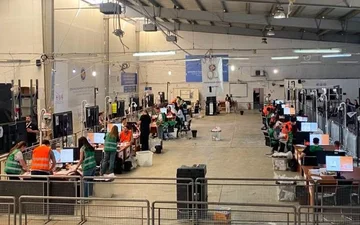
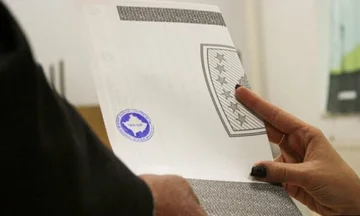
I hope these difficulties are only fleeting and that we will return to our previous relationship in the near future. I think that the most important dispute between Kosovo and the United States is related to the elections for mayors in the four municipalities in the northern part of Kosovo, the Serb majority, for which Kosovo, in some form ignored the United States and the European Union... because the government did not take into account the US counsel not to send them to municipal offices.
In the end, riots occurred in May, which were led by Kosovo Serbs who are under Belgrade's influence. We cannot forget that Kosovo Serbs, especially in the north, are under Belgrade's influence. They are not independent actors. But the government in a way accelerated the course of events by trying to establish elected mayors using force. In subsequent riots, dozens of KFOR peacekeepers were injured.
I think boycotting elections by Kosovo Serbs, protests against their outcome, and hurting these peacekeepers were really conduct that cannot be protected, followed by the arrest of several Kosovo police officers within Kosovo's territory, by the Serbian government. It was extremely provocative.
Without wanting to justify its contribution to violence, I think Kosovo could be more willing to listen to the advice of the West, the United States, the European Union, if it saw that the EU and the US were more seriously responding to the threat the Serbian government poses to Kosovo, to the citizens of Serbia and to the region themselves.
But, at the same time, I think Kosovo would have better relations with the United States, with Europeans, if it would make more efforts to integrate Kosovo Serbs into society and meet its responsibilities to create the association of Serb majority municipalities. Efforts to integrate them have clearly seen decline in the past two years.
Voice of America: According to observers, the relaxed attitude towards Serbia has not brought results. What do you think?
Greg Delaway: Unfortunately, I don't think the United States and Europeans are responding well to weakening democracy in Serbia. Looks like we're offering the wrong incentives. Perhaps this is the result of the focus for the near future on the conflict between Russia and Ukraine. But I don't think it will serve anyone in the long-term future. Increased authorism in Serbia and weakening democracy and freedom of the press pose the greatest threat to the Western Balkans currently.
Clearly, Serbia is ignoring the West in recent years. And apparently, in the West, collectively, we didn't seem to have reacted properly.
And maybe Kosovo considers that if this approach is working for Serbia, maybe it can work for it.
But I am sure that Kosovo would not serve such a strategy. I think Kosovo should commit more to co-operating with its friends, with its friendly countries since the 1990s, which have supported its independence and development.
Voice of America: How can Kosovo benefit from the current situation, from increasing Western diplomatic engagement in the face of geopolitical challenges in Europe, but at the same time Serbia's attitude towards it has not changed?
Greg Delaway: We should not have illusions: Russia's war in Ukraine has changed everything in Europe, and it is more important for the future of Europe and the United States than developments in the Western Balkans.
For at least a year and a half, the Western Balkans have been replaced as European powder barrels from Russia. And as a region, it has to find ways to resolve disputes, behave more Europeanly, if it wants to achieve its goals as an integrated part of Europe, united, in peace, for EU and NATO membership for what they want.
Voice of America: American officials and critics of the Kosovo government's positions have openly indicated that the Kosovo government's lack of flexibility played a role in the difficulty between relations and resulted in the suspension of Kosovo's participation in NATO exercises or the cancellation of visits by senior Kosovo officials to Washington...
Greg Delaway: The Kosovo government has apparently decided that it does not want to continue at the moment with the issue of the integration of Kosovo Serbs, including not only, with the issue of association of Serb majority municipalities. This seems to be the reason for Washington's disappointment and reaction. Co-operation should be mutual. I think that officials in Washington are not looking at proper co-operation by the Kosovo government and from their perspective, they are responding appropriately.
Voice of America: What is the way for policymakers in Kosovo and Washington from this situation?
Greg Delaway: The way to get out of this situation is to get back to what Kosovo wanted to be at the beginning, a multiethnic democracy in the Western Balkans; to find ways to move towards such a future, with a better inclusion of Kosovo Serbs and other minorities in the country.
What has been on hold since 2013 is the association. I think it's important. Kosovo must seize the opportunity and draft its plan for this association and be in line with Kosovo's constitution.
As a 35-year-old diplomat in the field of negotiations, I know that if you have the opportunity to get the other side to work on a plan put forward by you, that's a plus. If the other side compiles the plan, then the starting point is that plan. And if the Kosovo government has not drafted a draft plan for association, then the disadvantage is in place.
It takes better involvement of Serbs, not only with association, but to find out how they feel Kosovo is their state. And tensions must be reduced. Serbs are an integral part of the country, just like other communities.