21 minutes ago
Serious Conditions at QKUK: Clinics Operations at the Last Blood Reserve
Periskopi(3 years ago)
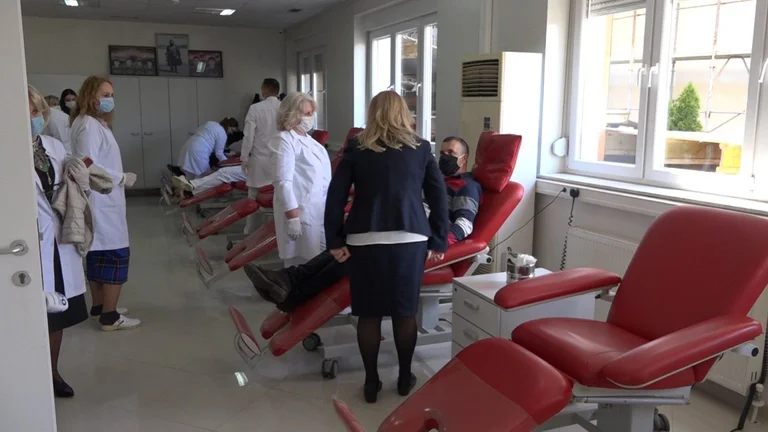
(3 years ago)Despite the great afternoon heat of August 21st, Nezir Gerbeshi waited in front of Pristina's Blood Transfusion Centre to donate blood. The 64-year-old pensioner has donated blood full of 128 times in his lifetime. Many times he has offered himself, but in many cases he has also been invited by health authorities. “Mbi 40 times more [...]
Despite the great afternoon heat of August 21st, Nezir Gerbeshi waited in front of Pristina's Blood Transfusion Centre to donate blood.
The 64-year-old pensioner has donated blood full of 128 times in his lifetime.
Many times he has offered himself, but in many cases he has also been invited by health authorities.
I've been invited by these guys at the mall 40 times, especially for the trumpet. I'm here today because I hear there's a shortage of blood here in transfusion”, he confessed.
That same day, at the Orthopeda Clinic of the University Clinical Centre in Kosovo, REL also talked to Heidi Podvorica, who had just donated blood to a family member.
I was told that I should come here and give you blood because there is no”, said 51-year-old.
Officials from the Kosovo National Centre for Blood Transfusion (QKKTGJ) confirm this lack, saying they are currently operating with the latest “reserts”.
Until the blood type shortages have come after major demands from Kosovo University Clinical Centre clinic clinics, especially from Emergency Clinic”, says Albana Gashi, official for promoting blood donation to the QKKTR.
According to her, the lack of a greater number of blood donors has also contributed to the lack of abundant amounts.
Lacks are often highlighted during the summer months, when citizens are on vacation with potential blood donors, while outdoor activities are more intense.
However, some doctors say that this season is one of the worst.
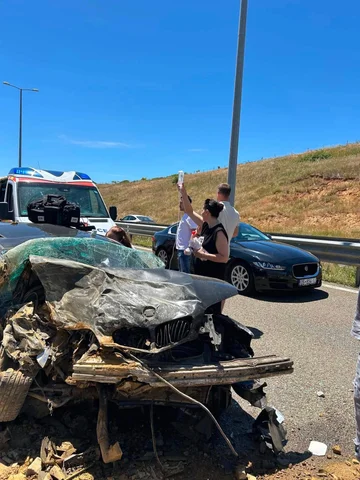
Merita Morina-Bujupi, a doctor at the QKKTG, says that many serious health cases handled at QKUK have been caused by accidents in traffic or gun shooting.
Most of them need blood.
We've had emergencies, which require large doses of blood. A case could start with 2, 3 or 4 doses [and end] with 30 or 40”, says Morina-Bujupi.
The amount of doses ranges between 300 and 400 milliliters.
In the QKKTR, it does not indicate how much doses will stabilize the situation, or how much is needed on average in a year, but they say they constantly organise blood collection activities.
It states that the number of donors is on the rise year after year, but they emphasize that demand is also high.
My blood saved my life”
In ten days, the Sheriff received eight doses of blood.
He's lying in the QKUK's Gastroenterology Clinic, he says his family couldn't donate blood and that the doses he needed had provided him with the hospital.
I took three doses, then three, and so on. I feel better now. The blood I took saved my life... I think so”, says the Sheriff, who comes from the Ferizaj municipality.
Health authorities say the biggest doses of blood are absorbed by the QKUK Emergency Clinic.
According to one report, during the entire month of July through August 21st, 1,213 cases have been handled. Most have needed one or several doses of blood.
How are doses of blood provided?
About 90 percent of the needs of blood patients in Kosovo's public health institutions are met by voluntary blood donors, from the QKKTG respectively, while the rest cover the patients' families.
Donating a dose of blood lasts about 15 minutes. According to doctors, nonfertile men and women can donate blood every three months, while women in child age can donate twice a year.
Besides blood, its specific components, such as the trombone, can be donated.
The World Health Organization recommends that all blood donations be checked for infections before they are used.
Blood transfusion saves life and improves health... Security and adequate blood should be an integral part of the national health care policy and infrastructure of each country”, WHO points out. / REL/