4 minutes ago
Blood and weapons: Russian War Cost in Ukraine
Periskopi(3 years ago)
(3 years ago)Reuters Russia's war in Ukraine has left tens of thousands of people dead, forced millions more to move and have sparked economic shocks worldwide in the 18 months since Moscow started the war on February 24, 2022. Here you can learn more about the impact of war: Death in war has [...]
Russia's war in Ukraine has left tens of thousands of people dead, forced millions more to move, and has sparked economic shocks worldwide, in the 18 months since Moscow began the war, on February 24, 2022.
Here you can learn more about the impact of war:
Death
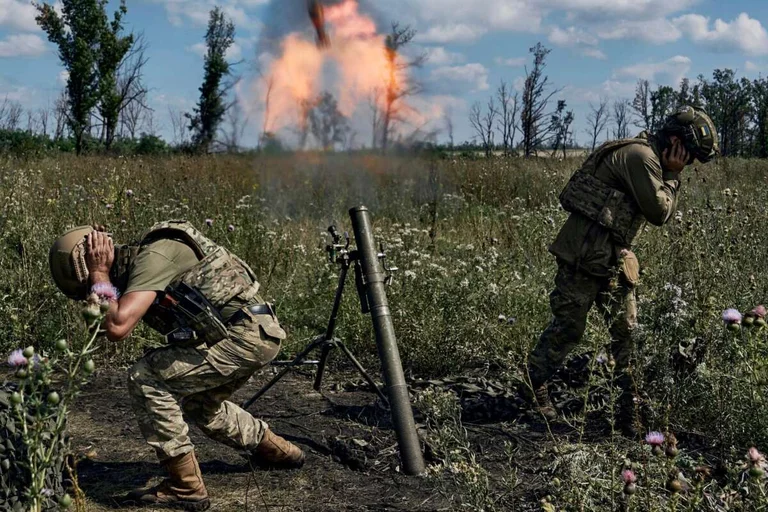
War has caused death at a level not seen in Europe since World War II.
Over 9,000 civilians have been registered as killed and over 16,000 injured by the end of July, according to UN High Commissioner for Human Rights data (OHCHR). According to this institution, real figures of those killed and injured are believed to be much higher.
War has left nearly 500,000 military troops killed or injured on both sides, according to the American daily New York Times.
The newspaper quoted officials from the United States, a state supporting Ukraine, as saying that up to 120,000 Russian troops have been killed, and 170,000 to 180,000 have been wounded. Meanwhile, 70,000 Ukrainian soldiers have been killed, and 100,000 to 120,000 have been wounded.
Russian officials have said US estimates of Russia's losses are very high and propaganda. Russian Defence Minister Sergei Shoigu said on September 21st that 5,937 Russian soldiers had been killed since the start of the war. Since then, there has been no new update on war losses, as something like that in Russia is considered a state secret.
Ukraine has not published information on how many of its soldiers have been killed and has said military losses are state secret, since they influence tactics on battlefields.
The conflict east of Ukraine began in 2014 after the pro-Russian president collapsed during the Majdan Revolution in Ukraine, and then Russia annexed the Crimea, with Russian-backed forces fighting against Ukraine's armed forces.
About 14,000 people were killed there between 2014 and late 2021, according to O data HCHR, including 3,106 civilians.
Reset
Since the start of the war in 2022, millions of Ukrainians have been forced to flee their homes, the UN Agency for Refugees has said. Ukraine has a population of more than 41 million.
According to the UN refugee agency, 17.6 million people in Ukraine need urgent humanitarian support, including over 5 million people who have been displaced abroad because of the war.
According to reports from this agency, there are over 5.9 million Ukrainian refugees throughout Europe.
Since the start of the war, Russia has received 11 percent of Ukraine's territory. This area is equivalent to that of Massachusetts, New Hampsheimer and Connecticut together, Belfer Centre said at Harvard Kennedy School.
If the Crime added, which Russia annexed from Ukraine in 2014, then Russia now controls about 17.5 percent of Ukraine's territory, or 106,000 square miles [106,000 sq km].
After pushing Russian forces in 2022, Ukrainian forces have failed to launch major attacks on Russian forces since Kiev launched the new counteroffensive in early June.
Ukraine has lost large parts of its coastline, its economy has been destroyed, and several cities have been reduced to ruins because of the war.
The Ukrainian economy contracted by 30 percent in 2022, and the International Monetary Fund (FMN) forecasts that it could increase by 1 to 3 percent this year.
It's unclear how much Ukraine has spent on fighting.
Russia
Russia's expenditures on war are state secret, but coincide with a major shock the Russian economy has suffered from the severe sanctions the West imposed on Moscow following the start of the occupation.
The economy challenged earlier expectations of a double contraction in 2022, but the return to prosperity remains far away as the government runs more expenses towards the military.
According to the IMF, the Russian economy this year will grow by 1.5 per cent, following a 2.1 per cent contraction in 2022.
“In the medium-term, the Russian economy will have consequences from the removal of foreign companies, the loss of human capital and its break from global financial markets”, IMF spokeswoman Julie Kozack said last month.
Therefore, we do not expect production in Russia to be 7 percent lower than pre-war” in the medium term.
Russia has doubled its defence spending target for 2023 for more than $100 billion, making up one third of all public expenditures, reported in a government document that Reuters has seen, while war expenses in Ukraine have increased and are putting pressure on Moscow's finances.
As Russia's military spending increases and sanctions are tightening revenues from energy, Moscow faces a battle to keep its budget deficit under control.
Russia has lost a large part of the European gas market, but has managed to continue selling oil to global markets, although the United States, Europe and other powers have limited or interrupted acquisitions. EU fills gas reserves
Russia has been excluded from Western financial markets, and most of its oligarchs have been sanctioned. The state is also struggling to provide certain items, such as microchipates.
CIA Director William Burns, has declared earlier this year that Russian President Vladimir Putin is jeopardising to turn Russia “into an economic colony of China”.
Prices
West invasion and sanctions against Russia have led to major increases in artificial waste prices, wheat, metals and energy, boosting an inflationary wave and a global food crisis.
Russia is the second largest oil exporter in the world, following Saudi Arabia, and the largest exporter of natural gas, wheat, azotic waste and palladium.
After the launch of Ukraine's Russian occupation, international oil prices rose to higher levels, breaking the 2008 record.
Western weapons
Since the invasion, the United States has provided more than $43 billion in security assistance to Ukraine, including antiaircraft systems Stringer, opposing Yavelin, 155 millimeter objects, and equipment to protect against chemical, biological, radiological, and nuclear attacks.
According to the Kiel Institute for World Economics, Ukraine's biggest supporters are the United States, the European Union, Britain, Germany and Japan.
Russia has said weapons supplies from the West are escalating the war. /rel