10 minutes ago
Millions holding youth companies in Kosovo
Periskopi(3 years ago)
(3 years ago)The year 2008 had found Arian Fazliu from Pristina at a crossroads. As a student of construction at the University of Pristina, he had quit his early work in this sector to take up the remaining exams. Even today, though, he still has 12 unfinished exams of a total of 45. This, after one day, [...]
The year 2008 had found Arian Fazliu from Pristina at a crossroads. As a student of construction at the University of Pristina, he had quit his early work in this sector to take up the remaining exams.
Even today, though, he still has 12 unfinished exams of a total of 45. This, after one day, 15 years ago, decided to take a not-so-called route to then-Kosovo: the field of information and communication technology.
At that time, only 20 years of age, Arianian é, who had originally wanted to study the pharmacies he had not found easy to try to find himself in a career.
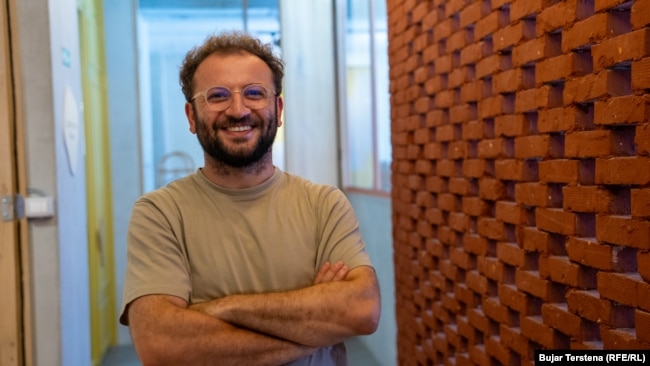
He started working at a information and communication technology company, Wheels, after being recommended by one of his family.
“Pata started from zero. Actually, not from zero, but from minus. I didn't even know what Chrome [internet research] is. I've had to work from 18 hours a day to get to the rest of the”, Ariani recalls.
The work of that time was rewarded in 2013 when he, along with his associate Faton Selesta, formed the software company Box.
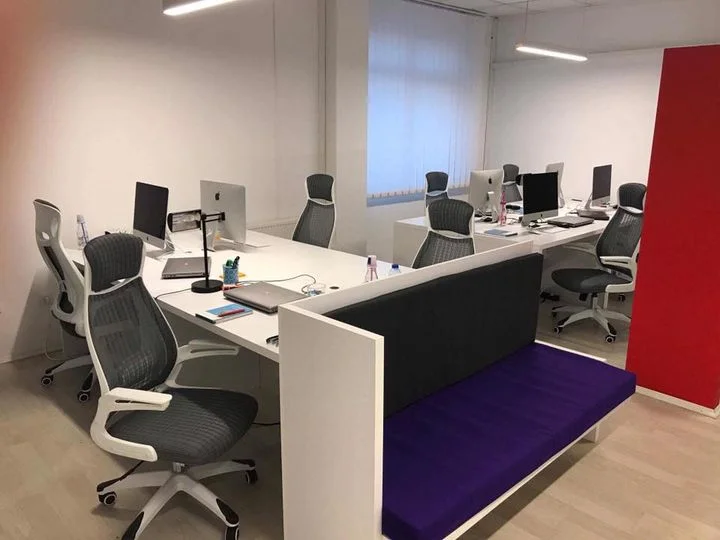
We went from salary to no pay. Then 100 euros a month, 150... depending on how they came in. We've been working on a flat, we've made our own tables, with these gyms [the door]”, says 35-year-old.
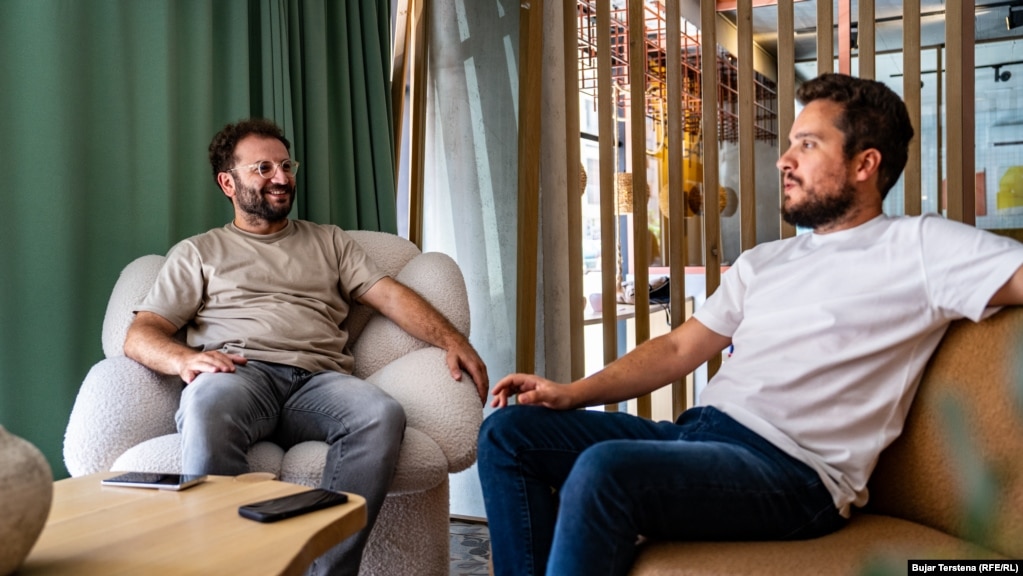
The box "like many other companies in this field in Kosovo last year had significant growth of 159 percent.
The company Box exports software products to the US, Norway, Sweden, Germany, and many other countries. According to a report released this month by the Kosovo Information Technology and Communication Association (STIKK), even though the majority of the sector's companies are local owned, the market in Kosovo represents only 16 percent of the customers of these companies.
But, even though his company has grown conspicuously and has now moved to a new office, Arianini says it still continues to offer jobs for the new students, with the aim of “sharing of knowledge”. His company employs dozens of interns.
We were two [Arianit and Faton] and we shared knowledge with everyone. Then, older ones have shared knowledge with youths. It has become a pyramid of distribution of knowledge, which even exists now”, Arianini says.
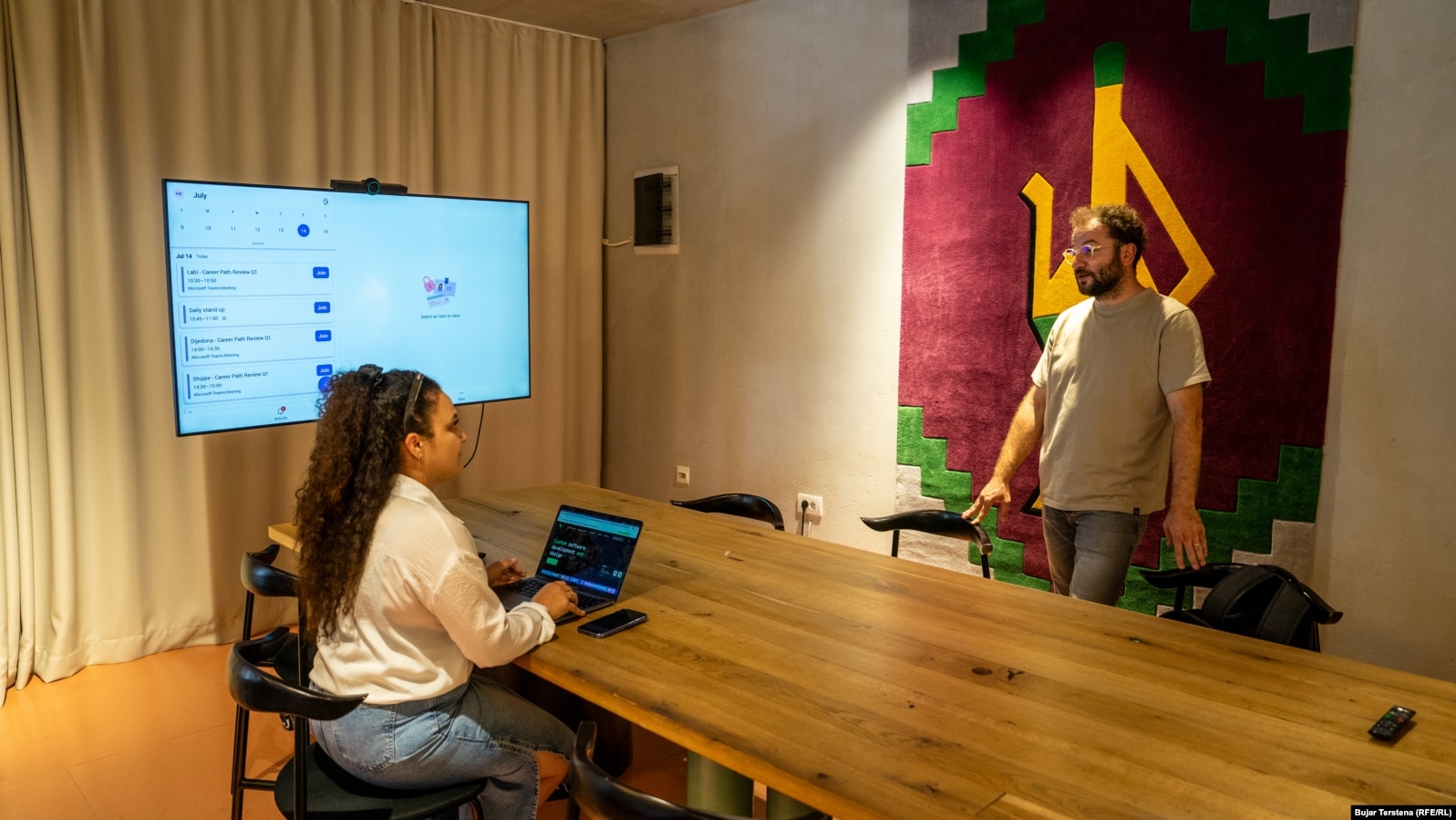
If we turn most young people towards our industry, about 50 percent of graduates, I'm sure that from our industry, [the young] won't go abroad, at least not because of financial causes”, he adds.
According to data from the Kosovo Statistics Agency (ASK), during the year 2021 from Kosovo nearly 43 thousand people have emigrated. A 2020 poll by the Group for Jury and Political Studies (GLPS) shows that over 48 percent of Kosovars wanted to migrate. This percentage has been on growth trend since 2014.
Queen Loja, executive director of GLPS, He said about the REL before. that lack of employment perspective and the difficult socioeconomic situation are the main reasons for forcing Kosovars to migrate.
Fikret Murati, owner of Kosovo's speedex company, which mainly offers services to foreign companies in the trade sector.
I think that if you offer them a safe job and opportunity for the future, development opportunities, it is not difficult [to keep young people in Kosovo]. We, as a private company, must adhere to certain rules”, says Fikretti, whose company employs about 2,000 workers in Kosovo, aged 29.
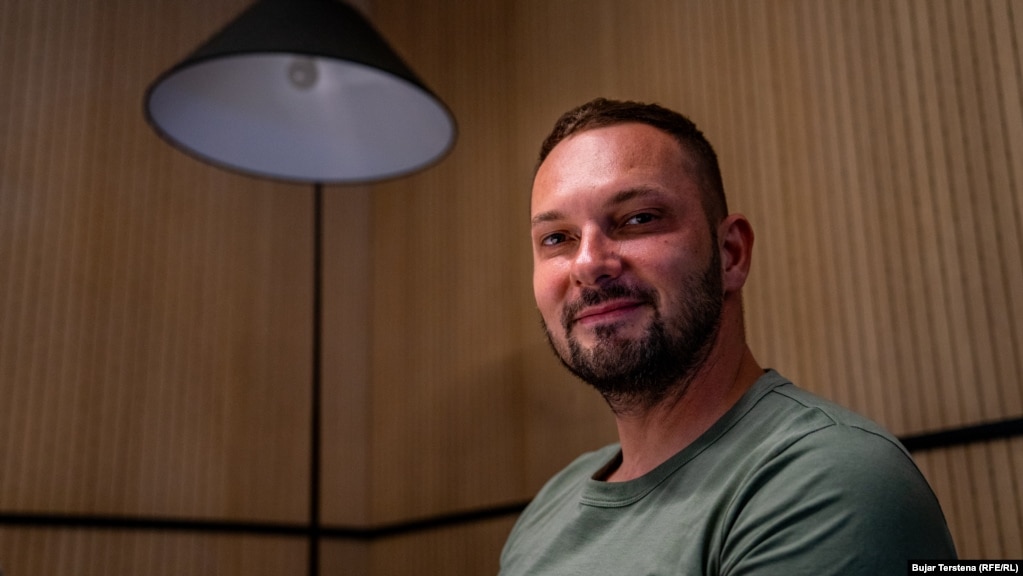
Raised in Switzerland, Fikret now spends half his time in Kosovo. He had first gone after the end of the war in 1999 and later returned with some business ideas. But his dream came true only in 2016, when he opened the Speeex.
His company now offers markedly higher salaries than the average in Kosovo. According to the AKS, the average gross salary for 2022 was 521 euros, while in Speex it is 1,200 euros. Other companies in this sector also offer similar salaries.
The extinguisher has made sure that its workers have even areas where they can find peace. At his company's new building in Pristina, workers have resting spaces, prayer rooms, kitchens.
There will be a ATM in the future so they can meet all their needs inside the building. We constantly ask people what they like about the company and what they don't, and these spaces get a lot of favor”, says Fikret.
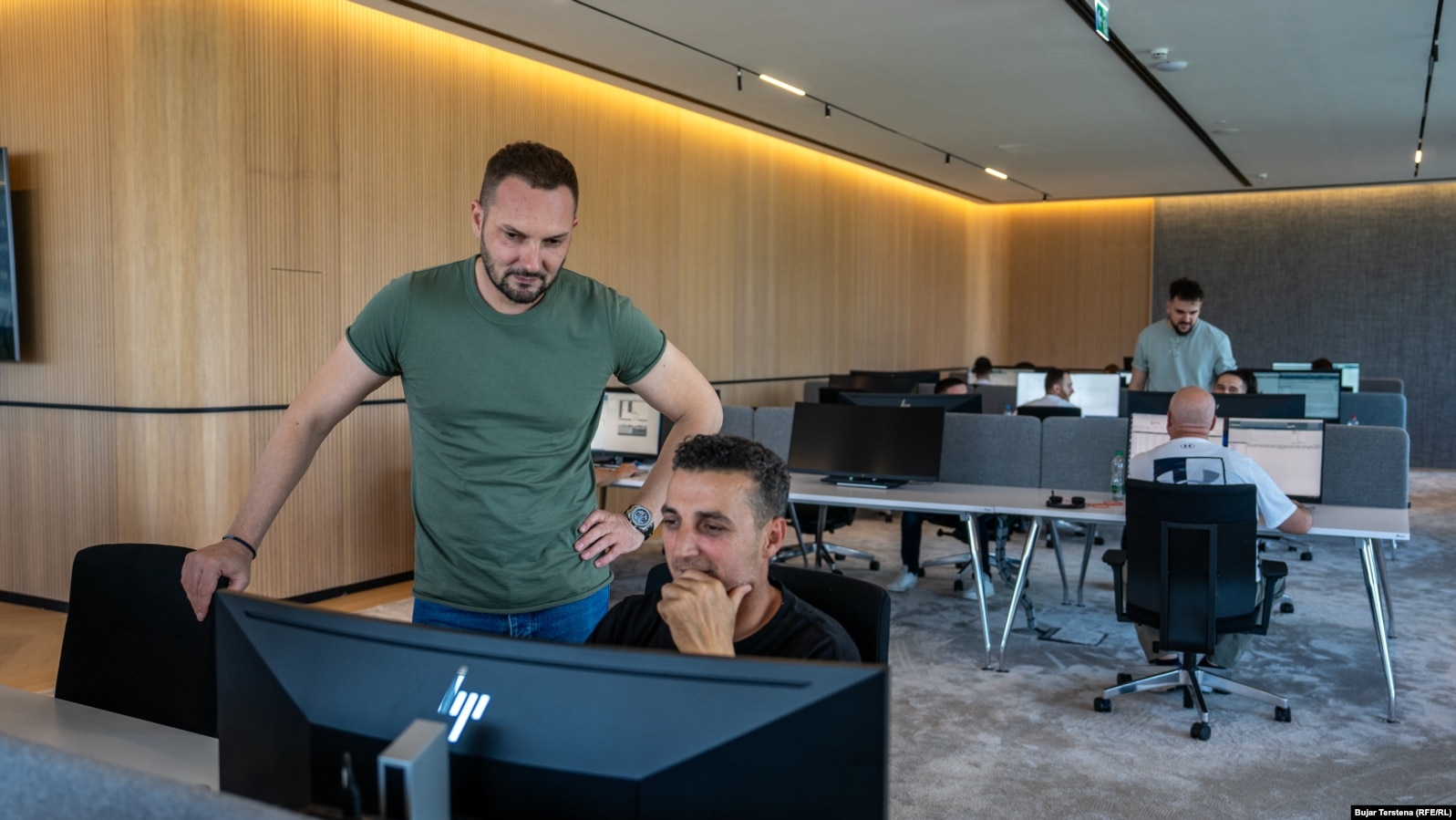
These best working conditions make the field of information and communication technology referred to as “the only sector that has the potential to fight the migration trend”, says Aldo Bajzak, official for public communication in the STIKK.
He says that this sector has the potential to do even more than just keep young people in Kosovo: it can make Kosovo a world-recognised country for providing services in this area.
The “Sector is growing worldwide. But Kosovo has this advantage of young people: 65 percent is under 30 years of age. That means you have potential. Kosovo is highly favoured that there is a new population in the middle of Europe, suffering from the old population”, he says.
Bayzak says that the average population of 35 years of age is an advantage because the sector is dominated by young people worldwide and the computer skills required in this sector are skills that are largely owned by young people.
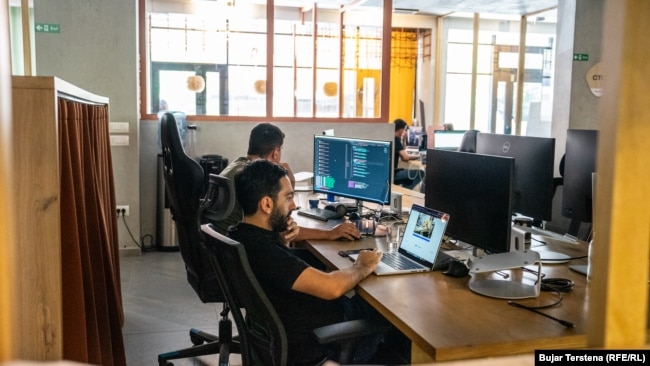
But, Bajzak adds, to exploit this advantage, Kosovo must specialise in one of the fields of information and communication technology, such as artificial intelligence, cyber security, software development, etc.
Arian from the box feels similarly.
I hope and want Kosovo to be a place where, for example, you have artificial intelligence engineers or some other field. In order that when the foreign client arrives, he knows that you are an expert in that field and he doesn't have trouble paying as much as he pays anywhere in the world”, Ariani says.
For Vigan Disha, executive adviser to the Speex Steering Board, Kosovo has already become a world-renowned country for the services of this field.
Kosovo is an attractive destination for these services. We have proven that the combination of [low] costs and [high] quality favours Kosovo on the international market”, he says.
Currently in Kosovo there are 1,950 companies offering information technology and communication services compared to 930 that were before COVID-19 pandemic. The biggest growth in the sector occurred last year, when more than 700 new companies were added. During this period the number of workers in this sector has also increased.