3 minutes ago
lynching campaigns against new Kosovo Serb police officers continue
Periskopi(3 years ago)
(3 years ago)Despite calls from internationals and Kosovo institutions, the lynching campaign against new Serbian police officers who have launched office earlier this week is continuing. Again the photos and names of five other policemen on the Russian social network, the telegram. The picture description also had an answer to the reaction [...]
Despite calls from internationals and Kosovo institutions, the lynching campaign against new Serbian police officers who have launched office earlier this week is continuing.
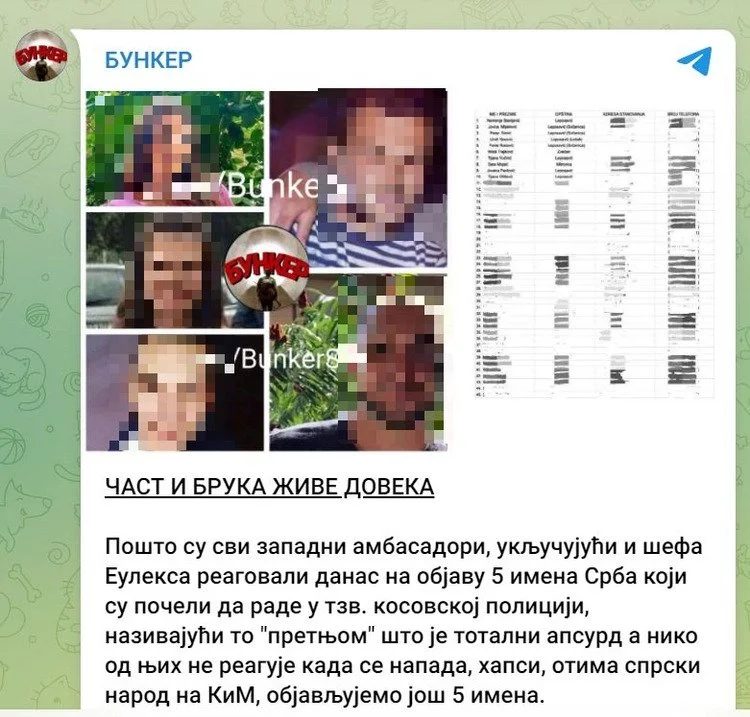
Again the photos and names of five other policemen on the Russian social network, the telegram.
There has also been an international response to this lynching campaign in the picture description.
“Since all Western ambassadors, including the head of EULEX, have reacted today to the publication of the five names of Serbs who have started working in the so-called Kosovo Police, calling it a total absurd threat and none of them react when the Serbian people are attacked, arrested, kidnapped in Kosovo, we are publishing another 5 names of”, the photo description reported.
During Wednesday day, Kosovo President Vjosa Osmani and Prime Minister Albin Kurti have called the lynching campaign to Serb police unacceptable, while international response has been requested.
The US Ambassador Jeffrey Hovenier and Britain's Ambassador Nicholas Abbott have also reacted to this, demanding that such a campaign be halted, suggesting that Kosovo police must have diversity.
The names and photos of five new Serbian police officers have been published Wednesday, until further names have been announced.
EULEX chief Giovanni Pietro Barbano has expressed concern over reports that against young police officers from the Serb community has launched a lynching campaign by Serbian social network users.
He has called any threat or intimidation that is made unacceptable.
At the beginning of this week, 72 new police officers from non-US communities began working. In the Kosovo Police, 45 of them are from the Serb community, 16 from the Bosniak community, 8 from the Roma, Ashkali and Egyptian community, as well as three Turks.