24 minutes ago
London Conference 110 Years From Split of Albanian Lands
Periskopi(3 years ago)
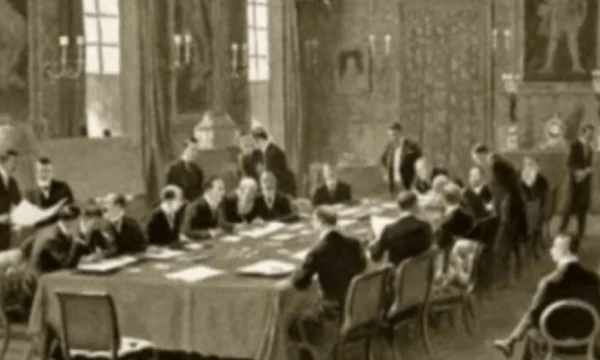
(3 years ago)110 years ago, the London Conference work was completed, in which the Albanian land's halves and its fate were established. The Ambassador Conference has started operating in December 1912, continuing until July 29th 1913. It may have been determining Albania's future on the country's independence, but [...]
The Ambassador Conference has started operating in December 1912, continuing until July 29th 1913.
It may have been determining Albania's future on the country's independence, but as it is known by that conference, Albania has come out halved at its borders.
The conference is dictated by the outbreak of the first Balkan War. The great powers of Europe, the representative of the Ottoman Empire and representatives of the Balkan powers, except Albania (unknown) and Greece (which had not signed the ceasefire).
From this conference has come the Treaty of London, on the division of territories that have emerged outside the Ottoman Empire by great powers and their allies. This treaty has remained secret until the Summer Conference (1918).
All major powers have presented their version of Albania's map. The most favourable map for Albanians was the one proposed by Austria-Hungary.
After many discussions, on July 29, 1913, ambassadors have made a formal decision to recognise Albania's Principate as sovereign state independent of the Ottoman Empire, breaking it up once again and taking two-thirds of the Albanian lands.
Below are the map of the Albanian government's proposal, the proposal of France, Russia and the established Balkan League (Bulgaria, Greece, Serbia and Montenegro), as well as the decision made by the ambassadors' conference.
The map with Vlora's interim government proposals for the map of Albania, proposals of France, Russia and the Balkan League (Serbia, Bulgaria and Greece), as well as the current proposed borders and approved by the London Conference (this territory is now called Albania). / KP