10 minutes ago
Kosovo isn't expected this year to make ends meet.
Periskopi(3 years ago)
(3 years ago)In some Kosovo countries, the grain harvest campaign has begun, but the country is also not expected to secure the engine bread. Despite the dedicated labor of farmers in their fields, the cold spring has reduced the expectations of abundant wheat production. About 40 percent wheat productivity is expected to be [...]
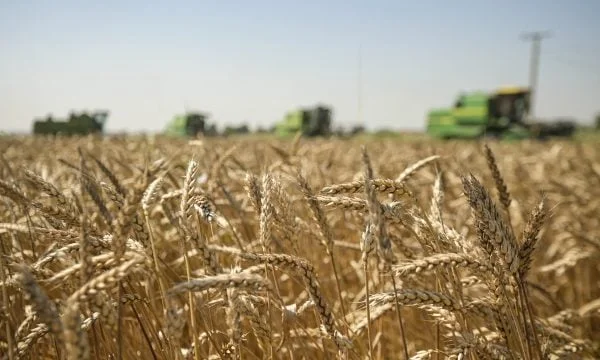
In some Kosovo countries, the grain harvest campaign has begun, but the country is also not expected to secure the engine bread. Despite the dedicated labor of farmers in their fields, the cold spring has reduced the expectations of abundant wheat production.
About 40 percent of wheat productivity is expected to be lower, resulting in inadequate weather conditions. For that, it is considered that even in this year, Kosovo will be dependent on wheat import.
On the other hand, many soils are becoming wild, and institutions are being criticized. Farmers are being attracted to productivity, since they have no economic opportunity to cope with losses.
Agriculture Professor Imer Rusinovac says that this year there is an increase trend of wheat surfaces, but according to him, production will not be as planned.
Few municipalities in the country have started harvesting, even as their season has begun. Even in what the harvest campaign has launched, expectations of wheat productivity are not satisfying.
Rusinovac considers that the import of wheat is high and unwarranted because of the opportunities Kosovo climate offers. For this, he stresses the necessity of taking measures on the part of the state.
Russia wants institutions to support this sector and feel the hand of the state.
The same is said by the chairman of the Agricultural Union Federation, Tahir Tahiri, who adds that productivity is expected to be very low this year.
It also singles out the delays in implementing subsidies from the direct payment programme.
Kosova Prees sent questions to the Ministry of Agriculture about the preparation for harvesting, wheat-planted areas and how much Kosovo's demands are expected to be met this year with wheat, but the same did not return.
However, a day earlier, Prime Minister Albin Kurti, after attending the start of the harvesting campaign in the village of Suhodol, said that close to 67 thousand hectares were planted with wheat this year, or 32% more than years.
“474 euros per hectare is support of the Ministry of Agriculture or growth of 216% compared to past governments: 150 euros per area, 150 euros per fertilizer, 120 euros for productivity (4 per hectare) and 54 euros for derivatives (rejection of the excise for oil)”, Kurti said.