 10 minutes ago
Extension north “halfway”
Periskopi(3 years ago)
(3 years ago)Steps for the suspension of the situation in northern Kosovo are those that Pristina and Belgrade's top negotiators should discuss at a meeting in Brussels on 19 July. The European Union has confirmed that both Free Europe Radio and the meeting, and the participation of both chief negotiators, [...]
The European Union has confirmed both free Europe Radio and the meeting, and the participation of both chief negotiators, Besnik Bislim from Kosovo and Petar Petkoviq from Serbia.
On Monday, until some Western Balkan leaders have met in Tirana with EU Enlargement Commissioner Oliver Warheyl, Kosovo Prime Minister Albin Kurti, has been on the Greek island of Crete for a conference on the Western Balkans.
There, he met with the EU envoy for Kosovo-Serbia dialogue Miroslav Lajcak, while in his Twitter account he wrote that “moit has been warmer than their” conversation.
Kurti's stance on the northern issue of Kosovo and the establishment of the Association of Serb majority municipalities has distanced him from his European partners, but his government reiterates that “Kosovo will fulfil what” has been hired and that “will continue to be constructive at the next meeting within dialogue”.
So it says in response that Radio Free Europe has received from the Kosovo Prime Minister's Office on Monday.
What happened earlier?
On July 10th, Lajcak and Kosovo's chief negotiator in dialogue with Serbia, Besnik Bislimi, have confirmed that at a meeting in Bratislava, they have reached agreement on extending the situation to the north.
A day later, concrete steps have also been presented, envisioning the withdrawal of 25 per cent of Kosovo Police from and around municipal buildings in the north, organising extraordinary local elections at the end of the summer, and returning to dialogue on normalising relations between Kosovo and Serbia.
From the Kosovo prime minister's cabinet, they say it is now up to Serbia to express its position on the issue.
“Anyway, we believe that [Belgrade] should stop its destructive approach and the fear campaign of Kosovo Serbs”, it says in response.
So far, official Belgrade has not stated clearly whether this concession agreement is acceptable to it, while Serbia's president, Aleksandar Vuciq, has said it is about a “malpractice” of Western countries.
What has been done so far, and what are the next steps?
Kosovo Police Deputy Director for the Northern Region Veton Elshani has confirmed to Radio Free Europe that last week, 25 per cent of the Kosovo Police has been reduced by and around municipal buildings in Zvecan, Leposaviq and Zubin Potok.
Police have been present at municipal facilities since the end of May, when Albanian mayors have entered offices, despite objections from the local Serb population.
Kurti has said on July 12th that 25 percent of police officers are not withdrawing from the north but only from and around municipal buildings and that they will be located in other locations.
Future steps for extending the situation must be meeting within dialogue and organising new elections.
However, for elections to succeed, participation by Kosovo Serbs is necessary. They have boycotted the recent elections in April, at the invitation of the largest party of Kosovo Serbs -- the Serbian List.
This party, which has Belgrade's support so far, has not been declared for the agreement to enforce the situation, nor for participation in the elections.
Free Europe Radio Addressed and the EU with the question of whether Serbia is expected to take any steps to intensify the situation, but until the publication of this article, it has not received answers.
The same questions the Office for Kosovo has not returned to the Government of Serbia.
Is there an election suspension?
International relations professor at Pristina University, Africa Hoti, estimates the question is not whether Kosovo and Serbia will take steps towards enlargement, but when they will do so.
He believes Kurti and Vuciq, with their procrastination, “buy time”, up to “the clarification of the geopolitical situation, due to the war in Ukraine”.
However, Hoti adds, extending the situation in the north has no alternative, and now the main step is to ensure Serb participation in early local elections.
There will be no elections if there is no guarantee from the international community that Serbs will participate. I believe that this time there will be better organisation and they will ensure their participation”, says Hoti for Radio Free Europe.
Why is the political will to intensify the situation controversial?
Dusan Janjic, from the Belgrade Forum for Ethnic Relations, says the practice has shown that, so far, solutions to various crises have been found under dialogue at the technical level, but that, according to him, the two leaders' political will for implementing those solutions has been lacking.
The dialogue on normalising high-level political relations currently leads Kosovo Prime Minister Albin Kurti, and Serbia's president, Aleksandar Vuciq.
The key to the problem is the security and institutional vacuum, which was created when representatives of the Serb community have left Kosovo institutions. Failure to act in this direction speaks of the inability to convince both sides of a” deal, Janjic says.
Serbs have left Kosovo institutions in the north in early November of last year, in sign of opposition to Prime Minister Kurti's decision to reregister cars with license plates issued by Serbia in Kosovo.
Since then, mediators of Western countries have mainly dealt with the overcoming crises.
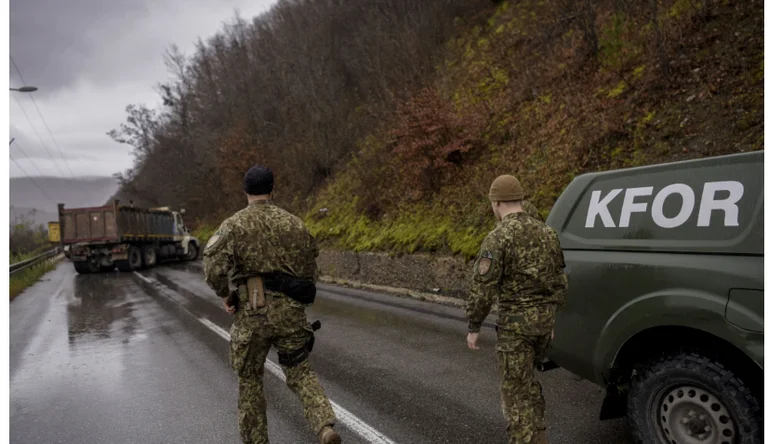
The last one, which erupted in late May, has escalated into violence, as Serb protesters have clashed with representatives of the NATO mission in Kosovo, KFOR.












