26 minutes ago
Escobar for Balkans: There are countries with popular leadership and NATO member states that have made progress
Periskopi(3 years ago)
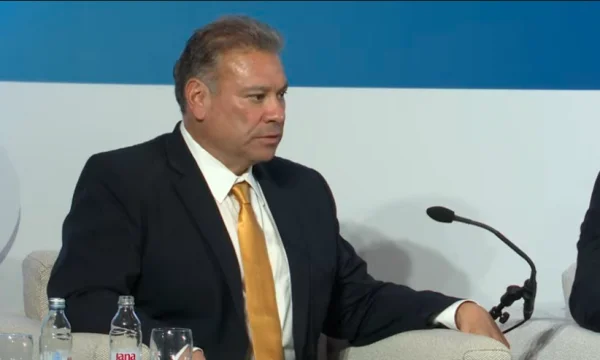
(3 years ago)US Emisari for the Western Balkans, Gabriel Escobar, at a forum in Dubrovnik has talked about the Western Balkans region and American policy engagement in support of the European Union enlargement process and the establishment of peace in the region. Escobar has said US policy has been consistent since the 1990s in terms of [...]
US Emisari for the Western Balkans, Gabriel Escobar, at a forum in Dubrovnik has talked about the Western Balkans region and American policy engagement in support of the European Union enlargement process and the establishment of peace in the region.
Escobar has said that US policy has been consistent since the 1990s in terms of the region and says he hopes very much it will remain the same.
Our policy in the Balkans has remained consistent since the 1990s and I expect it to remain consistent”, Escobar has said.
It further has moons that American policy in the Balkans relies on three pillars, and one of them is integration into the European Union. Even Escobar has expressed incompatibility with Kosovo Foreign Minister Donika Grovall's statements, saying that everything possible that has happened in the Balkans in the last generation is thanks to US-EU co-operation.
The American Emissar has added further that any country that has joined the European Union has become more stable and democratic.
Our “policy in the Balkans relies on three pillars, one is EU integration. And I'm sorry that I disagree with my colleague from Kosovo, but everything that has happened in the Balkans in the last generation is a combination of US and EU co-operation. Integration is the highest aspirin for the region. They must be part of the club. Any country joining the EU has become more stable democratic. While they may argue that the EU has failed, but enlargement is one of the largest possible developments in our genome”, Escobar said, Express reports.
He has already mentioned the security aspect, saying that commitment NATO is vital to security in the Balkans and is also the fundamental element of security within Kosovo.
<x0) NATO in the Balkans is vital. And it continues to be in the fundamental element of security even within Kosovo”, Escobar said.
As a third column, Escobar also mentioned the enlargement process. He says that when he took office two years ago, he had thought that the region's economic capacities would make it easier to solve political problems, however, says unfortunately only half of this story is true.
Escobar has said the region is divided into two Thracians. In one of the transition states that are in NATO, that are stable and that are secure in terms of integration, and in the other, states that consume the attention and resources of most of the region and that are stuck in overcoming their challenges.
When I started this job 2 years ago I had expectations that extraordinary economic opportunities would help us solve political issues. Unfortunately only half of it is true. The region is unfortunately made of two Thracians. A tradition is those who are in NATO, who are more stable and contribute to the creation stability and are secure towards European integration. And the other tradition is those who consume the attention and resources of most of the region until they're stuck with their own difficulties”, Escobar said.
Escobar away as it spoke of this division of the countries of the region, has said the fundamental difference is that the countries that are in NATO and have had progress have managed to overcome the challenges of ethnic rivalry.
Meanwhile, it says there are states that continue to have leaders who believe that popularism, nationalism and ethnic rivalry are the way ahead. Escobar has said that such a thing is considered the most challenging.
The key change is that the countries that are in NATO and that have made progress are those who have managed to overcome the challenges of ethnic rivalry. And those who continue to have leadership who believe that popularism, nationalism and ethnic rivalry are in the way ahead, we see them as the most challenging. Our hope is that we can use the expansion of the EU, dialogue and American engagement to help these three countries move and return to the road they belong to, which is full compliance with the EU and the Transatlantic Community, and with their neighbours doing far better --”, the American Emissar said.