14 minutes ago
Bruce Lee: The Heritage of Sports and Art Legends
Periskopi(3 years ago)
(3 years ago)Chinese-American artist and film star Bruce Lee died 50 years ago. His legacy and philosophy in sports and art remain current. <x) The most famous quote by kung fu legend, Bruce Lee, is not just advice for aspiring martial sports artists than [...]
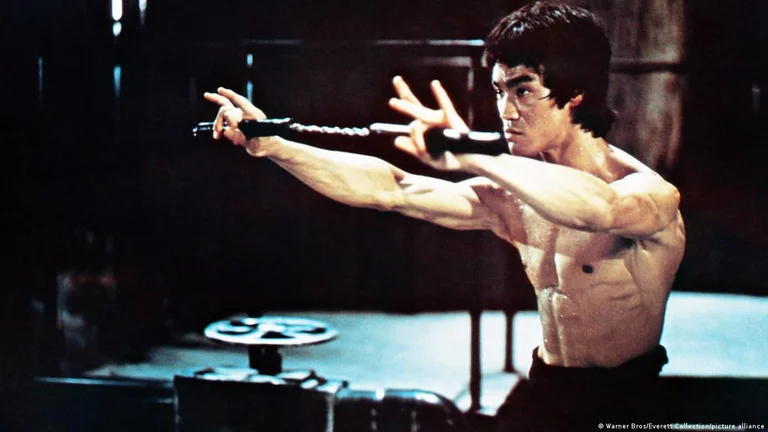
Chinese-American artist and film star Bruce Lee died 50 years ago. His legacy and philosophy in sports and art remain current.
<x) The most famous quote by kung fu legend, Bruce Lee, is not just advice to aspiring martial sports artists on how to master the opponent. It also stands for a philosophical view of the world. And it still matters.
The book of Bruce Lee <x) This aspect of the life of the film star is greatly lost when someone reflects on it half a century after his premature death.
Dragon Show
Bruce Lee was born as Lee Jun-Fan in San Francisco in 1940 by Grace Ho and Lee Ho-Choun, a famous Chinese opera singer and movie actor. The future kung fu sport artist spent most of his childhood in Hong Kong, where as a child, he played in some movie as an actor. But it soon became clear that his interests were not limited to acting. As a teenager, he started boxing and dancing. He was trained in Wing chun, a Chinese martial art that probably originated in the 19th century.
At the age of 18, he moved to the United States to study. Here he also learned martial arts and developed his style of these arts, Jeet Kune Do. In a literal translation, this means: “The way you pick up your fist”. The concept of self-defense is based on the greater efficiency possible in combat and combines elements from different classical styles.
At the same time, Bruce Lee appeared on American TV shows and movies, mainly in small roles related to martial arts. Only when he returned to Hong Kong did he take his first role in Golden Harvey Studios. He was at the height of his world fame when he died suddenly of a stroke on July 20, 1972, with only 32. The last film released during his lifetime was “Way of the Dragon” (“Dragon Street”) in 1972, while the film “Enter the Dragon” was completed after his death in 1973. Both of these films became Hollywood hits.
Jeet Kune Do special sports philosopher
While descendants have determined the legacy of Lee primarily in terms of his extraordinary physical ability and combat technique, the philosophical teachings he developed in his short life have received less attention. But his martial art style Jeet Kune Do is the synthesis of these two parts of his life.
Yeet Kuni's “Technics and philosophies can be applied both in real combat and in difficult life situations. Made up of applied physical techniques and philosophy, Yet Kune Do require that the individual be trained in the most sophisticated state of the being,” says on the Bruce Lee Foundation website. Awareness about someone's body and making peace with someone in the world is very important for Bruce Lee's work and life.
Also, his advice “becomes water, my friend” has been quoted many times over the years, and it relates to this philosophy of indiscretion and self-awareness. Like water flowing into a cup and changing shape, Lee recommended adaptability by remaining faithful to its core.
Lee cleared the way for Asian actors in the United States
Bruce Lee's legacy includes opening the door to Asian actors in Hollywood. Because he was the first Aziato-American star in Hollywood to play a leading role in a big international movie. And despite his early death, he managed to pave the way for future generations. Today, his daughter cares for Shannon Lee. She regularly gives interviews and presents an audio episode for her father. Simple title: “Bruce Lee Podcast”
As a read philosopher and thinker, he deserves more attention in retrospect: on the 50th anniversary of the death of the great master (July 2023), also a Jubilar edition of his German book, which includes parts of his private journals. "In essence, I've always been a combat artist by profession, and I'm an actor”," he stressed just before his death, “but, above all, I hope to realise myself on my way as a life artist. ”