15 minutes ago
Why did the Open Balkans end up, and what did it produce?
Periskopi(3 years ago)
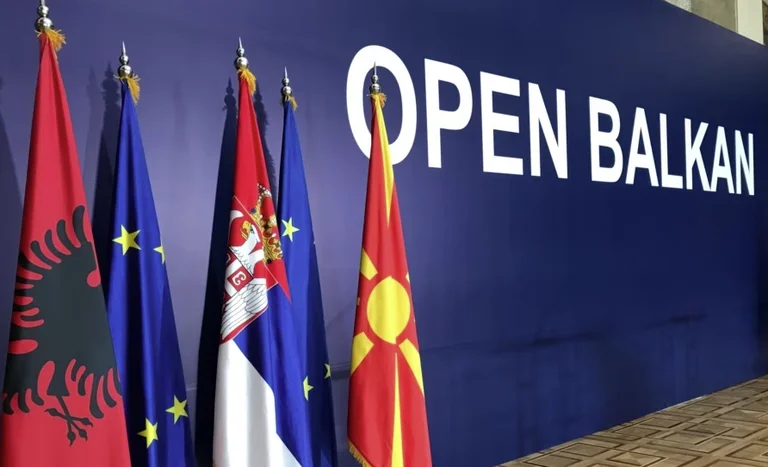
(3 years ago)With opposition it began, and it ended. After Albania's prime minister, Edi Rama, for the conclusion of the Balkans, power and opposition in Albania, but also former diplomats, have different positions for achievements and for the reasons for closing the regional initiative, where Serbia and Northern Macedonia are also part of Albania. About power, [...]
After Albania's prime minister, Edi Rama, for the conclusion of the Balkans, power and opposition in Albania, but also former diplomats, have different positions for achievements and for the reasons for closing the regional initiative, where Serbia and Northern Macedonia are also part of Albania.
For power, the initiative achieved the goal of why it was created as an impetus for the Berlin Process, meanwhile, for the opposition, there was no achievement, but it caused only damage in relations with Kosovo and served Serbia.
The initiative, originally called Mini-Sengen, was launched on October 10th 2019 in Novi Sad of Serbia, and was signed by Serbia's president, Aleksandar Vuciq, Albania's prime minister, Edi Rama, and then Northern Macedonia Prime Minister Zoran Zaev.
On July 29, 2021, she was baptized under the name Open Balkans. The initiative was rejected by the opposition in Albania, and rejected by Kosovo, Montenegro and Bosnia and Herzegovina.
Kosovo Prime Minister Albin Kurti had said earlier that the “Open Balkans” more like a “Balkani open to effects from the East” than a initiative for common regional market.
The Open Balkans, Overlaps or Push of the Berlin Process?
Albanian Prime Minister Rama declared the closure of the Open Balkans, an initiative that opened strong debates in Albania, but also clashes in relations with Kosovo. He, on July 1st, told Euronews Albania, that this initiative was born to further the Berlin Process, and, according to him, this mission was carried out.
Regarding this statement by Rama, Serbia's president, Aleksandar Vuciq, has said that “cannot believe he [Rama] has said such a thing”.
Meanwhile, there has been no reaction to Rama's statement in Northern Macedonia.
The Berlin Process
The Berlin Process was introduced in 2014 at the initiative of former German cancerales Angela Merkel, with the goal of connecting and integrating Western Balkan countries before joining the European Union.
The Berlin Process serves as a platform for high-level co-operation between representatives of the so-called Sixth of the Western Balkans, which consists of Albania, Bosnia and Herzegovina, Montenegro, Kosovo, Northern Macedonia and Serbia. The process includes EU institutions, international financial institutions and civil society in the region.
The November summit in Berlin also represents the revival of the process since Chancellor Olaf Scholz heads the Government in Berlin. According to the announcement, the upcoming summit will be organised in the Albanian capital, Tirana.
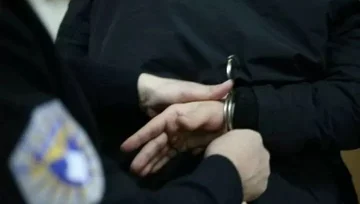
The conclusion of the Open Balkans, Rama had warned him since June 23rd, when at a news conference, “that the integration of relations with Serbia, due to the arrest of three Kosovo police officers, stated.
Rama said he would not meet and would not talk to Serbia's president, Vuciq, about anything but the issue, which further strained relations between Kosovo and Serbia. Police officers, meanwhile, were released on June 26th.
MPs from Albania's Parliament, former ministers and ambassadors, differ on the open Balkans, why it left and what was achieved.
For Socialist Party deputy, formerly Deputy Foreign Minister Etjen Xhafaj, the initiative was a level parallel to that of the Berlin Process, where countries in the region were aiming at economic and social integration, preparing for European integration.
“Since the European Union's list of priorities was beginning to change, leaving a little bit of focus for the region and for the region, in terms of some broader priorities, such as managing the immigrant crisis, hence the Western Balkan countries saw the way to change the status quo, they saw the possibility of having an alternative way of having a faster economic integration. It was a push for the Berlin Process”, Xhafaj tells Radio Free Europe.
Otherwise, Democratic Party MP Kreshnik Colak sees the initiative. According to the former Albanian diplomat, the initiative only aimed at ensuring Serbia's leadership in the Balkans.
At its founding, in Novi Sad, Vuciq referred to the phrase "Balcanan Balkans." This is Serbia's strategy to turn this region into a closed space between East and West, that's not the new phrase. Russian ambassadors, centuries ago, used that word when they divided the Balkans and when they broke up Albanian lands. The initiative has been aimed at securing Serbia's leadership in the Balkans, but it has also been a kind of shield to see the Balkans as a bunker, because a Balkans without the presence of the West is completely controlled by the Russians and from the East”, Colak says of REL.
Did the Open Balkans Have Success?
Several agreements were signed during meetings within the Balkans, among the three participating countries Albania, Serbia and Northern Macedonia.
For power in Albania, the achievements were great, while for the opposition the initiative achieved nothing more than giving Serbia a dominant role in the Balkans, and, according to her, restored the image of Vuciqi and Serbia in the international arena.
“I base major achievements is economic co-operation, free movement of people at the border, liberalisation of trade exchanges, recognition of professional licenses, or, to some extent, of diplomas, the approach of the Western Balkans market. Even those who were members of this initiative, even those who were not, are aware that the size of our markets is small to attract large investments”, says Etjen Xhafaj.
For the Democrat MP, Colak, the initiative marks “one of the tops of Serbian diplomacy success”.
The Open Balkans “Balkan was a well-planned attempt to restore Serbia's hegemon role, its leadership politically, economic and militaryally. The initiative reached a high level when it managed to enter the Washington Agreement, in the format of Mini-Shengen at the time, and Kosovo was forced to accept it from the Serbian offensive. Thus, Serbia, from the country that caused four genocide wars in the Balkans, was designed as a country inspiring peace and co-operation in Balkan space”, says Colak.
Socialist Xhafaj says the outcome of the Open Balkans came as a result of recent developments in northern Kosovo.
The “The advancements made withdrew ahead of the crisis in [Kosovo's] north. The worst incident was the arrest of three policemen within Kosovo's territory, which is a violation of integrity and is a reminder of the 99 conflict. And therefore Rama made the decision to have a platform where we can no longer be just the six countries discussing with each other, judging that at this moment there is a need for an arbitrator engaged in a joint project, the focus will be on the Berlin process”, Xhafaj says.
Tensions in northern Kosovo began in late May, when Serbs launched protests against the new Albanian mayors of Zvecan, Leposaviqi and Zubin Potok. Serbs are demanding the withdrawal of Kosovo Police chairmen and special units. From the international community, Kosovo is being urged to withdraw new police and mayors from municipal buildings and announce new elections. Meanwhile, Serbia is being asked to persuade Serbs to participate, unconditionally, in the new elections.
For Colak, the outcome of this initiative is good news for Albanians.
There was no more survival option. It's good news, but it's retarded. It produced only a deep division into the domestic foreign policy approach, as the opposition has rejected it since its beginning. It also caused a major conflict between Tirana and Pristina, so the closure creates new opportunities to regain an internal cohesion, at least in terms of sensitive foreign policy themes, but also in reports with Kosovo”, he tells Free Europe Radio.
Colak adds that the European Union and the United States of America have always sought inclusion.
Albania's former Foreign Minister, Pascal Milo, sees as the reason to complete this initiative the fact that in October Tirana welcomes the Berlin Process summit.
“Albania is hosting the Berlin Process summit in October of this year, Europe's heads of state and government will come, and it cannot be the initiative and a regional initiative, creating overlap with the Berlin Process. That is why Prime Minister Rama announced, without even the knowledge of Serbian President Vuciq, that the Open Balkans mission was shut down. Another recent reason for this initiative is the fact that relations between Kosovo and Serbia did not improve, which was one of the goals of this initiative but got worse. Tensions in northern Kosovo dealt a blow to the” initiative, Milo points out for Radio Free Europe.
Meanwhile, Albania's former ambassador to the United Nations Organisation, Agim Nesto, says the initiative was named by Rama as the project of the century, but ended with nothing.
It was a ridiculous vision of Rama, who wanted to do something but did nothing. Vuchchi used it. And, in a moment of crisis, when he didn't give even the minimum, the release of the three [Kosovo] police officers. This credit was given to [the prime minister of Hungary, Viktor] Orban, given his weight in foreign policy '% Rama gave up. I think it was an adventure of consequences for Albania's policy, for the credibility of our country”, says Nesho for the REL.
Albania expects this year for the first time a summit of the Berlin Process, where European Union leaders will participate.
On July 6th and 7th, Rama is expected to hold a Balkan tour under this process. He is expected to visit Pristina, Belgrade, Skopje, Sarajevo and Podgorica. / REL