8 minutes ago
Ukraine's Herson faces ecological subx0 disaster”
Periskopi(3 years ago)
(3 years ago)A few hours after the Nova Kahovka dam, located on the top of the Dnjeper River, was blown up on June 6th, the cemetery in the village of Odrakamyanka in the region of Herson was flooded. Three days later, when Mykhailo Boyarskiy, a farmer from the nearby village of Kozachke, went to the cemetery of relatives, he saw crosses [...]
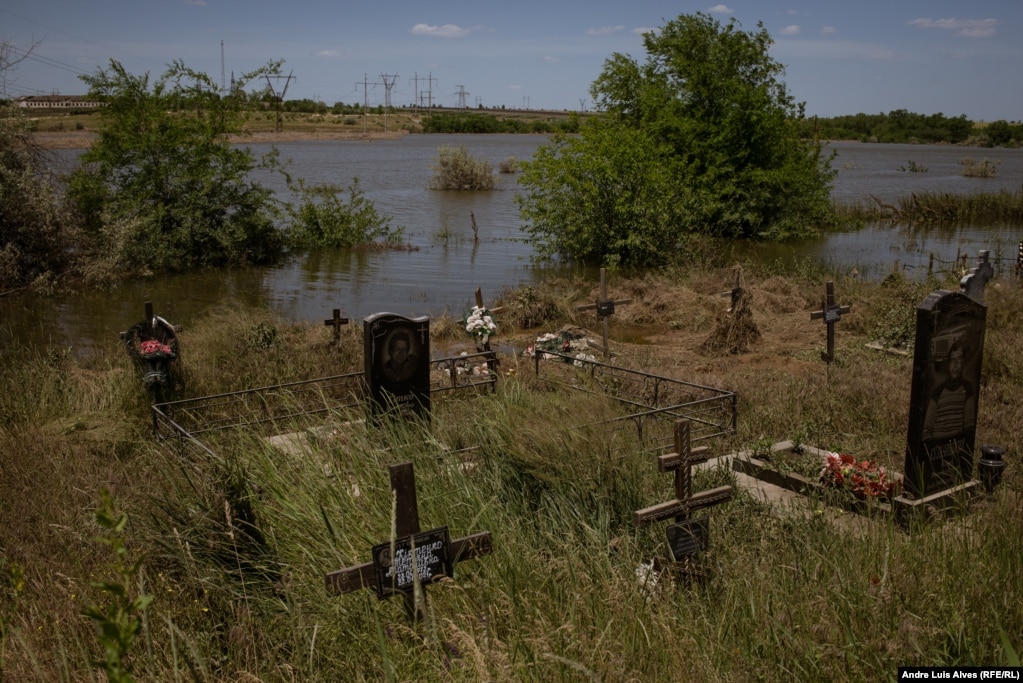
A few hours after the Nova Kahovka dam, located on the top of the Dnjeper River, was blown up on June 6th, the cemetery in the village of Odrakamyanka in the region of Herson was flooded.
Three days later, when Mykhailo Boyarskiy, a farmer from the nearby village of Kozachke, went to the cemetery of relatives, he saw wooden crosses and granite monuments covered with mud and weeds. The smell of dead fish came into the air.
The breaking of the hydroelectric dam, dating from Soviet times and controlled by Russia, caused severe floods that led to the evacuation of tens of thousands of people from both sides of the Dnjeper River in the southern region of Ukraine, Herson.
The incident also caused what many fear is one of Europe's biggest environmental disasters in decades.
Unlike some villages located at a lower altitude below Dnjeprio, Odradoka was flooded to a more limited extent. Three days after the dam was broken, some homes remained underwater, and its artificial lakes poured deep into the surrounding fields.
We seem to have driven them out of here just to have this mess in exchange for”, Boyarskiy says, referring to the Russian troops expelled from the Ukrainian Army last fall.
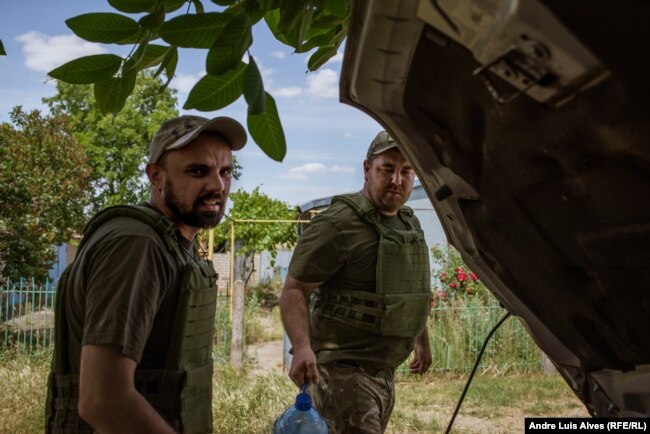
Two of Boyarskiy's friends, who preferred not to discover their identity, middle-aged farmers caring for local animals, were in the village the night the Nova Kahovka dam was destroyed.
Men with tired faces of sleeplessness said that after hearing a loud noise, they went ashore with a thermographer and saw streams of water.
Farm cattle and wild animals tried to swim on the highest coast of Dnjepre, they said, but the water current sank them.
Russian soldiers “received water”
They also said that a Russian intelligence group approaching Ukrainian territory under a boat was caught unawares by floods and sought refuge on one of the many islands of the river. However, in the end, Russian soldiers took away water”, they said.
Boyarskiy went to Odradoka kamyanka with his friend, Edward Laktyonov, to bring humanitarian aid to some of the 300 leftovers in the village that had more than 3,300 residents before Ukraine's full invasion of Russia. Most of those who remained could not leave because of old age and poor health.
The mutual exchange of fire around Dnjepres did not stop, despite the evacuations and rescue missions that took place in the region of Herson.
The local sub-bankers struggle to deal with rockets and rockets that are being used every day and each night”, says Kostyantyn Kryrichenko, 41, one of the youngest remaining in the village. It has electricity only from a gas generator and a very limited amount of drinking water.
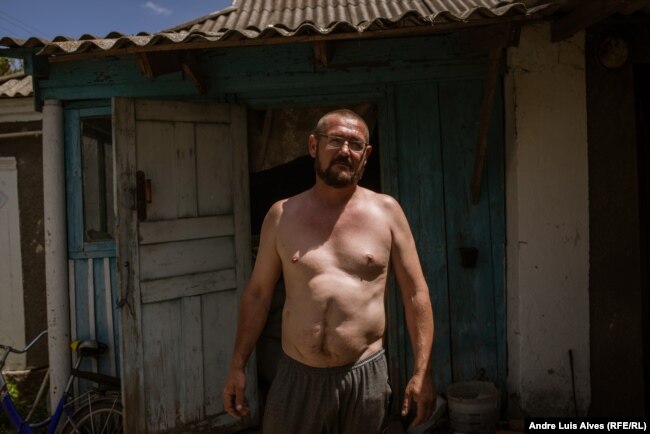
His wife and daughters have moved to the Czech Republic, while his son and brother are serving in the Ukrainian army. He's staying in the village to help the elderly. His house was partially destroyed by the shells that fell near her, and he has only a basement to hide.
The only thing I need is to get me a set of new glasses”, he told Boyarskiy, who handed him a box of food and other products, while Kyrychenko gave him a fresh catch.
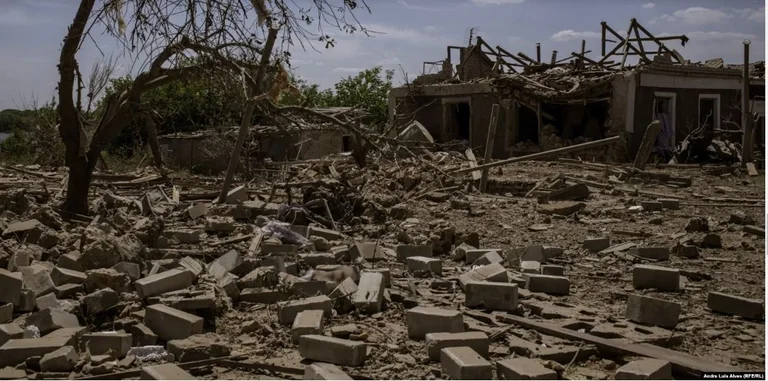
According to some residents, the Russian army is bombarding Ordrakakaka with mortars, artillery shells and rockets and attacks it daily.
Many private homes, schools, village councils, other buildings, and the monument of an unknown soldier have been demolished.
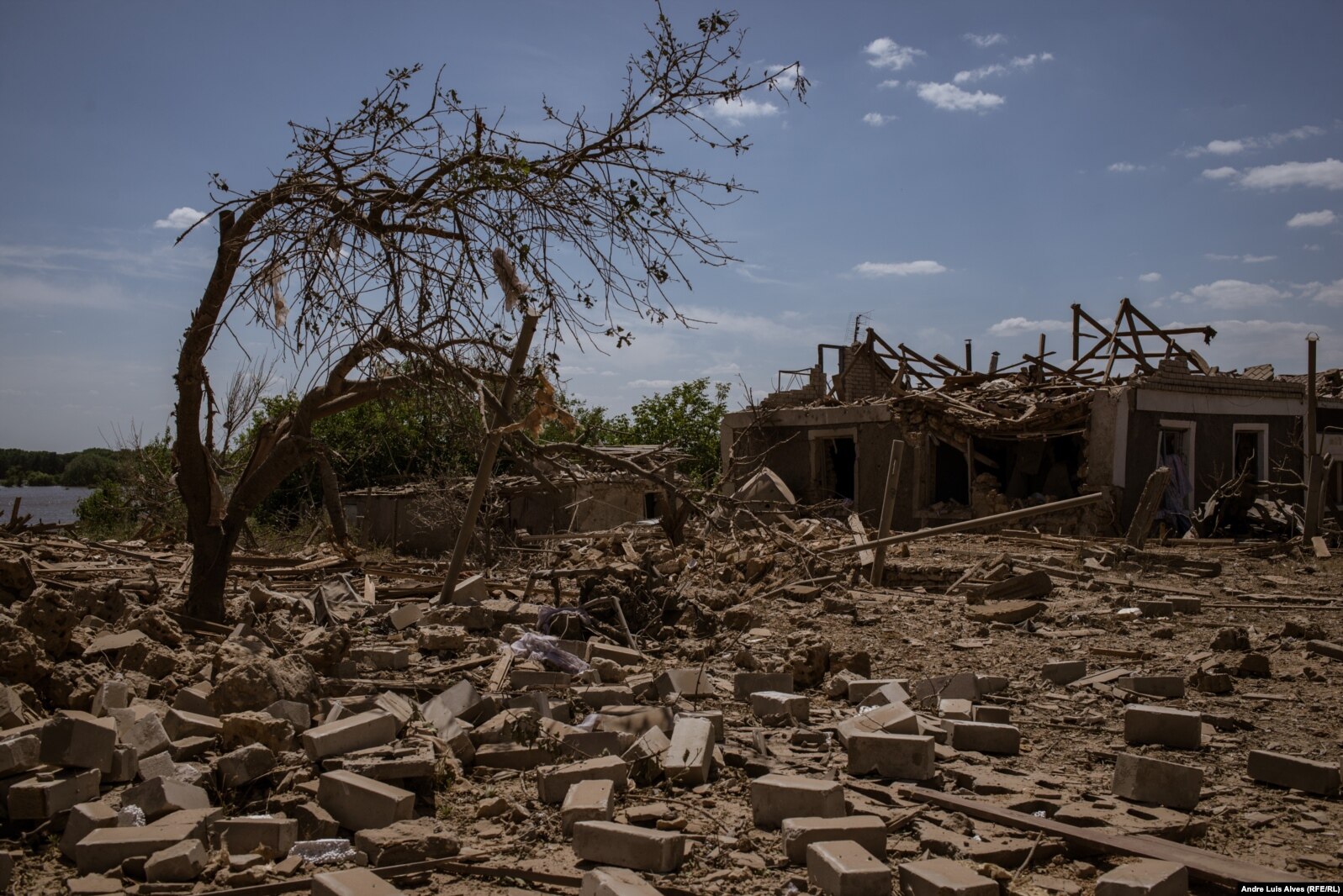
The civilian population of the Herson region, which initially survived the brutal Russian occupation and later coincided with daily grants and air strikes, is now forced to face what Ukrainian President Volodymyr Zelensky described as a “environmental disaster of mass destruction”.
Total ecosystems “at risk”
This threat is very felt in National Nature Park “Kamyanska Sih”.
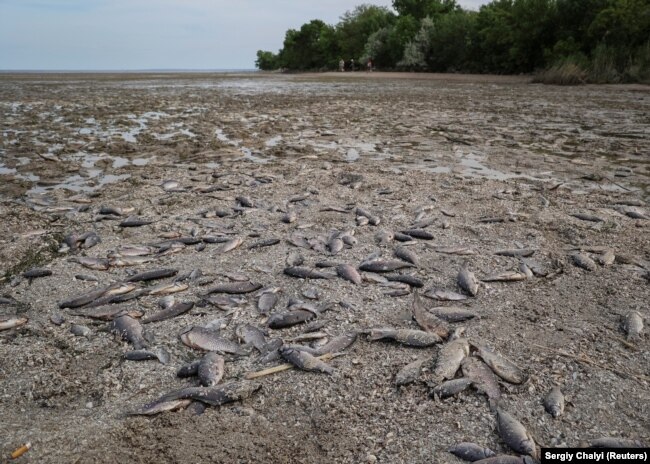
Ukraine's Environment Minister Ruslan Strilets said that, in some places, water in this reservoir has left the coast for almost 160m.
The shores will become salt marshes and will not be suitable for any living, for decades, he said.
Ukrainian officials estimate that some 28,000 fish have already died because of the water drain.
The director of the “Kamyanska Sih”, Serhiy Skoryk, who spent the last months demining the country, is now busy controlling the water level and easing side damage caused by the floods.
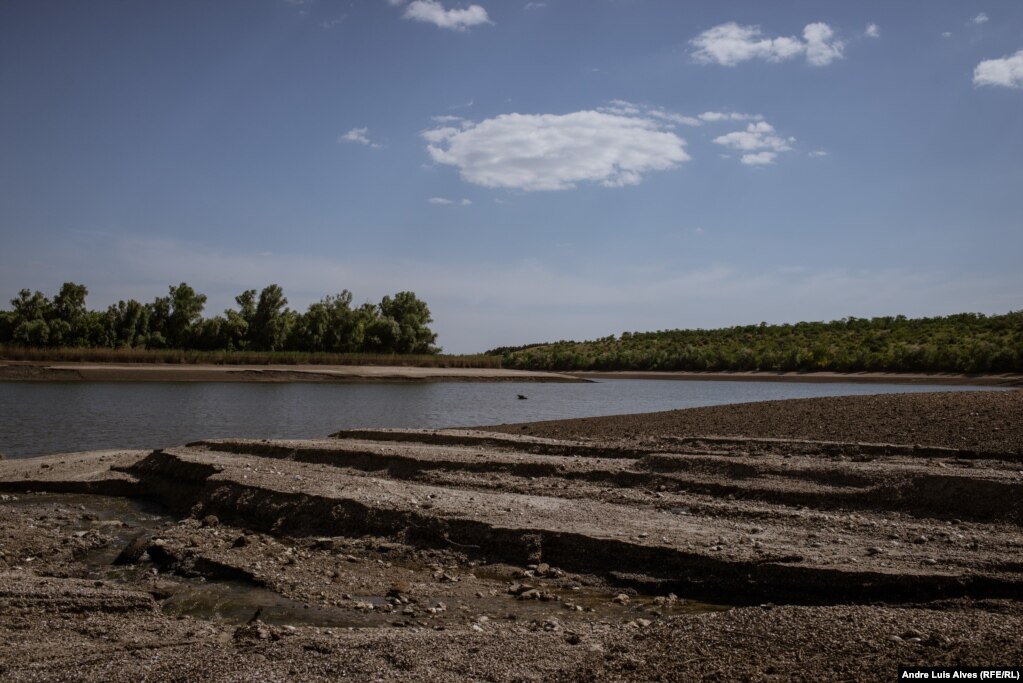
Three days after the dam broke, he and his team removed explosives boxes left by the Russians, and discovered under a ruined bridge.
The National Natural Park “Kamyanska Sih” is one of the 60 protected areas that suffered due to the break in the Nova Kahovka dam, Ivan Moysiyaenko, chief of the Botanika Department at Herson State University and member of the National Conservation Group in Ukraine, tells Radio Free Europe.
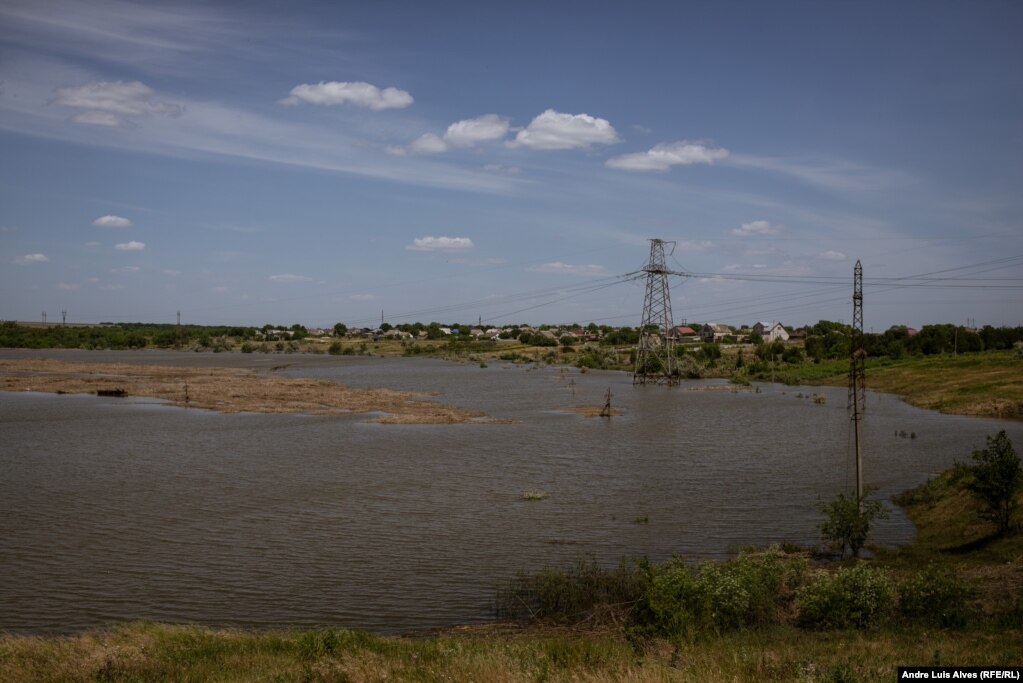
Flooding areas in the lower Dnjemë, under the destroyed Nova Kahovka dam, and drying areas over it, as will Black Sea pollution put entire ecosystems of flora and fauna at risk of irreversible losses, he adds.
According to Moysienko, more than 19 endangered species listed in the Red Book of Data, and dozens of species protected by the Bern Convention will be wiped out from these places forever.
Hundreds of species and hundreds of thousands of animals and plants will be affected, he says.
But according to him, environmental disaster will affect territories that have never been underwater, such as Natural Park “Olesky Sands” Europe's largest desert ♫ and destabilise places such as the Black Sea Biosphere Reserve, protected by the U NESTO.
This is an international ecological disaster and as long as fighting continues, there can be no more to the environment”, Moysyenko says. / REL