17 minutes ago
Serbia's Economic Oda: Both sides are suffering because of blockades at the border
Periskopi(3 years ago)
(3 years ago)The blockades at the border points between Serbia and Kosovo have a bad influence on both sides, Serbia's chairman of the Economic Ode of Serbia, Nenad Djurdjevic, said in an interview for Radio Free Europe. Truck drivers with Serbian license plates, which are not allowed to enter Kosovo since June 14th due [...]
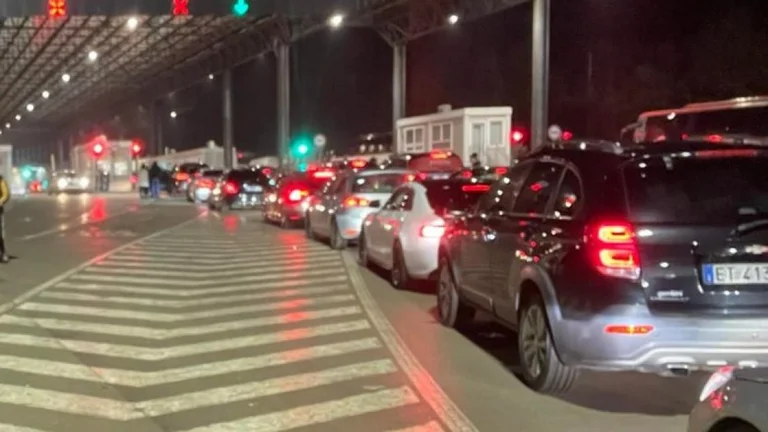
The truck drivers with Serbian license plates, which are not allowed to enter Kosovo since 14 June due to the Kosovo Government's decision to ban imports of goods from Serbia, have protested for the third consecutive days at border points in Jarinje, Merdare and Brnjak.
Djurdjevic said that economic co-operation between Serbia and Kosovo is of great importance and in 2022, bilateral exchange was worth 520m euros.
This number shows that the market in Kosovo is the most important for us in the Western Balkans, behind the market in Bosnia and Herzegovina”, he said.
He stressed that blockades have the effects on companies and citizens in both states.
The subx0-companies suffer because of raw work and because of expectations, but also citizens, separately those in Kosovo, who buy goods from Serbia and their companies use raw materials, machinery, to produce goods in Kosovo, but also their market, export, which then contributes to the Kosovo economy”, Djurdjevic said.
Representatives of the Serbian Economic Ode and the Kosovo Chamber met in Podgorica on 16 June. They called on partners from the European Union and the United States to do everything to preserve peace and stability in the Western Balkans, adding that the economy should not stop.
Djurdjevic said the most successful part of the 2013 Brussels Agreement was intensifying economic co-operation between the two states.
“Shifrat confirm there is great interest in co-operation between Serbia and Kosovo and our companies. In practical terms, the most successful segment of that agreement is now under the negative influence of policy”, Djurdjevic said.
He indicated that Serbia's Economic Oda is in constant communication with customs officials and agencies located at border points, in order for companies in Serbia to be offered precise information.
Serbia's Economic Oda has condemned the deadlock caused by truck drivers, but also by blocking the entry into Kosovo of carriers with Serbian license plates.
On 21 June, at the Jarinje border crossing, only private vehicles were allowed to cross to Serbia. In Merdara, they are not allowed to pass buses, while the crossing in Brnjak is closed to cargo carriers in both directions.
The Kosovo government's decision to stop trucks with Serbian license plates from entering Kosovo came after Serbia arrested three Kosovo police officers. Kosovo says they were kidnapped within its territory, but Serbia says they were arrested “and” within Serbian territory.
So three police officers a court in Kraleva has pronounced a month-long detention measure.
Tensions in northern Kosovo, inhabited by Serb majority, have increased since 26 May. That day, Serbs began protests against entering the municipal buildings of the young Albanian mayors of Zvecan, Zubin Potok and Leposaviqi, who entered the buildings with the assistance of the Kosovo Police.
Since then, local Serbs have protested in the north, opposing leaders who were elected on April 23rd elections that were boycotted by Serb parties and populations.
On May 29th, protests escalated into violence, with Serbs fighting in Zvecan with NATO peacekeeping mission soldiers in Kosovo, KFOR.