3 minutes ago
Scientists produce the simulation of a nuclear war: Disaster consequences on humanity of a US-Russia crash
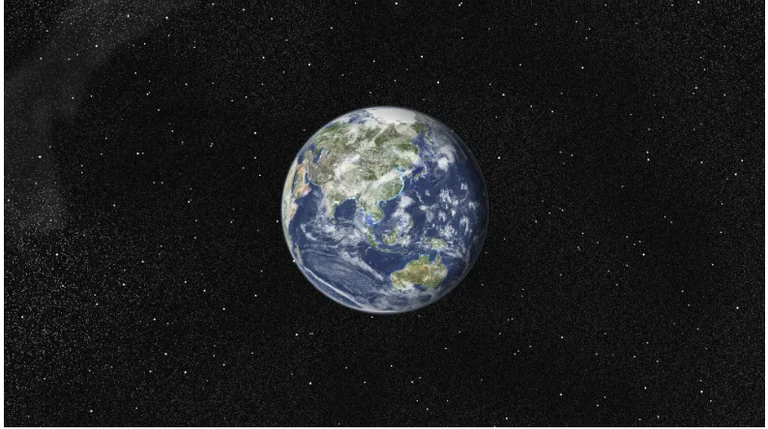
Periskopi(3 years ago)
(3 years ago)We are all aware that a comprehensive US-Russia nuclear war would be bad. But how bad, exactly? What are the chances of surviving nuclear explosions, radiation, and nuclear winter according to countries where you live? Last year's unprecedented nuclear explosion and last weekend's chaos in Russia us [...]
Last year's unprecedented nuclear explosion and last weekend's chaos in Russia move us to return from time to time. To answer, The Times has gathered a marvelous group of interdisciplinary scientists to produce the most scientifically realistic simulation of a nuclear war, using only unclassified data and visualising findings through filming film pictures.
The project makes a detailed combination of areas that are most likely to be targeted by a nuclear attack, missile trajectors, explosions and electromagnetic pulse, and how black carbon smoke is produced, rose and spread across the globe, changing climate and causing massive urine.
As you can see from the video illustration, it doesn't matter who starts the war: when one side is launching nuclear missiles, the other side detects them and shoots them again before the impact. Ballistic missiles from US submarines west of Norway begin to strike Russia in about 10 minutes, and Russian ones from northern Canada begin to strike the US. The first hits electronics and electricity networks, creating an electromagnetic pulse of tens of thousands of volts per meter. Next attacks target command and control centres and nuclear launch facilities. Intercential ground-based ballistic missiles take about half an hour to fly from launch to target.
The highest chances of being targeted by a nuclear attack during the war are major cities because they contain military objects, as well as preventing the post-war enemy's recovery. Each blow creates a ball of fire as hot as the sun's core, followed by a radioactive mushroom cloud. These intense explosions evaporate people nearby, causing fires and blindness to people they see from a distance. The expansion of the fireball then triggers a wave of explosion that undermines buildings, crushing nearby ones.
Great Britain and France have nuclear capacities and are forced by Article 5 of NATO to protect the US, so Russia hits them as well. Fire storms assisted by winds also consume many cities of flames, burning all that can be kindled, melting glass and metals, and turning asphalt into hot liquid.
Unfortunately, revised research by fellow scientists suggests that explosions, electromagnetic pulse, and radioactivity are not the worst part: nuclear attacks can cause a nuclear winter as a effect because of black carbon smoke and nuclear storms.
Hiroshima's atomic bomb caused such a storm, but today's hydrogen bombs are much more powerful. A large city like Moscow, with almost 50 times more people than Hiroshima, can create much more smoke, and a fiery storm that sends sparks of black smoke to the stratosphere, far higher than any rain cloud that could at best remove smoke.
The black smoke will be heated by sunlight, keeping it in the air like a balloon with hot air up to a decade. The high - altitude air currents on Earth are as fast as it takes just a few days for the smoke to spread throughout most of the northern hemisphere.
This causes the earth to be trapped by a cold cold even during the summer, with agricultural land cooling at about 20 degrees Fahrenheit [20 ° C], and other regions cooling almost twice as much. A recent scientific paper estimates that over 5 billion people can die of starvation, including about 99% of those in the United States, Europe, Russia and China, because most of the black carbon smoke lies in the northern hemisphere where it is produced. And because of the decline in temperature, more agricultural cultures in considerable land spaces would remain damaged.
It is important to note, however, that this experiment leaves behind great uncertainty. So the current humanitarian impact can be either better or worse what makes one more reason for caution. A recently launched $4 million research programme will help clarify public understanding and inform global policies, but much more work is needed, as most research on this topic is classified and focuses on military rather than humanitarian influences.
Of course, we do not know how many people will survive a nuclear war. But if the situation degrades in what the study predicts, there are no winners, just losers. The fact that nuclear war is likely to begin through the gradual escalation of tensions in Russia, perhaps combined by accident or miscalculation, means that the more people know about nuclear war, the more likely we are to avoid having one. / Source T MY RIE: Top Channel