7 minutes ago
How can Russia's influence in the Balkans be reduced?
Periskopi(3 years ago)
(3 years ago)From Harun Karcic & Peter Manduville “United States Institute of Peace” The influence of Ukraine's Russian occupation in the Balkans can only be understood considering Moscow's malicious influence in the region from a broader perspective. While Russia has specific objectives related to each country in the region, its overall objective [...]
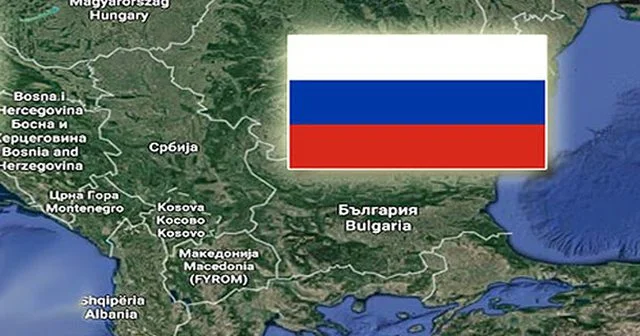
The influence of Ukraine's Russian occupation in the Balkans can only be understood considering Moscow's malicious influence in the region from a broader perspective. While Russia has specific objectives related to each country in the region, its overall objective is to influence the Western Balkans through the familiar approach “divides and Sundo”, using multiple means of influence.
While the United States and its European partners are focused on the war in Ukraine, Russia is taking advantage of the opportunity to breach NATO borders and cause divisions in countries hoping one day to join the European Union.
Moscow penetrates the region's population mainly through political representatives, local media and the Orthodox Church. They all work to exploit divisive issues and deepen existing divisions in different societies.
Threats Supposed to Enlargement NATO, EU reforms and “Muslim professionals” in Bosnia and Kosovo are often blown and manipulated by Moscow to escalate tensions, and to create a sense of uncertainty within the population.
Bosnia and Herzegovina is probably the clearest example of a country in which Russian tentacles can be found in depth. Moscow has many spots it can use in one country, which is long standing between the European Union and NATO on the one hand, and on the other, the nationalist Serbian political elements of the hard line in Republika Srpska (one of the two autonomous entities that make up Bosnia; the other is the Federation of Bosnia and Herzegovina).
The latter are keeping the country under the influence of Belgrade and Moscow. Moscow enjoys a series of local assets, including nationalist Serbian politicians like Milorad Dodik, president of Republika Srpska. There are also motorist gangs like the local branch of “The waters of the Night”, paramilitary militia such as Serbia's “Nder, businessmen with suspicious links, pro-Russian media and, above all, the Transnational Serbian Orthodox Church.
Russia's main narrativas of soft power consists of two elements: the anti-Western opposition and the Orthodox brotherhood. The discussion of the Russian Orthodox Church against “moral adence” of the West” (used by the Serbian Orthodox Church) enables Moscow to describe the European integration process as another example of Western normial imperialism, intended to impose liberal values that are foreign to local societies (which are supposed to have more common with Eastern Orthodox than West).
A key element of this technique is blaming the current interethnic tensions of Western actions and ignorance, but also creating the impression that Russia is reacting only to Western aggression. Therefore, Russia is exploiting not only religious and ethnic weaknesses in the region, but also declining trust in democracy and lack of will for liberal democratic reforms that have plagued the Balkans after a decade of stagnation of the EU enlargement process.
As the Balkans have different cultures, ethnicity and political stories, so their reactions to the invasion of Ukraine were different. Some were angered by the Russian occupation of a democratic sovereign country, especially by Croats, Bosniaks and Kosovars, who are able to identify with the present situation of Ukrainians because of their similar experience as a result of Slobodan Milochev's irredentist aspirations in the 1990s.
They are anxiously predicting possible geopolitical consequences, and ask what they can mean for their political future. Others have openly expressed support for President Vladimir Putin and his fight against Ukraine, both Dodik and Serbian President Aleksandar Vucic.
Through investments in energy and commerce, the Kremlin has managed to create a vital source of funds, and has proved capable of expanding its influence within a very short period of time. Because kleptocratic circles in the Balkans view Moscow as highly profitable, just as Chinese investments perceive it.
Fortunately, however, some steps can still be taken that can cloud the Russian influence trajectory in the Balkans, but only if implemented quickly and vigorously. First, Europe and the US must improve and support a strong and responsible security architecture in Bosnia, Kosovo and Montenegro, the region's most fragile and vulnerable countries.
It is vital to promote strengthening of state-level military institutions and capacities in the Federation of Bosnia and Herzegovina, which is pro-NATO and pro-EU. In it, Republika Srpska could further draw all of Bosnia into Belgrade's orbit and the end of Moscow.
Second, Russian disinformation campaigns in the local languages of the Western Balkans should be halted, which foster political and ethnic divisions and foster distrust and instability. To that end, valuable lectures should be applied that have ballistics in this regard.
Finally, one of the basic sources of political instability in Bosnia and Herzegovina is its constitution. A new Bosnian constitution should reflect the wishes of all citizens, with any vote equally counted and without ethnic quotas and vetoes that have so long hampered an effective government.
With the stabilisation of governance in Bosnia, and the ironing out of the Serbia-Kosovo, Europe and the United States dispute can achieve a double success: first by ensuring much needed democracy and stability for these countries, and secondly by reducing Moscow's capacity to exploit unresolved Balkan conflicts for its strategic benefits.
Note: Dr. Harun Karcic, journalist and political analyst with residence in Sarajevo covering Balkan issues.