21 minutes ago
Rakiq: Protests Continue in the North
Periskopi(3 years ago)
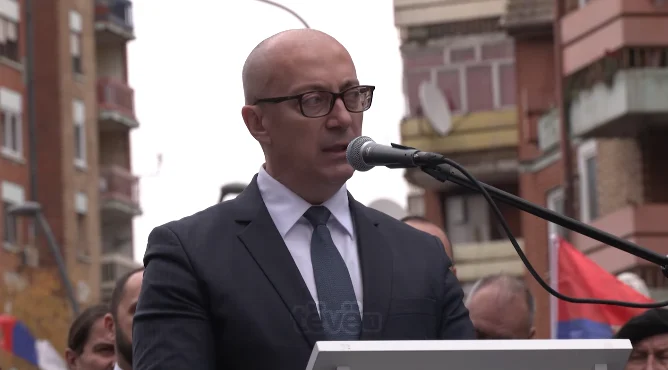
(3 years ago)Representatives of the Serbian List after meeting with international emissaries Miroslav Lajcak and Gabriel Escobar have given a speech to Serb protesters in Zvecan, however, the media are not allowed to participate. KosovoPress has insisted on asking Serbian List Chairman Goran Rakic about their meeting with Lajcak and Escobar, as well as the position of [...]
Kosova Prees has insisted on asking Serbian List Chairman Goran Rakic about their meeting with Lajcak and Escobar, as well as the Serbian representatives' stance after that meeting, but Rakic has only said the protests would continue.
On May 26th, local Serbs from the northern municipalities -- Zvecan, Leposaviq and Zubin Potok -- are protesting to reject the entry of young Albanian mayors into municipal buildings.
On May 29th, the situation has escalated in Zvecan, following the clash of Serb protesters with KFOR members. As a result, 30 members of the peacekeeping force and 7 members of the Kosovo Police have been injured. KFOR, Kosovo Police and media vehicles have been damaged and burned during the protests.
The boss himself NATO, Jens Stoltenberg, has strongly condemned violence against KFOR members.
Violence Has Stood Up NATO engages 700 additional troops in Kosovo, in addition to the 4,000 troops that are only in our country.
The international factor has repeatedly called for steps towards reducing tensions.
Among the requirements are the withdrawal of mayors from municipal buildings and the suspension of police operations near buildings in the north.
Some diplomats have also called for holding new elections in the north.
Kosovo President Vjosa Osmani and Kosovo Prime Minister Albin Kurti have said something like this can happen, always respecting the Constitution and Kosovo laws.
As for Serbia, the international factor has asked this state to lower its state of military readiness, and to help reduce tensions among Serb protesters in the north.
Kosovo and Serbia, with EU mediation, have started negotiations on normalising relations in 2011. The sides have signed several agreements, but not all have been implemented, especially from Serbia.