31 minutes ago
Prices worth about 70m euros blocked on Kosovo- border Serbia
Periskopi(3 years ago)
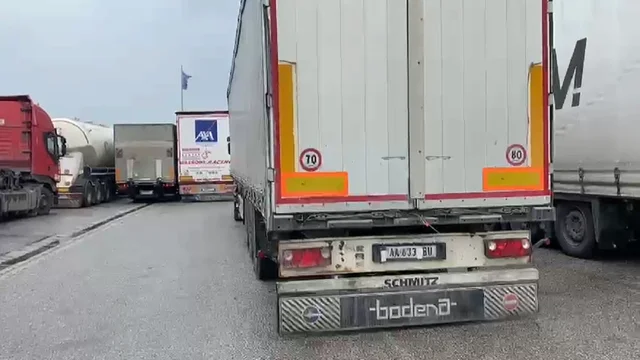
(3 years ago)The Kosovo government has banned truck access with Serbian goods on its territory, resulting in the deadlock of dozens of trucks at border crossings between Kosovo and Serbia, while the value of goods blocked by the exchanges of both sides, according to the GDP, totals around 70m euros. And according to economic connoisseurs, this issue [...]
The kidnapping of three Kosovo police officers, by Serb forces within Kosovo's territory, led the Kosovo Government to ban the entrance of trucks with goods and Serbian license plates on its territory. Once that decision was made, by June 15th, dozens of trucks were blocked on the Serbian side of the borders, at Merdare and Jarinje crossings respectively.
Following this drastic measure of stopping truck access with Serbian goods and license plates in Kosovo, the Government has made a new decision that partially allows the movement of goods from Serbia on Kosovo territory.
According to nearby sources of the Dukaagjini portal with Kosovo's decision-making institutions, by 21 June, the entrance of trucks with Serbian license plates has been allowed, but on a condition of CHA their goods are not originally from Serbia.
This executive decision has been welcomed by the Executive Director of the American Economic Ode in Kosovo, Arrian Zeka, who has estimated that this move prevented the import of goods from European Union states and Kosovo exports using company transport services from Novi Pazar.
He has also mentioned that the ban has already been abolished, believing that the Government has taken into account the obstacles and difficulties that could be caused by this situation.
The decision to review the ban on moving Serbia's license plates, since it also hampered the import of goods origin from other European Union states, but also Kosovo exports that used company transport services from Novi Pazar. This ban, however, has been abolished and I believe that the Government has taken into account the obstacles of the upper”, he has declared the Dukajini portal.
“About 70m euros blocked on Kosovo- border Serbia”
The Kosovo Business Alliance (AKB) has indicated that exchanges from both sides are blocked at a total of about 70m euros, including prepaid money for Kosovo business products in Serbia and Kosovo business debts to Serbia.
According to this estimate, the chairman of this Alliance, Agim Sahini, has said the value of goods that Kosovo businesses have contracted and are prepaid with Serbian companies amounts to about 30m euros. This money has been invested in raw materials and ready products pending entry into Kosovo.
At the same time, according to him, Kosovo businesses owe over 40m euros in Serbia, which bank transactions are not yet banned.
“According to a research the Alliance has done in the first seven days has been about 30m euros prepaid in Serbia -- that is, of various products of Kosovo businesses, whether raw or ready. But at the same time, the thing that has been proven in the last few days has also been shown by Kosovars in Serbia, for which bank transactions are not prohibited. So they owe over 40m euros, and that's an extremely high value”, the head of GDP said, for the Dukagnaj portal.
The head of GDP has stressed the importance of finding a political solution to overcome this problem.
He has called for immediate action by the Kosovo government to allow the entry of goods loaded in Serbia or their turning back to avoid damage that could be caused by high temperatures at the border.
Unlike the head of GDP, the Executive Director of the American Economic Ode in Kosovo, Zeka, has stressed that political actions should not have a negative impact on economic activity, and according to him, the barriers that limit economic activity conflict with the spirit of economic and trade co-operation promoted by international partners and countries in the region.
According to Zeka, all Western Balkan countries must work on eliminating differences that hinder co-operation and promote economic and trade co-operation.
He has estimated that this is a prerequisite for the EU integration process.
Also, Sahin has voiced confidence that dialogue in Brussels between Kosovo Prime Minister Albin Kurti, and Serbian President Aleksandar Vuciq, with the mediation of international factors, would lead to resolving the issue and normalising trade exchanges between the two countries.
Portal Dukagjini has requested answers from the Ministry of Internal Affairs about the deadline for the ban on the entry of Serbian-born goods to Kosovo. However, until the publication of this text, there has been no official response to the matter.
Meanwhile, the Kosovo government had praised the decision of stopping trucks as a necessary measure for ensuring the security of the country's territory.
This government decision was taken a day after the kidnapping of three Kosovo Police members by Serb forces. Kosovo police had testified that police were kidnapped on Kosovo's territory, while Belgrade has insisted they are “arrested” on Serbian territory, where they are currently being held in custody for 12 days.
Kurti and Vuciq held separate meetings with European Union foreign policy chief Josep Borrell on 22 June.
The European Union has submitted three key requirements that the Kosovo government must accept “as soon as possible”.
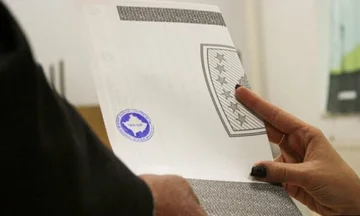
One of the requirements is the announcement of early elections in northern Kosovo, for which Kurti agreed, but set the condition for the elections to be <x0 legal>”.
We remember that tensions in northern Kosovo began to rise since May 26th, when young Albanian mayors of municipalities in the north, under the backing of the Kosovo Police, entered municipal buildings, facing opposition from local Serbs. This situation has caused a deep division between communities and major tensions.
The peak of tensions took place on May 29th in Zvecan, when Serb protesters clashed with NATO mission members in Kosovo, KFOR.
Violent clashes resulted in serious injuries for dozens of people from both sides, further mounting tensions and division among communities in northern Kosovo.