6 minutes ago
Former President Obama's adviser: Kosovo is at a crossroads
Periskopi(3 years ago)
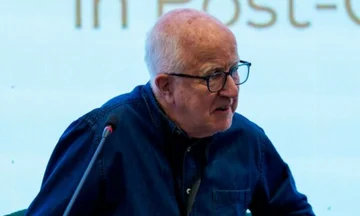
(3 years ago)Vice President and High Director of Atlantic Council Digital Legal Research Laboratory ( DFRLab) Graham Brookie in an exclusive interview has also spoken about Kosovo. DFRLab is at the forefront of open source research with a focus on governance, technology, security, social media and where each of them is cut off. Publishing what [can] prove [...]
DFRLab is at the forefront of open source research with a focus on governance, technology, security, social media and where each of them is cut off. By publishing what might prove or reject in real time, DFRLab is creating a new model of research and adaptable education for influence.
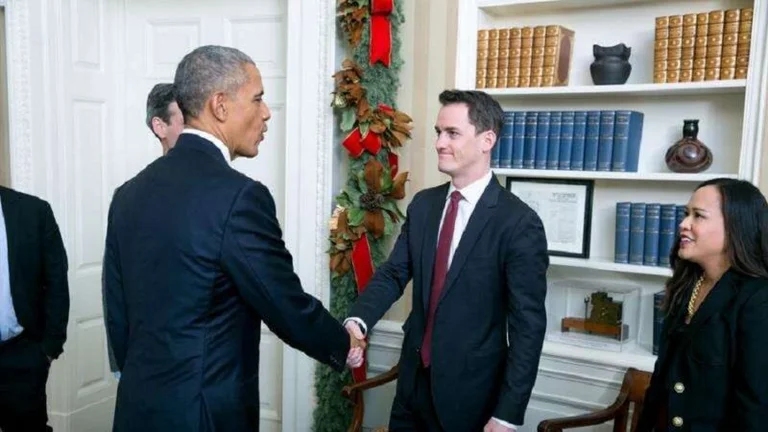
Before DFRLab was brought together, Brookie served in various positions at the White House and the National Security Council. His most recent role was as adviser to strategic communications with focus on digital strategy, audience engagement and co-ordination of a national security and foreign policy history of former US President Barack Obama.
Full Interview
The Geopost: You were part of Obama's administration and the White House and you have knowledge of the situation in Kosovo, what is your message to the people of Kosovo?
It's the same message I'd say on the scene of this conference, right, and that's because things are especially difficult right now in the information environment, of course we're facing uncertain times. One of the things we can rely on is that these are uncertain times. But there are many reasons for optimism. And so, when we talk about the information environment or are talking about technology in general, there are still a lot of promises, and I would say there are still many agencies, which means there is not a predetermined conclusion to what happens in a global information competition is not an unforeseen conclusion that happens in an era of increased geopolitical tensions, for which a country like Kosovo is at a crossroads, quite central. And what I would say is that you see an example like Ukraine. Vetevendosje does not occur overnight. We have a number of Ukrainian leaders at this point coming out of a revolution of dignity and Maidan. And this is a moment in their history when they set another way. And this is a wonderful example in the agentry of what we can do as people. And I hope that's the reason for optimism in Kosovo and elsewhere.
Geopost: How do you see Europe and Ukraine, obviously after the Russian aggression against Ukraine that is the biggest challenge of Europe and the United States now?
The main component of something that is undeniable, something that is obviously the focus of Europe and certainly global competition for information, the central point of that global information competition is a very real war aggression by Russia against Ukraine. Or as someone characterizes it, a renewed struggle of aggression against Ukraine or a rerun, although I'm not sure how it is translated out of English, so the goal is very clear. And in that very real war what we see is a great front, a great front and field of war being the field of information in which influence operations are very much in the face of conflict, they form the field of actual battle. And what we see from DFRLab, we have seen impact operations and things like foreign influence in the wider sense of online damage for almost a decade now. So, from the beginning of the Ukraine recapture, what we've been doing is we've been looking at all the work we've done in the past, six, seven years looking at the hostile narrates and strategic dezinforms from Russia, and what we've seen is the number of the same Narrativas, just used in different ways in direct direction to the invasion. And what we've seen in the following year, a year of war, as told on stage earlier, the present 469 days of war, we've seen Russian dynamic information facilities maintaining control of the information environment in Russia, an environment of highly disputed information in Ukraine, and it's not a predetermined conclusion that no one has yet won the war of information.
Many dezinforms coming from Russia, for him, number one, to justify the war, to justify a war of aggression, number two, deny a responsibility for a war of aggression and number three, a covert military operation, so that when they gathered immediately before the invasion, they were collecting many equipment on the borders, they said it is simply a military exercise, which is a masquerading military operation of denforms. And we've seen in the post-war year, at this point of war is an additional effort beyond denial and the mask of justification to undermine Ukraine's resistance in Ukraine and, above all, undermine support for Ukraine at the international level. And that happens among European countries, of course, and especially among European countries that are in a very close neighborhood with Ukraine. It's happening in all of the allies and partners whatever you want to define it, it's happening worldwide in information environments that don't necessarily think of Russia or Ukraine on any given day, but they have an interest because global food prices are growing up, or there's a security situation in Europe for the first time that's being confused with a global market and things like that, and that's what we're looking at when we're talking about the field of information of very real aggression against Ukraine.
Geopost: How you see Russian influence in Europe in general and especially in the Balkans.
The tactic of influence, the tactic of intervention, sometimes including dezinformation or information operations involving manipulation, is not new. We expect that, from nations and state actors, and especially authoritarian nations and state actors, autocratic state actors like Russia, so that component should not be new to us. And I say that in America, I think that the vast majority of Balkan citizens will understand this closer than any expert we have in the United States, although we have also been subjected to successful massive Russian influence operations. And so we're in it together with certainty.
But what we see in countries like the Balkans, which in my opinion are the central point or the point of a global competition for information, are strongly disputed information environments that don't necessarily have a large amount of flexibility, because media markets are smaller because it's easier to reach more people on the scale, and because impact can be defined more widely to one including not only what happens in social media with bot farms or any small media that are mainly on the internet and of dubious origin, or not. We are talking about broader elements of influence such as direct investment or economic relations we are talking about political relations that would go directly between the main party in Russia and Russia's state and political parties in every number of other countries in the region, and especially in the Balkans. So, when we talk about influence, we're talking about something that's much broader, and the Balkans is obviously a major central and sharply disputed point at this point.
The Geopost: There are many Russian dezinforms coming from the Serbian media, what is your suggestion, how to fight this?
Yeah. Absolutely. In particular for Serbia, there is no doubt that many elements within Serbia have friendly relations with Russia. And this in itself is not necessarily a bad thing, expected in a globalized world, right, countries should be able to interact with other countries, that's what we protect. That said, Serbia tries to be more connected to Russia in many ways, even though they are further integrated to the west, and it plays a very, very important regional role because it has the largest media market. And so much of the infrastructure for influence, to achieve, whether it's malicious or not malicious, whether it's completely high and completely legitimate or acceptable, much of that infrastructure is in Serbia, so it's a natural gravity centre for influence throughout the region. /Gepost