25 minutes ago
Prelec: The situation in the north has clearly damaged Kosovo's very special relations with the US
Periskopi(3 years ago)
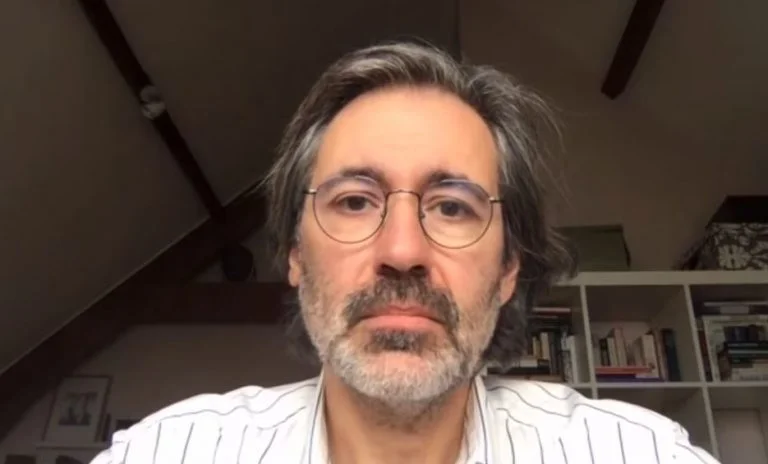
(3 years ago)International Crisis Group analyst Marko Prelec said in an interview with the Voice of America that the situation in northern Kosovo is very serious and could contain the process of reconciliation and integration of the Serb community in Kosovo in an unpredictable way. Speaking of United States sanctions on Kosovo, he [...]
International Crisis Group analyst Marko Prelec said in an interview with the Voice of America that the situation in northern Kosovo is very serious and could contain the process of reconciliation and integration of the Serb community in Kosovo in an unpredictable way. Speaking of the United States' sanctions on Kosovo, he said recent developments have damaged the very special relations between the two countries.
Voice of America: Mr Prelec, how do you see the recent tensions in northern Kosovo and escalation there?
Marko Prelec: This is a very serious situation that has the potential to fuel some real violence, potentially with loss of life. There are already quite a large number of injured and injured persons, and beyond that, it has the potential to curb the process of reconciliation and integration of the Serb community in Kosovo, but significantly.
Voice of America: The international community directly blamed the Kosovo government for unilateral actions. Do you think the Kosovo government should have shown more restraint and taken into account the possible consequences before taking those steps?
Marko Prelec: Yeah, sure. But I think the Kosovo government knew exactly what it was doing. Let's not forget this is not the first move to attract attention from the government. Throughout the past year, and in fact, beginning in late 2021, there have been a series of steps of government to demonstrate its authority in northern Kosovo, which have faced resistance and increased tensions. So most of them have been disputes, which may also be difficult for your listeners to understand the seriousness of such things, what car license plates are allowed to be used, but important is that in three cases, in three separate cases in September and October 2021 and then in July and December 2022 there were barricades throughout Kosovo's north, and there should be some effort of international peacekeepers to keep things under control. Thus, the government knew from experience what would happen if it took the steps it took.
Voice of America: How do you see the solution to the current situation in northern Kosovo?
Marko Prelec: Well, I clearly think that this should be treated bilaterally, but perhaps best in a multilateral way, through talks between the authorities in Belgrade and the authorities in Pristina, and also international actors like the United States and the European Union to defuse the situation. But the other thing that is essential to doing here is to pay attention to the opinions of the affected community in northern Kosovo. Something that loses in many conversations is how frustrated and skeptical that community has become. Of course they do not trust the Kosovo government, but they do not trust the Serbian government either. This is very important to keep in mind. And I think part of the outburst of anger we saw, which led to all those injuries was just that people were fed up with a year or more of high tension and having things they don't understand, getting taken away from other people, away from their territory. They have to get into the process somehow. I think it's essential.
Voice of America: The international community has called on the Kosovo government to withdraw special forces from municipal buildings to reduce tensions. How do you view these calls and the refusal of Prime Minister Albin Kurti to act?
Marko Prelec: Yes, the international community is calling on Kosovo to withdraw special police forces, and also in parallel with that the four mayors of the municipalities -- Albanian mayors of majority Serb municipalities -- are working from alternative buildings, perhaps located in some of the majority Albanian villages in the area. So I understand that Prime Minister Kurti does not want to do this, but he has signalled some interrelated ideas as accession that these mayors do not, as he called it, strong legitimacy, do not have a strong mandate and signalled early elections. I think this is probably the next step, the next necessary step for reducing tensions by attracting special police. You might argue, whether this is a good step or not, but I think only by seeing the role special police have played in the imagination of the Serb community in the north, it is hard to see how they leave them there or at least by leaving them in municipal buildings would contribute in any way to a solution.
Voice of America: But, Prime Minister Albin Kurti is saying that with actions in the north, he is implementing rule of law and has not expressed readiness to remove new mayors from municipal buildings. How can developments flow?
Marko Prelec: Yeah, I think rule of law is an important thing, but it's not necessarily the first thing to look for in an environment for conflict resolution, because rule of law is something that comes after you have peace, once you have a peaceful situation. We don't have it now. Thus, rule of law is not a means of resolving conflicts. It's something we can enjoy and benefit from, as having conflict solutions and the solution usually requires things like negotiations. Negotia about what the law will be. And these negotiations have been under way. So I think that one of the reasons why the international community has been very loud and critical of the prime minister is that they have perceived these as brief steps, in talks that have been conducted with the mediation of Joseph Borrell and Miroslav Lajcak.
Voice of America: Mr. Prelec of the United States imposed sanctions because of the government's actions in the north. What does that mean for Kosovo?
Marko Prelec: I would put it in the context of escalation from the United States. The US has used an increasingly strong language by trying to persuade the Kosovo government to engage in dialogue in Brussels specifically regarding meeting its obligation to create the Association of Serb-run municipalities, something dating back to the 2013 and 2015 Brussels accords. And it's repeated in this last round. So I think Washington clearly expected words to suffice, but they found that it is not enough and now they resorted to sanctions. And I don't think I'd be surprised if those sanctions were able to escalate in the coming days if Washington remained dissatisfied and of course if the situation on the ground deteriorated and if the government was perceived responsible for the deterioration.
Voice of America: Are relations between Kosovo and the US damaged that both sides have considered unique?
Marko Prelec: The United States has never imposed sanctions on Kosovo before, and has usually refrained from criticizing Kosovo's leaders in public at least, even when it was not satisfied with their actions. This is because the United States, I think, feel a kind of fatherly responsibility for their role in ending the Serbian depression towards Kosovo citizens through NATO-led military intervention in 1999 and then in being one of Kosovo's declaration of independence in February 2008. So, there's a lot of loyalty in Washington and of course the administration of (Joe) Biden and the people inside of it, many of them, including the president himself, were very much engaged in both of these actions, so as senator, was very interested in Kosovo. So I think there is still a degree of loyalty in the United States towards Kosovo, but it is not, it is not endless and this has clearly damaged that very special relationship.