24 minutes ago
NATO urges allies to increase budgets for their armies
Periskopi(3 years ago)
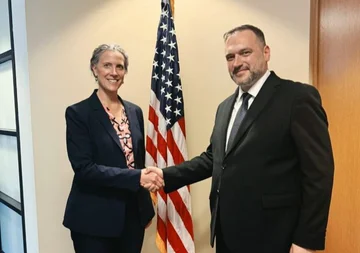
(3 years ago)Secretary - General NATO, Jens Stoltenberg, and US Ambassador to NATO Juliane Smith said on June 7th that funding of the military alliance will be one of the main topics of the upcoming summit in Vilnius, along with expansion of the alliance and guarantees for security. Smith and Stoltenberg, who participated in one [...]
Smith and Stoltenberg, who attended a virtual conference sponsored by the Center for New American Security, said members would discuss the threshold for spending at least 2 percent of the gross domestic production of NATO member states in defence.
Smith pledged that the US will continue to pressure to ensure that members spend at least 2 percent of their gross domestic production in defense, as agreed in the 2014 Defence Investment Promise (DIP), which requires countries to meet the threshold of 2 percent by 2024.
In addition, Smith said that 2 per cent “is a threshold, not a” ceiling, and that NATO's future plans could require further growth of this threshold.
The United States of America “is planning to bring a DIP 2.01> to the summit, Smith said, pushing NATO allies to meet and exceed the 2 per cent threshold within the coming years.
The leaders of 31 NATO nations, who will gather on 11 July and 12 July in the Lithuanian capital, are also expected to hold critical talks about NATO's future, regarding a possible expansion.
Ukraine's president, Volodymyr Zelensky, who has pressured NATO to allow his country's membership, is expected to take part in the summit. He said earlier this week that Ukraine is “ready to join” and that the alliance should make a decision on Ukraine's membership in the summit.
Regarding NATO's possible expansion, Smith and Stoltenberg made it clear that there is a wide range of potential models for NATO's continued contribution to Ukraine, but that the solution is likely to be a compromise among the different NATO allies' opinions.
“We are looking at a range of options to signal that Ukraine is progressing in its relations with NATO”, Smith said.
Stoltenberg added that a discussion of security agreements is needed before Ukraine joins the military alliance, but did not specify what agreement it is about.
Chief NATO explained it is up to allies and Ukraine to make the final decision on when Ukraine should join. However, he reiterated NATO's commitment to making Ukraine a member after the war.
When this war ends, we have a framework to prevent further attacks in Ukraine”, he said.
The two officials also stressed NATO's commitment to Ukraine's victory.
Asked about a long-awaited Ukrainian counteroffensive, Stoltenberg said Ukraine's victory as an independent and sovereign nation is a top priority NATO, but did not speak much more about Ukraine's plans for counterattack, except that Ukrainian “have the ability to clear land held by the Russians”.