22 minutes ago
How life is developing on both sides of the book, following recent tensions
Periskopi(3 years ago)
(3 years ago)With Serbs protesting and Albanians feeling tensions in northern Kosovo for almost two weeks now, normal life has not developed. Red - square white covers lie on the tables that await the deer on the river - visible roof. In addition to the usual mealtime crowd, the restaurant “Ura” these days awaits [...]
With Serbs protesting and Albanians feeling tensions in northern Kosovo for almost two weeks now, normal life has not developed.
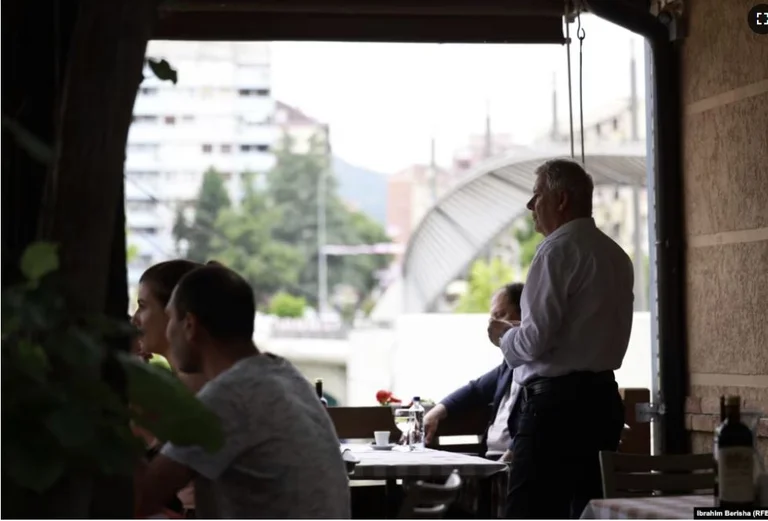
Red - square white covers lie on the tables that await the deer on the river - visible roof.
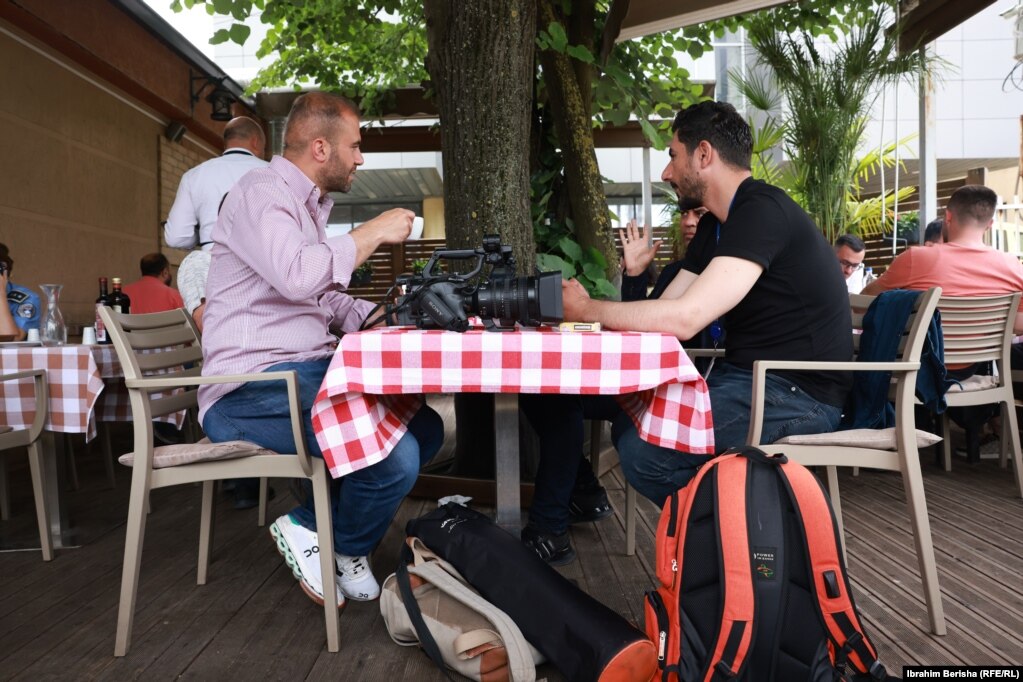
In addition to the usual lunchtime crowd, the restaurant “Ura” these days awaits a Vlogger of other special guests, journalists, policemen and soldiers.
This open restaurant in 2011 stands next to the bridge of the “Iber” in the middle of South Mitrovica, with Albanian and northern majority, mostly Serb.
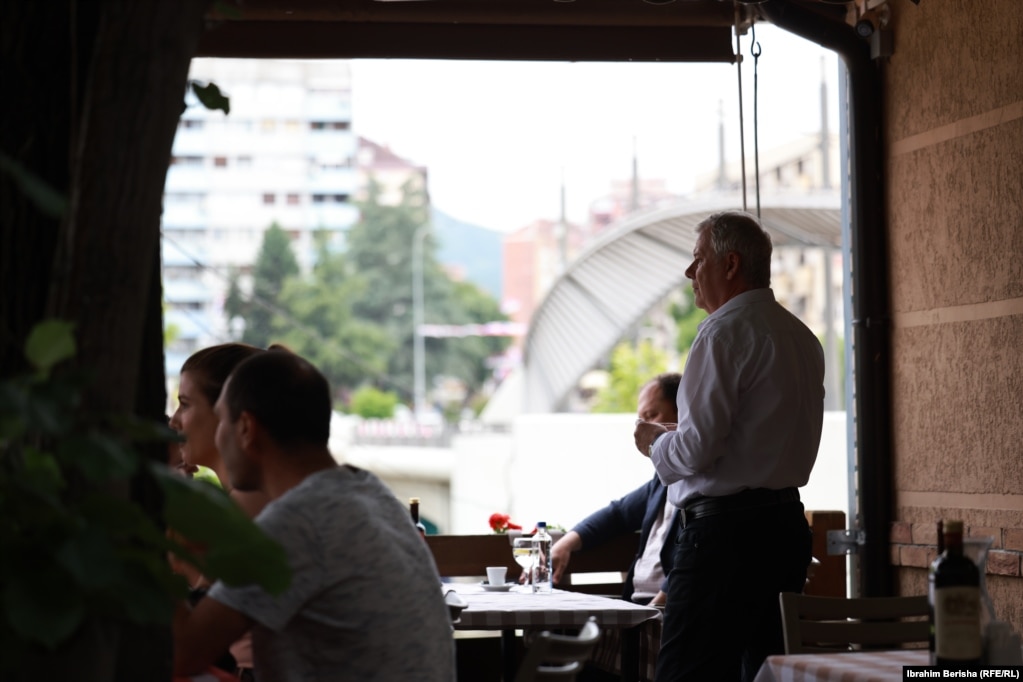
We are all guests without any distinction”, says waiter Agron Berisha, who has been working in the vicinity of the bridge that has become a symbol of the ethnic division of the two communities in the area.
However, according to Berisha, tensions often raised in the northern area are easy to feel within this restaurant, especially with the growing number of journalists returning south after reporting from the north.
They're home to their own, they know where the cables are, the batteries... Nothing prevents us”, Berisha shows, adding that he is already familiar with most local and international journalists.
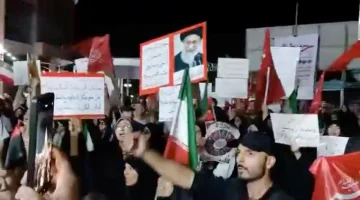
From May 26th, protests broke out in the four Serb majority northern municipalities against Albanian leaders who emerged from the April 23rd elections, which Serbs had boycotted.
Protests, in which there was violence and injury, took place mainly about municipal objects that the elected mayors tried to use to work.
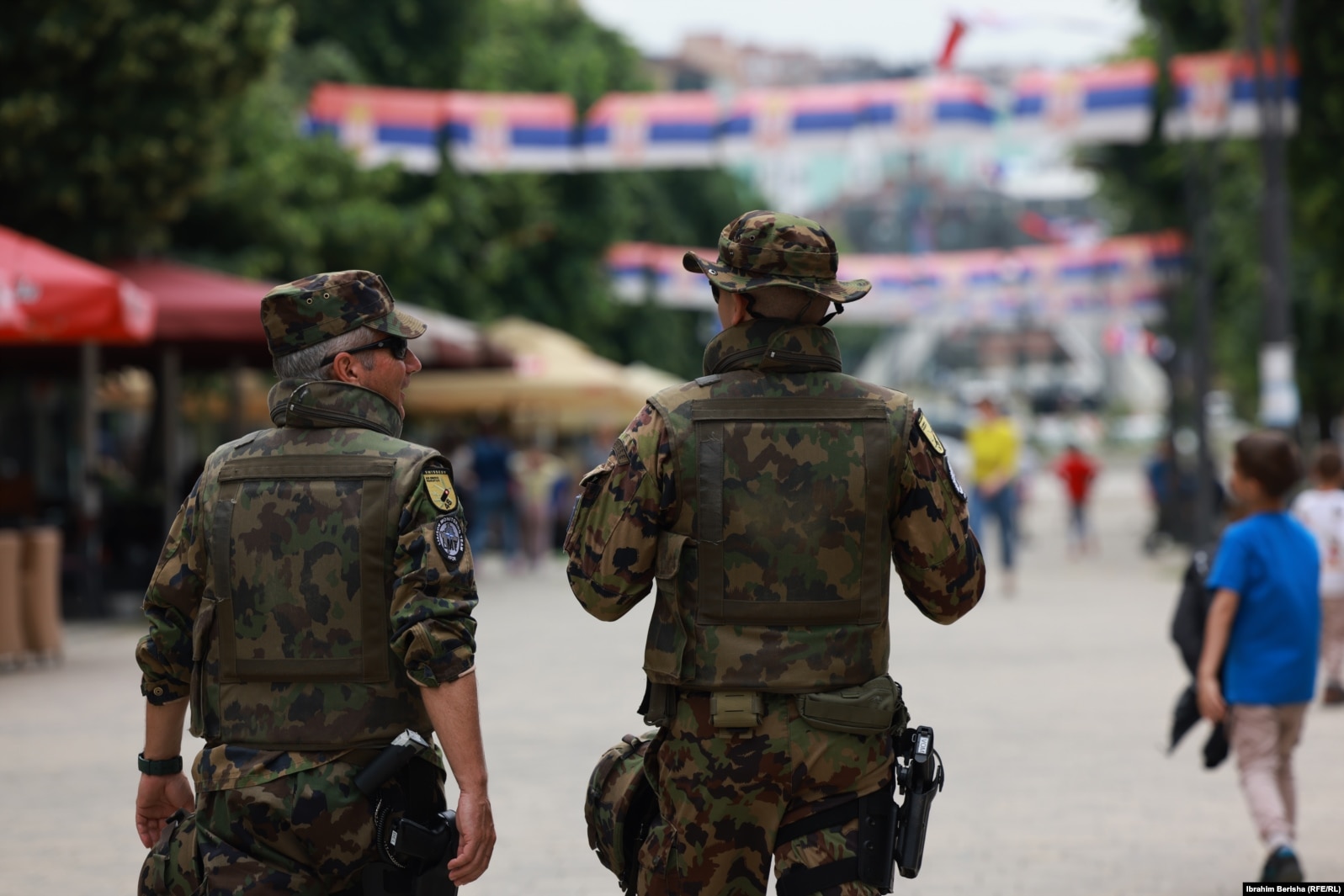
Berisha says that through the guests he serves, including KFOR forces, he notices how serious the situation is across the bridge.
He recalls that earlier, a part of KFOR staff, especially non-military ones, have been more relaxed.
From this situation now that it's happened, (I've seen it) for the first time with bulletproof vest”, he recalls.
Unlike the excitement and noise in the restaurant, there is greater silence across the bridge for almost two weeks now.
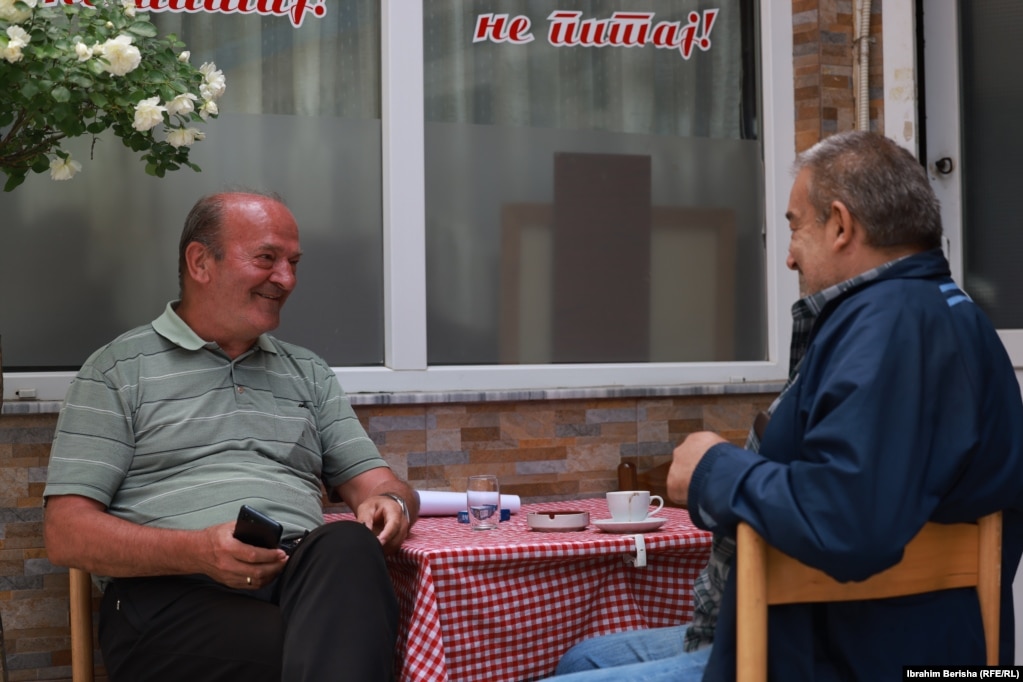
To cope with the changing weather of June 6th, passing from sun to rain often during the day, Vdalmir Rakiq was sheltered outside a café in northern Mitrovica.
The same daily life as in the last 20 years, monotony and tension at any moment. Much more tense in the last 10 days”, the pensioner says.
Rakiq was drinking daily coffee with his friend Lazar Kragovic, opening up the problem of high prices in the area where Serbia's official currency, not Kosovo, continues to be used.
“About 120 dinars [1 euros] are [for kilograms] of cherry trees in the Race (Serbia) and 450 dinars [3.83 euros] in Mitrovica”, says Kragovic, who, like many of Kosovo's northern Serbs, has close labour and life ties with neighbouring Serbia.
Other citizens from North Mitrovica are more angry about the fact that schools in this city and three other municipalities -- Leposaviq, Zubin Potok and Zvecan -- closed due to tensions on May 26th.
There are wires about schools, wires about municipal objects. Hard for these kids. Everything's dead here in town. Everyone's staying home or going anywhere”, says a citizen who didn't want to be identified.
The entire educational system in municipalities that are inhabited by Serb majority in Kosovo works with Serbian programming.
Children from Zvecani, about three miles [3 km] from North Mitrovica, also became part of the protests, with recitals demanding a halt to violence.
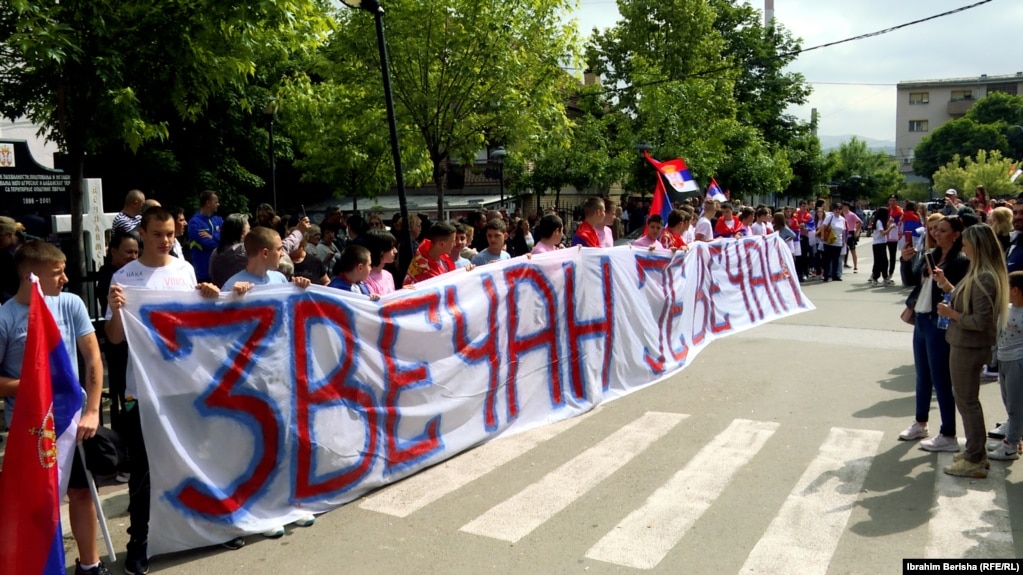
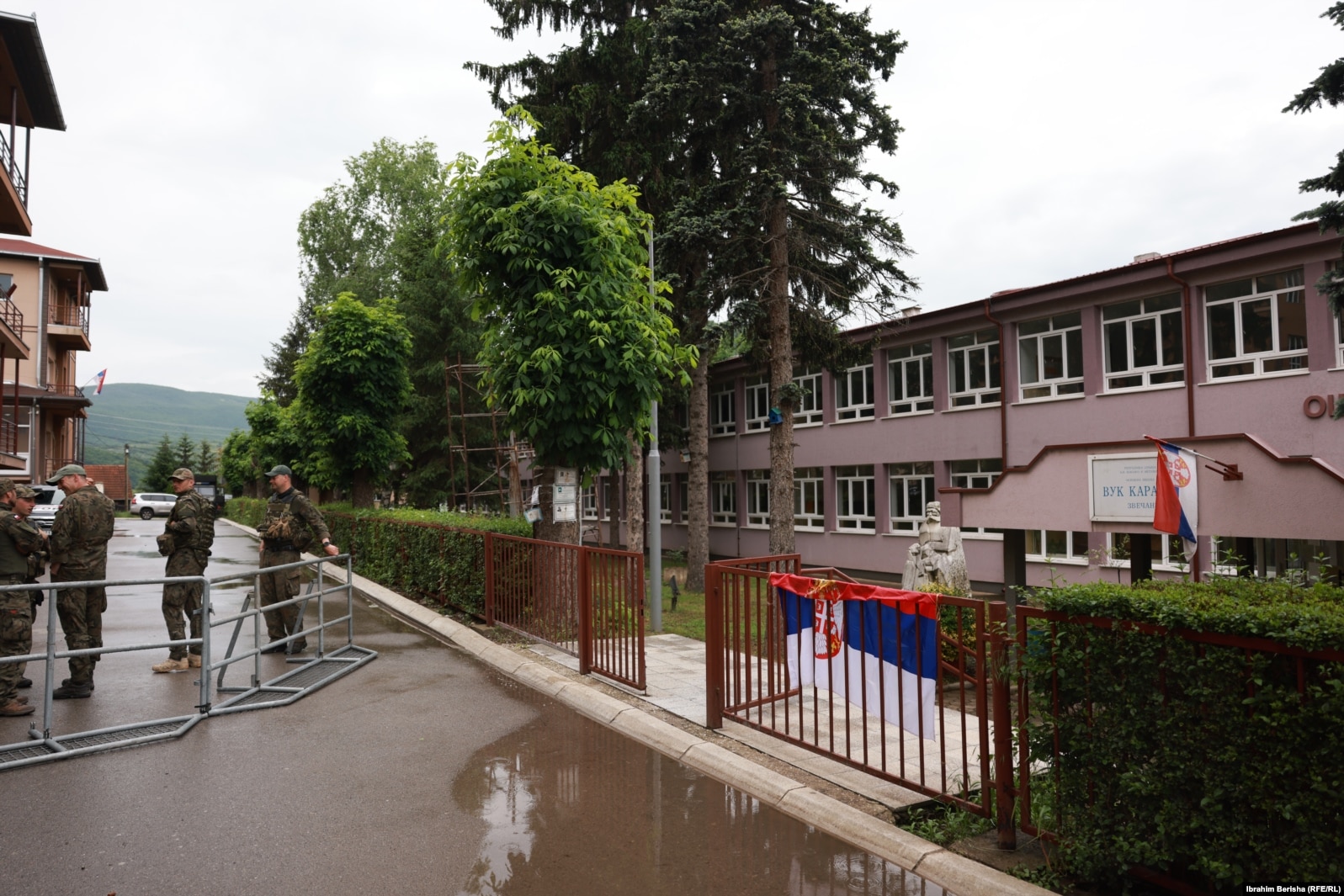
In Zvecan, inside wire and protective bars surrounding the municipality, there is also a high school and even a residential building.
For all these days of tensions, residents of the building in the vicinity of the municipality have had to go through KFOR troops to circulate.
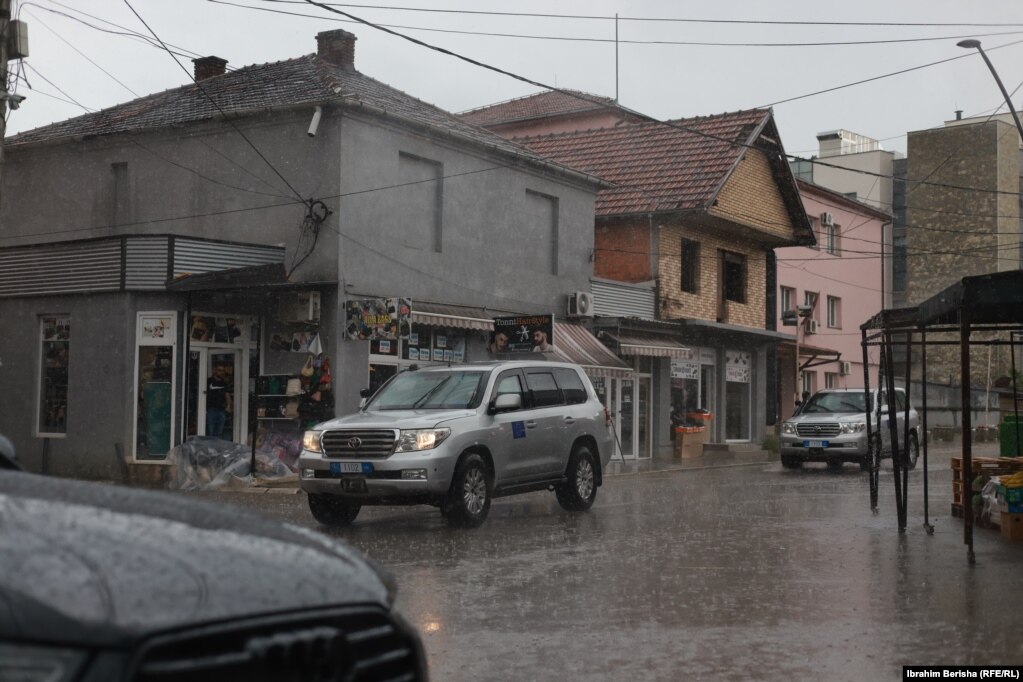
Back in northern Mitrovica, several narrow roads lay the Albanian community's homes and businesses.
Few in number in that area, these residents depend largely on the market Serbs do in the majority.
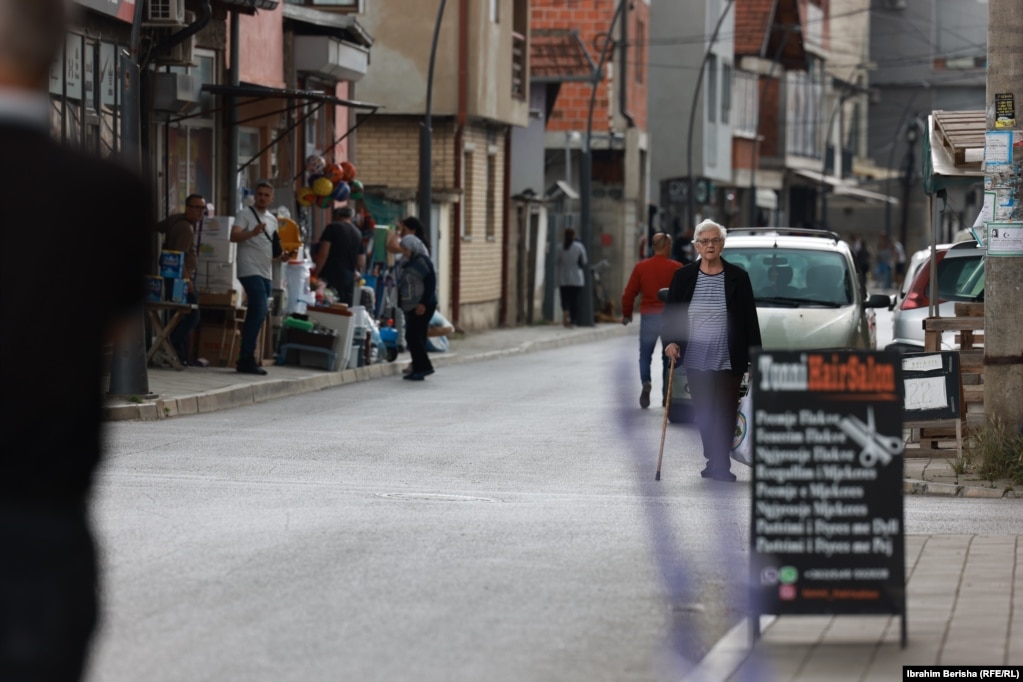
Business owners in what is called “Bosniaks' neighborhood” complains tensions have reduced the number of buyers.
I don't know if they're scared or what it is I don't know, but there's been a lot of business, there's been a drop of business”, says I want Stevileci, a worker at a perfume shop.
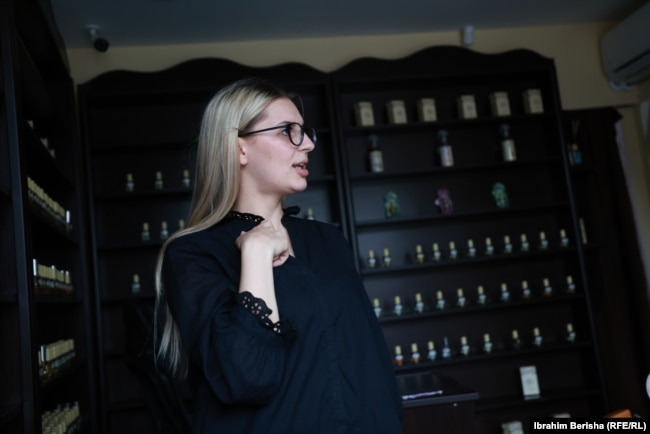
Stavileci says that the difference in the number of people who circulate in the neighborhood is seen as soon as an alarm is issued that is calling for mobilizing the Serbian population in the north.
The “may be full, but in a second that sounds the alarm, this is where Stavileci points out immediately.
Another trader, even, says their clients are afraid of the sirens ever issued by Kosovo Police cars and those of the EU's mission to rule the law in Kosovo, EULEX.
Neither Albanians nor Serbs in that part of Kosovo who spoke of Radio Free Europe are very optimistic about a possible long-term solution, as they say they have faced similar successive crises. /R