5 minutes ago
Kosovo-Serbia: Can Turkey mediate where the West has failed?
Periskopi(3 years ago)
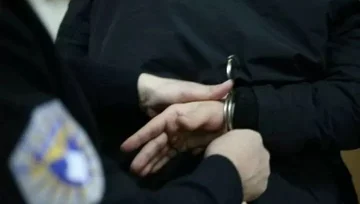
(3 years ago)An attack organised by Serb militants supported by the Serbian state in public buildings in northern Kosovo led to clashes between police and NATO soldiers with men wearing masks and metal sticks. The attack, in which at least 30 KFOR members were injured, was condemned by NATO as “legally [...]
The attack, in which at least 30 KFOR members were injured, was condemned by NATO as “strictly unacceptable”.
The current crisis dates back to April, when Kosovo Serbs boycotted local elections. As a result of low turnout, ethnic Albanians took control of local assemblies, which were mainly Serbian, recalls Midleaesteye in her analysis.
When elected Albanian representatives tried to enter public buildings, they were attacked by militants backed by Belgrade with signs “Z”, the Russian symbol of the war in Ukraine.
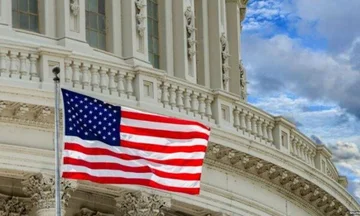
In a move the head of the British Parliament's Foreign Affairs Commission, Alicia Kearns, described as <x0 strategic non-commerce”, the US began sanctioning the Kosovo Government in Pristina because it did not initially develop its decision-making process through Washington.
The US is apparently turning against Kosovo Prime Minister Albin Kurti, in part because he is trying to exercise sovereignty that they never had in mind for Kosovo, the portal writes, referring to the statement of a Kosovo academic who has wanted to remain anonymous.
The US largely avoided criticism of Serbia after the violence, in an effort to prevent Russia's close ally from slipping further into the embrace of Moscow.
But an increasingly independent Kosovo, ready to pursue its national interests, became difficult for Washington to accept after Pristina decided to allow the mayors of elected municipalities to take office.
“Basically, the United States wants Kurt to leave, as they wanted in 2020. But nobody here supports”, the academic said, speaking of Middle East Eye from Pristina.
In March 2020, Kurti faced a “rich political state” orchestrated by the US, after Kosovo's prime minister refused to follow the political whims of the then American president. It is written that former US special envoy for Serbia and Kosovo Richard Green has exerted great pressure on the junior coalition partner Kurti, the right-wing Democratic League of Kosovo, which withdrew its support for the government.
Such was the anger of public opinion in Kosovo because of US intervention, that a year later, when elections were held in March 2021, Kurti's party, the Vetevendosje Movement (LVV), won with more than 50 per cent of the vote, which made it clear that citizens think about US intervention.
Even then, as now, Kurti opposed Washington, which in recent years has been trying to force Kosovo to sign policies that many in the country do not believe are in their national interests. Worse, in private, some politicians in Kosovo see American politics as weakening Kosovo's sovereignty.
“Kurti is trying to preserve Kosovo's sovereignty. As European and US powers really thought they would hold it and are trying to keep Kosovo in this suspended and motivated state of sovereignty where we always need their help or have become confident that we need their help”, the academic said.
And obviously, current tensions are not separate from the greatest game of geopolitical power between the West and Russia.
Legality Lost
Kosovo declared independence in 2008 after the 1998-1999 war in which the Kosovo Liberation Army (UÇK), with NATO's help, expelled Serbian forces who had launched a systematic campaign of ethnic cleansing, recalls the portal.
Almost 10,500 ethnic Albanians were killed or disappeared, 20,000 women were raped, and more than 800,000 were forcibly expelled from their homes.
After the war, Kosovo was one of the most resistant supporters, if not overzealous, Western and especially US.
Roads were named after American presidents, newborns were named after Bill Clinton and former British Prime Minister Tony Blair. Pristina even has a store dedicated to the former United States State Secretary Hillary Clinton's fashion elections.
The political elite in the predominantly Muslim country has long believed that the West could lead Kosovo on the difficult path of institutionalising its citizenship.
However, public moods in the country increasingly do not acknowledge that the West is a harmless player.
The last “koh citizens of Kosovo feel that the US and the EU will not stop at nothing to get Serbia out of the scope of Russian influence”, said a political activist close to Kurti's party.
It seems that Western powers are ready to sacrifice Kosovo, one of the most pro-Western countries in the world in favour of victory over Serbia -- an extremely prorus nation” -- has added the activist by anonymously speaking about the portal.
US actions seem increasingly to confirm this perception.
Following the attack of Serb militants on Kosovo and NATO security forces, the US ambassador to Kosovo, Jeff Havenier, reserved his anger on Kosovo. I would be surprised if any Kosovo Government official could visit the United States at this time”, Hovenier said.
Over the years, Kosovo has lined up with every major US foreign policy goal. Washington has agreed to move the embassy from Tel Aviv to Jerusalem, and Kosovo is one of the only three countries to do so, and has placed Lebanese Hezbollah group as a “terrorist organisation”. Kosovo imposed sanctions on Russia, following its war in Ukraine, and hosted Afghan refugees awaiting asylum in the US. Meanwhile, Serbia avoided imposing punitive measures against Russia.
“instead of strengthening Kosovo's position, these actions seem to have weakened it. The US simply takes Kosovo as a welcome”, said an activist from Kurti's LVV party.
Kosovo now increasingly is looking for alternative partners who would treat them with dignity. Turkey is in a good position for this”, the activist added.
If the current Western policy trajectory continues and Turkish diplomacy becomes more active in the Balkans, the search for a broader network will intensify in Kosovo.
Can Turkey come back?
Turkish government officials who spoke about the Middle East portal are increasingly focused on what Ankara can do to help resolve tensions in the region.
An opposition MP from the centre-left Republican People's Party (CHP) said, on condition of anonymity, that he wanted Ankara to take a more proactive media role.
Meanwhile, Talha Kose, professor of international relations at Ibn Haldun University in Istanbul, said: “We have strong economic and political ties with Serbia. We also have strong cultural, historical and political ties with Kosovo”.
Turkey, Kose said, is in a particular mediation position, given that it has “warm, frank and balanced relations with both sides.
“The EU is trying to play a more constructive role with Serbia and Kosovo. This represents a diplomatic opportunity for Turkey”, he added.
Diplomatic progress in the grain shipments Turkey brokered last year between Russia and Ukraine is a useful model Ankara could use in principle, Kose said.
“A mistake the EU continues to make is that they take positions in the internal policy of these countries,”, she said, adding that there is undoubtedly a Russian “in ongoing tensions”.
Serbian President Aleksandar Vuciq has already invited Turkish counterpart Recep Tayyip Erdogan to help resolve tensions.
“The US, NATO and the EU are in one place. Russia and China are in second place and have conflicting positions and interests. Turkey could help call a summit with all these interested parties”, Kose said.
Taking into account the conflict in Ukraine, this could be “impossible at the moment”, but “Turkey should establish contacts with these interested parties”.
Sinan Baykent, Balkan foreign policy expert, believes the US is increasingly “focused on quick solutions in the Balkans”, while trying to shift its focus to China.
Kosovo file represents a “barre” that the US wants to remove from its agenda. They are in a hurry to leave the region, Baykent said in an interview for a portal from Istanbul.
Turkey's presence, on the other hand, is the deeply rooted and historical “”, Baykent said, and unlike the US, Turkey is not interested in “a temporary quo status that is destined to ultimately fail”.
It seems neither Brussels nor the US are aiming for a permanent deal. They tend to view the region as a chessboard, like Russia,” he said and asked, “really care about the welfare of Balkan peoples? I doubt it, he answered.
While the EU and the US “contributed to the recent escalation”, Turkey has achieved a balance between all regional actors, Baykent said, and the summit could unite Albania, Kosovo and Serbia.
The US and EU would probably not welcome a larger Turkish role in the Balkans.
For its part, the EU considers the region “oron its”. Baykent believes, however, this should not prevent Turkey from filling up the regional vacuum to mediate between all sides.
“I believe Ankara has the ability to monitor such a process without interfering with domestic policy and the decisions of the parties involved,” he added.
Don't pressure, don't threaten, don't blackmail, but coordinate, understand and cooperate. These actions can open up a new perspective for the” region, Baykent concludes. /Democracy. com/