22 minutes ago
Bundeswehri ready to station 4,000 soldiers in Lithuania
Periskopi(3 years ago)
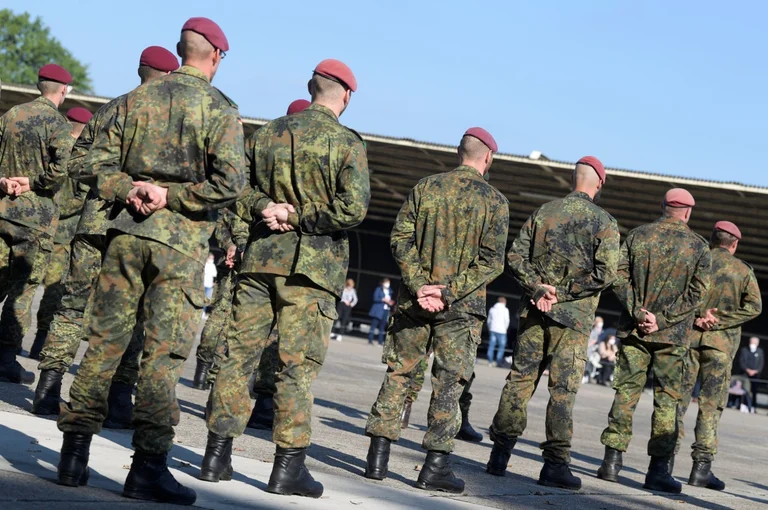
(3 years ago)Germany aims to permanently deploy 4,000 soldiers to Lithuania. Their presence must have a preventative effect. But infrastructure and proper conditions are required. German Defence Minister Boris Pistorius was in Lithuania for less than half an hour when, surprising his journalists, said: “German is ready to deploy a brigade [...]
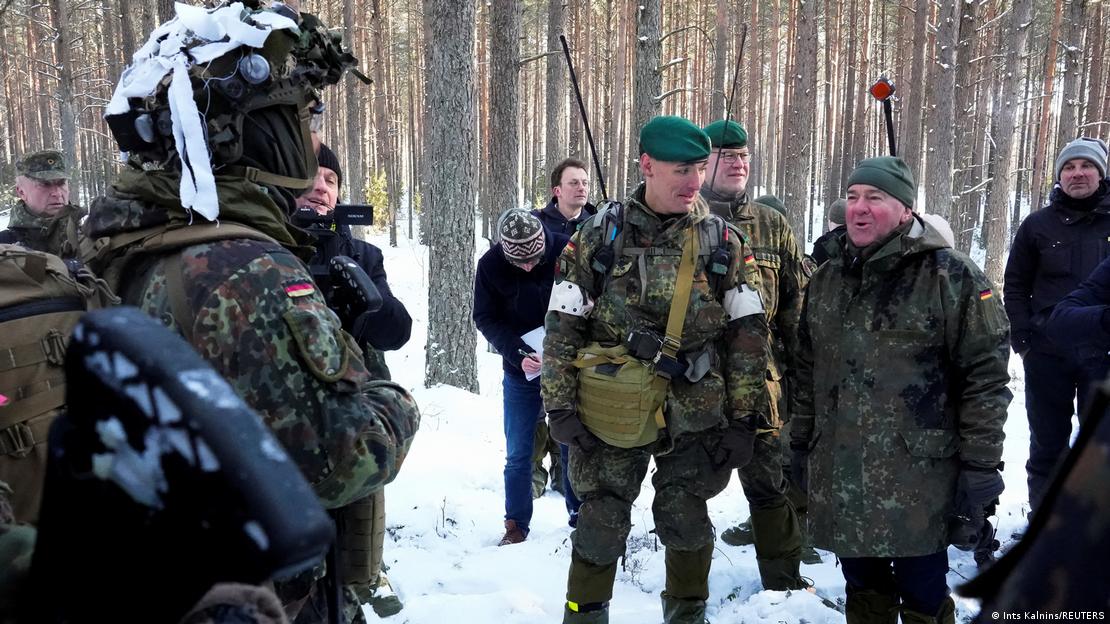
German Defence Minister Boris Pistorius was in Lithuania for less than half an hour when, as a surprise to his journalists, said: “Germania is ready to deploy a strong brigade in Lithuania dealt forever. ” This temporarily ended a discussion that continues for months, even though many questions remain unanswered.
Several key German politicians have visited Lithuania in recent months. President Frank-Walter Steinmeier was there in late May, while Bundestag President Bärbel Bass in June. The Germans have repeatedly faced all levels -- often less and more -- with Lithuania's desire to permanently place Bundeswehrin in the Baltic.

At the same time, Lithuanians referred to the promise of Olaf Scholz from 2022. Nearly a year ago, after a conversation with Lithuania's president, Gitanas Naused, the Chancellor announced that Germany would increase its contribution to the defence of Lithuania. But even after that, much remained unclear. Germany already provides a considerable share of NATO units under the “Enhanced Food” programme. There are almost 800 Bundeswehri soldiers, but they change every six months.
The Permanent Station
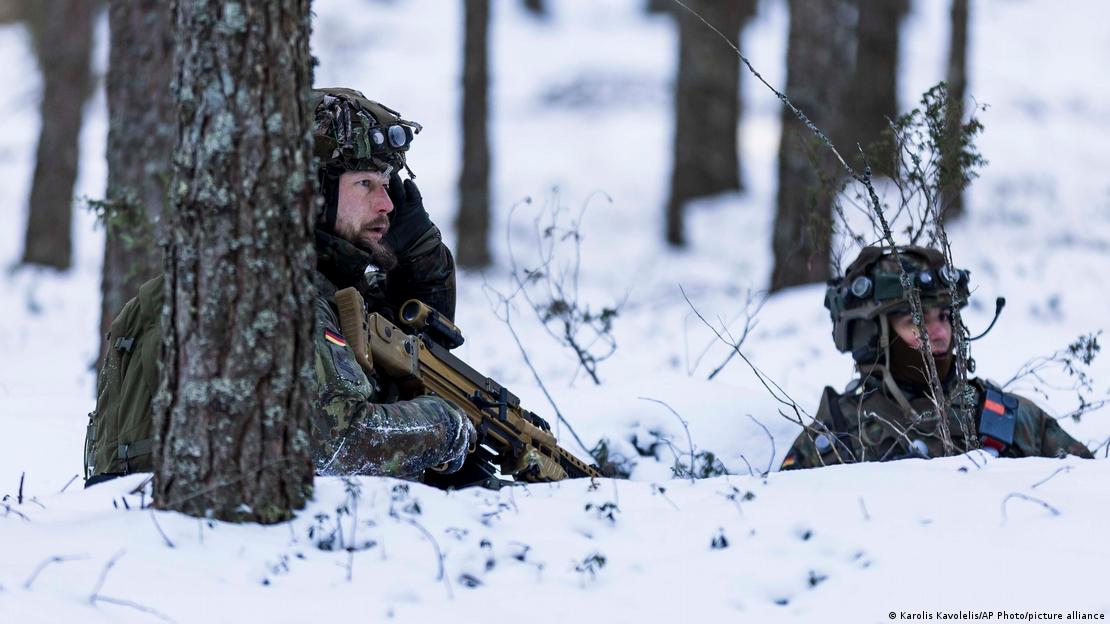
Since 2017, the German model for protecting the east wing of NATO was this: to have troops ready for Lithuania, but to be deployed in Germany. At regular training, the army was trained to move people and materials from Germany to Lithuania, land, sea, and air as soon as possible. Currently training a thousand soldiers during the <x0 session Griffin Storm” They have been in Lithuania since mid-June, with about 300 tanks and artillery equipment. Brigadier General Navrat, responsible for the drill, says it has all worked well.
However, in view of the events in Russia over the past weekend, the rebellion of Yevgenij Pigozin and Wagner entities respectively, the question is whether a large transfer of soldiers from Germany to Lithuania would be really fast in case of emergency.
And if you ask people on the ground, like 38-year-old Sergeant Thomas, who's taking part in the maneuver in Lithuania, you'll hear that the movement of people and materials is a “logistical challenge”. The supply is “is probably limited”, because you can't take it all with you from Germany. However, if permanently established, the entities can create their infrastructure in Lithuania and supply at the local level. Thus, the German army “would certainly be willing to react faster”.
Geographical position makes Lithuania vulnerable
This is an important factor because the geographical position on the Belarus border and the Russian enclave of Kaliningrad make Lithuania vulnerable. Defence expert Christian Mehling of the Council of Foreign Affairs says there is a “strategic depth” in the Baltic states. This means that in the event of an attack, the Russian army can move very quickly to the Baltic Sea and conquer or divide Estonia, Latvia and Lithuania.
The accession of Finland and Sweden to NATO would slightly change the situation, because in case of emergency these two countries would have to land their army amphibeally across the Baltic Sea. That is why the continued presence of 4,000 Bundeswehri soldiers can have a preventative effect.
Like U.S.A. in Germany
Pistorius promised 4,000 German soldiers but with two restrictions: the brigade would be deployed at the pace as Lithuania offers the needed infrastructure. Lithuanian president Nauseda promised he would give high priority to preparations. It also seeks to speed up technical and legal procedures to provide residential facilities, ranges of shooting, ammunition depots, and schools and gardens, later in 2026.
Because German soldiers should be allowed to come with their families. It would be a “housing system” similar to what United States soldiers have had in Germany for decades. However, an open question remains whether a long-term assignment abroad will be quite appealing to many in the German army.
Stoltenberg praises Germany's plans
In addition to the necessary infrastructure, the second limit is for NATO to comply with this decision. But this is more than just a formalism. At a joint press conference, the Alliance's Secretary General praised German Defence Minister Pistorius' announcement. According to Jens Stoltenberg, Germany thus shows a strong leadership.
This may be welcomed by the most important nation NATO, United States of America. Especially when the theme “is known Europe and its efforts to defend itself” could play a larger role in the upcoming US election campaign. / DW