22 minutes ago
Analysis of The Economist: Albania no longer a bad Balkan joke
Periskopi(3 years ago)
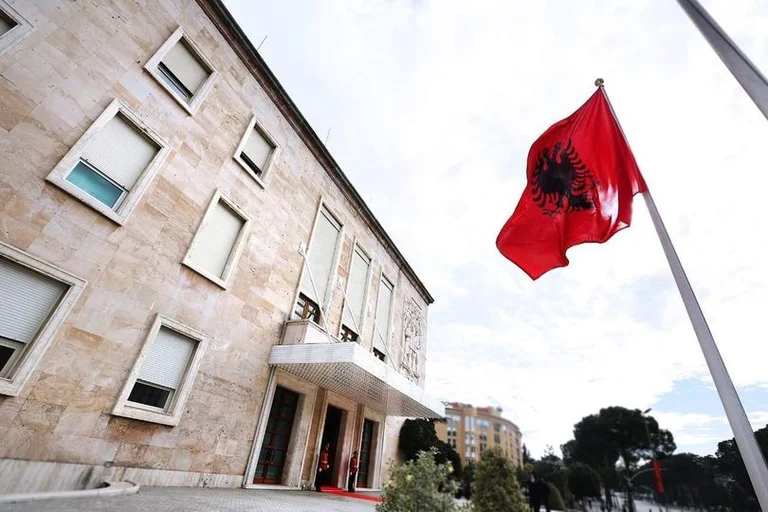
(3 years ago)Europe's darkest and most controversial part, the Balkans can have a new guiding light. He is Albania's prime minister, 58, a former basketball player and modern artist, Edi Rama. Last month, his Socialist Party defeated opposition groups that were divided and won almost all 61 municipalities and councils [...]
Darkest Part and most controversial of Europe, the Balkans can have a new guiding light.
He is Albania's prime minister, 58, a former basketball player and modern artist, Edi Rama. Last month, his Socialist Party defeated opposition groups, which were divided and won almost all 61 municipalities and country councils.
Therefore, it will likely win the next general elections, held at 2025, will be its fourth consecutive victory, and will therefore rule until 2029 in the country that was once the most miserable in the region.
In power since 2013, Mr Rama is the oldest current head of a government in the Balkans. In 2000, he became the dynamic and colorful mayor of the Albanian capital, Tirana. Since 2005, he has led his party.
For now, it can boast of being a Balkan star, even having a soothing impact on a still fragile region. As a witness to the riots in neighbouring Kosovo, where the Serb minority is rebelling against the ethnic Albanian majority, Rama refuses to give up his cousins and urges the West to address the issue with Serbian President Aleksandar Vucic with sensitivity.
Comforted in his office after finishing talks with the Manchester City football club on the creation of a network of training academies in the Balkans, he has a magnificent figure in a shiny white shirt, pants and athletes. He's two meters tall, with short hair, a skillfully cut white beard, a dot-and-eye mustache, you may not want to meet him in a dark alley at midnight.
He speaks fluently a number of languages, he is obviously cosmopolis, despite his growing up in what was one of the most isolated, wilder and paranoid countries in the world, often named by today's Albanians as the “Northern Europe Centre” before the fall of communism in 1991.
It was our America”, he points out. TV, Italian football, papa, music. But even having a television was not easy. He recalls that he had isolated his bedroom with sheets and carpets so no one would listen to him and his friends playing illegal Beatles records. He says he remembers his shock and joy when he was able to read Kafka, Prustin and Dostoyevski, listen to Raven, Debus and Stravinski and see the paintings of Cézanne, Van Gogh and Picasso.
His opponents note that he was a child of the Communist Party's nomenclature. His father was a prominent official sculptor who may have shaped Stalin's traits. Mr. Rama is also accused of a personality cult. A Western observer calls it “excellent, visionary, excenterary, immersed in itself with a strong sense of his heritage in history”
He does not hesitate to count his achievements, or at least those of post-communist Albania. Tirana has changed compared to what was three decades ago: a dark, gray, totalitarian and sub-Soviet village. At that time, the whole country had about 6,000 cars. It was illegal to possess one. Today, more than 700,000 are counted.
Even though Mr. Rama's party has started from the ruling party for 44 years from mass killer Enver Hoxha until his death in 1985, it has been completely rebuilt into a pro-market organisation and Social Democrats. His critics accuse him of instilling corruption under an oligarchic elite that dominates the media and has allowed inequality to expand.
Rama ignores these claims. He says he is shaping his party according to Britain's New Labusists. Tony Blair, his lawyer's wife Cherie and his doctor Alastair Campbell still visit to offer advice.
We are not very ideological”, says Mr. Rama. “For us there is no choice right or left: it is not here to have a good solution that works.” Margaret Thatcher, he claims, was “a major leader” who presented painful reforms to modernise Britain, without which young Labusists would not succeed after that.
Mr Rama's faith includes the region. The entire Balkans, he notes, even traditionally pro-Russian Serbia, is united for Ukraine. The country has been a member of NATO since 2009, and since 2010, a member of the Schengen Group providing visa-free travel to Europe up to three months, Albania has no serious conflicts with its neighbours, he adds. The “is unique in history. ”
As far as EU membership is concerned, he wisely refuses to set any date, while accepting entry conditions as the driving force behind Albania's own reforms.
Rama agrees that a small part of the EU nations, led by France, are reluctant to allow the Balkan group to enter. Every Western diplomat visiting Tirana says Albania “is going in the right direction” but that “has still a long way of doing”, especially when it comes to reform in justice and creating “a real rule of law, an issue which the EU and America pay much attention to and money.
A programme to control the entire body of judges and prosecutors in the country led to their two-thirds dismissal. What happens to those who download? “Oh, they become lawyers and accountants,” says a local civil society activist.
Increased corruption is still the biggest spot in Albania today. The two main parties are responsible, in the eyes of most Albanians. A diplomat's view, praising Mr. Rama, it's that “to advance development, you just have to play the boxer game”.
Please don't leave
The next biggest issue facing Mr Rama is immigration. The population has decreased by at least one quarter since the end of communism to about 2.9 million today. Albanians are still leaving.
Rama is nervous when asked about the view in the West that many Albanians, including those arriving in Britain illegally by ship, are involved in the crime. But his most serious complaint is the continuing lack of civilization in his country's politics.
All parties accuse each other of being gangsters, frauds, even murderers, which in some cases is true. This, he acknowledges, dates back to Hoxha's terrible days, when the slightest disagreement often meant deportation, prison, or even execution. If Albania is ever to become a liberal democracy, it must change, Rama claims. If this were to happen, it would be his greatest legacy. /The Economist