2 minutes ago
After 15 years, police officers for the first time were left without additional risks
Periskopi(3 years ago)
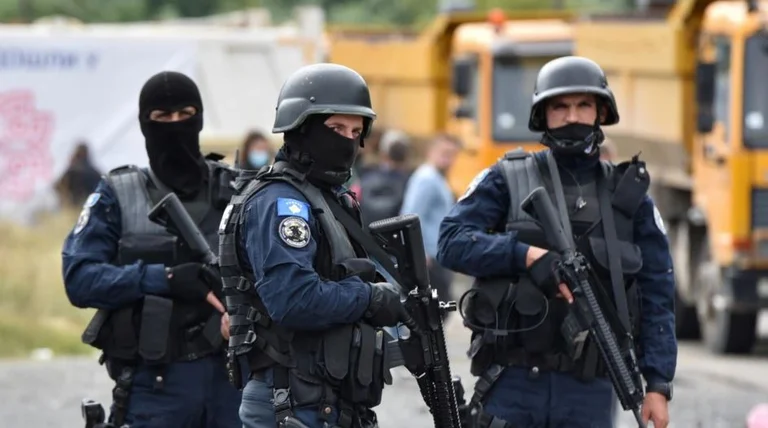
(3 years ago)Kosovo police have never been so exposed to danger and never again for such a long time as it is now with the situation in the north, but it is the first time now that the state has decided to stop its contributions for risk at work. No extra payment will be [...]
No extra payment will be paid for extended working hours these past days in Leposaviq, Zvecan and Zubin Potok.
In addition to lack of health insurance, for the first time, after 15 years, police will remain without addition to the dangerous work they perform.
For Kosovo Police Union Chairman Imer Zeqiri.
He tells her that they have made countless requests to the Government, but none of these have even been considered.
Police previously received extensions for extended hours and risks at work under an internal police regulation, but with the functioning of the new salary law, this regulation was banned.
On the other hand, the new law does not raise wages to that level to equalise at least the previous sum coming up with additions
They haven't even discussed a solution in this direction in the country.
Nor has such a discussion been discussed, and even former Kosovo Police Director Rashit Qalaj, now deputy of the Democratic Party of Kosovo, says.
“It is unacceptable, it is absurd that the Kosovo Police do not pay the additions for the 025x1>, says Qalaj.
Sindical Action Prompted
We have consistently demanded that additional risks be included in the Law of the Salaries, we have requested and clarified for each police unit”, says Kosovo Police Union Chairman Imer Zeqiri.
The government's concrete action, and if this goes on, then it'll be the police that'll make up for the controversy.
If this is continued without the execution of additions for riskiness and additions for civilian staff, then we will act according to police requirements, without excluding any form of union legal action”, Zeqiri says.
“Always and immediately you will have to execute the additions for riskiness because the police officer is always in danger in 24 hours because there is a legal obligation to act at any time when the need” is provided.
Rashti Qalaj explains that the police situation is difficult. They are servants on one side who do not spare and act with urgency and a need for the state, on the other side they are so vital to order and law that the smallest form of protest would endanger the whole operation.
Qalaj says it's only about extreme situations like the last one in the North.
“The patrol policy in the late hours of the night, doesn't know who will stop it in traffic with what kind of person it has to deal with, with what risk it will face”, the MP now says.
Then, investigators who arrest various gangs especially in the area of continued crime during the war against narcotics, trafficking of human beings, demining units, which do damage various equipment at extreme risk, the special units we have in the north today, and they don't know what they're going to be facing.
As the former director of this institution, Qalaj shows what the additional issue for police officers was earlier.
There were some types of risk depending on the units that have worked. Starting with patrol officers, investigative police officers, then communications officers, then cops who worked in Special Unit”.
The “means the height of riskability has been different, depending on how it was assessed by the commission that has been under the Kosovo Police”.
The situation was changed by the new law on wages. When the police expected to add additional values, the opposite occurred.
“It is a fact that police have been taking the salary for months without the additions to riskability involved, it is very absurd because if only a profession is higher risk than other professions it is Kosovo Police”.
In the MP's role, he doesn't even see any initiative by the Kosovo government to include additions for risklessness.
The “is not that there is any will by the Government for paying risk, even though the country's prime minister at the last session was applauded by Vetevendosje deputies when he said police want support”.
But, says Qalaj, support would have to come in the form of additions, as happened in the past.
The measures do not support the police, police want to support specifically with better salaries, with additional risks, with health services, health insurance, the law for pensioners, cuts and night payments, and so on”.
“I pressure the Kosovo Police and the Ministry of Internal Affairs to put more pressure on the Government of Kosovo so the law on risk extensions to include”.
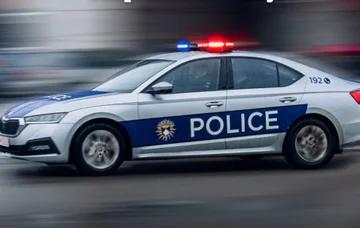
As of June 5th, Kosovo Police have been attacked in Zvecan by Serb protesters, while a car was patrolling.
News of Albanian Post has confirmed Kosovo Police spokesman Bucky Kelani.
We can confirm that, a police vehicle that was on official duty patrolling in the direction of the Zvecan municipality, has been obstructed and attacked by strong means by protesters”.
“as a consequence of the strong means (stone), the car has been broken into the glass, which was later removed from that location”, Kelani said.
As he said that there was no harm, and the case began to be investigated.
In contrast, since the end of the last war, 19 police officials have lost their lives in office.
The first case was recorded in September 2001.
With legislation in effect, the right to compensation from the state budget belongs to two categories: the family of police officials who die in office and those who are in charge. /Albanian mail