11 minutes ago
Visa liberalism will affect even more the contraction of labour force

Periskopi(3 years ago)
(3 years ago)The visa liberalisation decision for Kosovo citizens since 1 January next year will move freely to the Schengen area may also affect the lack of labour, problematic power that even currently remains very challenging for businesses. Although liberalisation has clear criteria, for the business community this [...]
The executive director of the American Economic Ode in Kosovo, Arian Zeka, declares that the lack of labour force should be seriously seen by the Government of Kosovo.
He says the risk of lack of workers remains undoubtedly visa liberalisation.
There is a risk, lack of labor force can turn into a major development problem for Kosovo businesses, and as such should be dealt with seriously and seen jointly through a comprehensive dialogue between governance and private sector what can be done for such a problem to get a proper epilog... However, it is a concern that exists among businesses that after January 1st, 2024, when visa liberalisation for Kosovo citizens is expected to eventually occur, will affect the contraction of the workforce, since a large number of people are expected to leave the country because of tourist visits or even because of the enormous demand that exists for workforce in Western European states”, Zeka says.
Zeka calls on businesses and the government to engage in improving workers' conditions.
The business that is possible should review the level of payments, since the average salary in the private sector is always reported to be lower than in the public sector, then within the means private sector employers should review payment levels... The government should also review fiscal policies, see where it can interfere with tax and excise rates for specific products that would affect the release of the consumer basket”, Zeka for Kosovas says, among other things.
One of the business sectors that is being largely damaged by the lack of workers is gastronomy.
Gastronomers' Association Secretary Arian Vranica says that all of this has resulted in disrespect for workers over the years.
And if we look at it over a longer period of time, for 10 years ago it's been a different situation, where we've had very limited and hard-working businesses, and now it's the opposite, and the disrespect of contracts on the part of businesses has also affected workers, disrespecting responsibilities and tasks... Of course, visa liberalisation would also negatively affect the gastronomy sector, but it is seen that part of gastronomy has changed the time of operating their business, some of them have also closed”, Vranica says.
Vranica says that if this phenomenon continues, most businesses will be forced to close.
It's a primary job contract, improving working conditions within the worker's reach, not being charged with other responsibilities if only certain responsibilities are set, because this too has contributed to the discontent of workers. However, in the state side, it has to influence by some fiscal policies in order to reduce the price of products, and to reduce the price of products would reflect a better well-being for workers, and an increase of greater consumption, less to have workers losing their jobs and less businesses that have a lot of trouble with”, Vranica says.
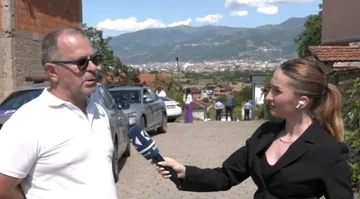
That the shortage of workers is evident, even the manager of a coffee shop in Pristina says.
Rudrichim Binish, who works in one of the cafes in the capital, tells Kosovas that it is difficult to work with lack of workers.
Binish asks the government to take any measures to help businesses, as he says they will come to the closure of many businesses.
The lack of labor force is evident locally, especially in gastronomial. And we're looking for the government to help gastronomy, otherwise it's going to come down to the end of the” business, Binish says.
Meanwhile, the Ministry of Trade and Industry announced that only in the first four months of this year, 445 businesses have disappeared. A written response by MINT is said to have recorded 3078 new businesses in this period.
Over the two years of this government, we have record growth of businesses registered in the Agency for Business Recording, with a total of 24,778 businesses. During 2021 we have 10,652 new registered businesses, in 2022 we have 11,048 new registered businesses (the highest number in the last 10 years). During the first four months of 2023, we have 3078 new registered businesses (the highest registered figure ever, compared to the first months of past years). As for extinct businesses, 1574 businesses have disappeared in 2022, and in 2022 1773 of which 286 have changed the type of business, and during the first four months of this year, 445 businesses from which 97 have changed the type of business” are said to have been written in response by the Ministry of Industry, Intervention and Trade.
Currently, procedures for opening a business in Kosovo are much easier than for its closure, where there are bureaucratic procedures.