6 minutes ago
Turkey chooses between Erdogan and Kilicdaroglu: All you need to know about presidential elections
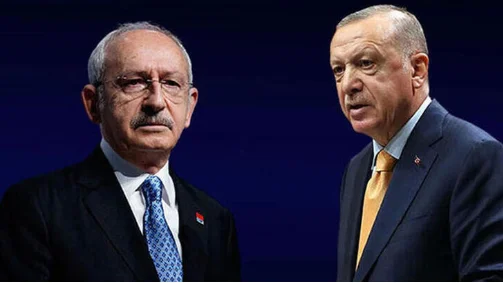
Periskopi(3 years ago)
(3 years ago)Turkey's long-term leader, Recep Tayip Erdogan, will face opposition candidate Kemal Kilicdaroglu in the run-off of Sunday's presidential election. The first round suggested that it would be a tight race, where Erdogan is facing unprecedented pressure after 20 years in power. Instead, Erdogan [...]
The first round suggested that it would be a tight race, where Erdogan is facing unprecedented pressure after 20 years in power.
Instead, Erdogan challenged expectations and nearly missed full victory in the first round of presidential elections, reports Can.
The vote took place nearly four months after a February 6th earthquake killed more than 50,000 people and displaced more than 5.9 million across southern Turkey and northern Syria. The vote also came amid a serious economic crisis, and what analysts say is democratic erosion under Erdogan's government.
But what you should know about the runoff vote.
How do elections in Turkey work?
Turkey holds elections every five years. Presidential candidates can be nominated by parties that have passed the 5 per cent voter threshold in recent parliamentary elections, or those that have collected at least 100,000 signatures in support of their nomination.
The president is elected the candidate, who gets more than 50 per cent of the vote in the first round, but if no candidate gets the majority of votes, the elections go to a second round between the two candidates who have received the largest number of votes in the first round, Telegraphy broadcast.
Voter turnout in the first round on May 14th was nearly 90 per cent, according to the Supreme Election Council (YSK), however, no single candidate received the absolute majority, sending the elections to the runoff.
Erdogan received 49.52 per cent of the vote in the first round, giving him a five-point advantage over Kilicdaroglu. His bloc won a comfortable majority in the legislature in a parallel parliamentary vote.
The runoff will take place on Sunday. Places open at 8:00 local time and close at 5:00. Results are expected after 9:00 local time.
Who are the contenders?
Two politicians with the largest number of votes, Erdogan and Kilicdaroglu, run.
Turkish leader with the longest service since the establishment of the modern Turkish republic, Erdogan has been in power for two decades, initially as the country's prime minister and later as president.
The 69-year-old, who began his rule with widespread religious freedom and economic boom, over the years has consolidated power and has seen Turkey's 800 billion-dollar economy suffer a major decline in fiscal policies.
Alliance right-wing candidate “ATA”, Sinan Ogan, who won 5.17 per cent of the vote in the first round, said on Monday that I would support Erdogan in the runoff.
Ogan had conditioned each of the candidates' support with rigid refugee policies and some Kurdish groups he perceives as terrorists.
A lawmaker representing the CHP since 2002 -- the same year he saw Erdogan's AK Party in power -- Kilicdaroglu, 74, climbed the political steps to become the seventh chairman of his party in 2010.
Born in the eastern, predominantly Kurdish province of Tuncel, the party's leader ran in Turkey's 2011 general elections, but lost, ranking second after Erdogan and his AK Party.
Kilicdaroglu represents the party formed 100 years ago by Mustafa Kemal Ataturk, the founder of modern Turkey and a staunch secularist. It stands in stark contrast with Erdogan's Islamist-rooted party and conservative base.
Despite secular trends, however, the opposition candidate and coalition have pledged to represent all factions of Turkish society, which analysts say was demonstrated by different coalitions.
Since the vote, his speeches received what analysts called a “conversion to gear”, with Kilicdaroglu pledging to send back millions of Turkey's hospitable immigrants.
What are international implications?
One of the largest economies in the world and with a population of 85 million people, Turkey is at the heart of an increasingly polarised world order.
A NATO member who has the alliance's second largest army, Turkey has strengthened ties with Russia in recent years. Erdogan's growing friendship with Russian President Vladimir Putin has raised tensions in the West, especially after Moscow's invasion of Ukraine.
Contrary to the US, Turkey even bought weapons from Russia in 2019, and last year caused a headache for NATO enlargement plans preventing Finland and Sweden's membership.
In an exclusive interview with CNN's Becky Anderson, Erdogan said Turkey has a separate “ ” and growing relationship with Russian President Vladimir Putin.
“We are not at a point where we will impose sanctions on Russia as the West has done. We have no obligation to Western sanctions”, Erdogan said. “We are a strong state and have a positive relationship with Russia. ”
“Russia and Turkey need each other in any possible field”, he added.
Kilicdaroglu has said he would not seek to imitate Erdogan's personality relationship with Putin, and would instead recalibrate Ankara's relations with Moscow.
But even if Erdogan loses, there will be no major twist of Turkey's foreign policy, analysts say. While figures close to the opposition have indicated that if they win, it would reorient Turkey again towards the West, others say the core foreign policy issues will likely remain unchanged.
Despite their disagreements, Turkey has been useful to its Western allies under Erdogan. Last year, Ankara helped mediate an important grain export agreement between Ukraine and Russia, even giving Ukraine fears that played a major role in countering the Russian occupation. And while Sweden is still awaiting its NATO accession, Finland has been allowed to enter.
What are the main concerns of voters?
High on the voter's list of concerns is the state of the economy and the damage caused by the earthquake. Even before the February disaster, Turkey was struggling with price hikes and a waves crisis that in October saw inflation at 85 percent.
This affected the purchasing power of the public, and this is “willobly why Erdogan's popularity has eroded”, Sinan Ulgen, former Turkish diplomats and head of the research institute said. Istanbul-based EDAM. “This will be the main obstacle for Erdogan”, he added.
Voters are also casting their votes based on whom they see as better able to manage the consequences from the earthquake, as well as to protect the country from future disasters, analysts say, adding that Erdogan's popularity had not taken on the expected political impact.
“There is a debate over which electoral platform provides the needed solution to address these weaknesses and increase Turkey's sustainability of these national disasters”, Ulgen said.
Besides the economy and managing Turkey's frequent natural disasters by the government, voters will likely worry about Erdogan's leaving democracy something the opposition has been campaigning to return.
Who's likely to win?
Despite facing the strongest opposition to his rule so far, Erdogan's future does not seem as dark as some predicted earlier this year.
The president is supported by a considerable religious sector, which seems to have been barely damaged by the declining economy or the government's early reaction to the earthquake.
Erdogan's critics argue that he further galvanised his support base by raising unsupported accusations at the opposition camp. He accused Kilicdaroglu of co-operating with Kurdish terrorist groups, and repeatedly referred to the opposition leader ʹa member of the liberal Muslim minority Alevi as a bad Muslim.
“This strategy of ill-man and supported by terrorists called on right-wing voters supposed to choose Kilicdaroglu”, said Soner Cagaptay, senior associate at the Washington Institute for Near East Policy.
Cagaptay argues that while Erdogan's message did not echo in the large cities of Turkey and on the relatively rich southern coast, where all voted mainly for the opposition, he received the necessary support from the poorest parts of the country -- namely, the central regions and the Black Sea coast.
“There, support for Kilicdaroglu was suppressed because right-wing voters, whose parties supported Kilicdaroglu, did not choose it”, he said.
Erdogan's messages were also strengthened by widespread influence on Turkish media, critics argued.
However, Sunday's runoff is the first presidential round in Turkey. In 2019, Erdogan's ruling party lost major cities in mayoral elections, including the Turkish leader Istanbul's hometown. On May 14th, most of Istanbul's votes went to the opposition.
It remains to be seen what Sunday's elections will produce, but if Erdogan wins by large, said Cagaptay, “ai will be acquitted of poor economic policies, lack of rule of law and end of social autonomy”.