19 minutes ago
From prison, towards third decade in power, Recep Tayip Erdogan's journey
Periskopi(3 years ago)
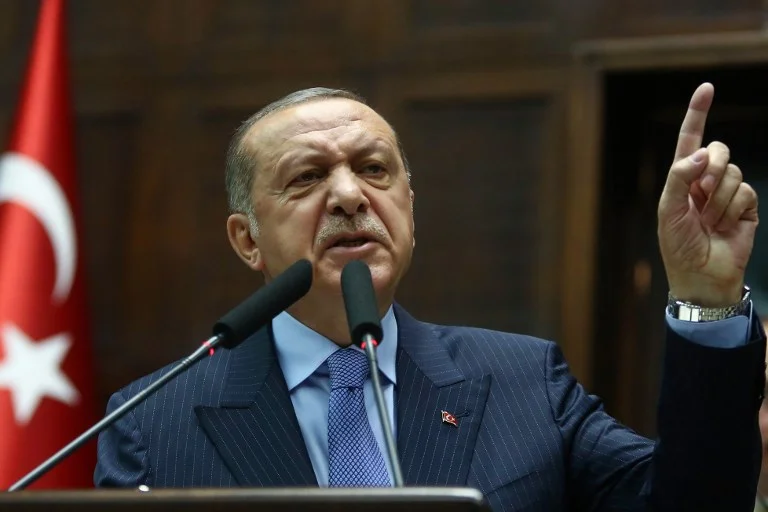
(3 years ago)In Turkey, President Recep Tayip Erdogan is already seeking the third term as president, following three previous mandates as prime minister, thus aimed at continuing in a third decade of his ruling position. Most polls show a slight advantage for his rival, Kemal Kilicdaroglu, who heads an opposition coalition [...]
Most polls show a slight advantage for his rival, Kemal Kilicdaroglu, who heads an opposition centre-left coalition that participates in six different political parties.
When Recep Tayip Erdogan revived crowds in 1997 reciting a poem of Islamic Intonations, Turkish courts acted quickly, condemning then Istanbul Mayor to prison for violating the country's secular laws and inciting religious hatred.
Erdogan denounced him as the shameful “” at the time his sentence and thousands of supporters took to the streets to protect him.
I was convicted because I recited a poem. I want to say first of all that this is a tragedy, a shameful chapter in the history of the judiciary of our country”, Erdogan declared at the time.
His opponents, however, rejoiced. The headlines in the popular newspaper Hurriyet reported that his “political career finished” and that “ai couldn't be solved either for the head of”.
His bodyguard was a turning point in the future relationship he would create with humans, something he always talked about. In that case, Erdogan was wronged. He was excluded from politics because he recited a poem of a poet, thinker, sociologist that the government considered acceptable. This actually created an Erdogan victimisation and further strengthened his relationship with society. In further stages of his political life, Erdogan did not remain in prison years, but turned his attention to the future”, says policy researcher Nebi Mis.
Opposers downplayed 45-year-old Erdogan, who after only a few months of imprisonment, organised the return to politics and power for over two decades, initially as prime minister and then as president, thus becoming Turkey's longest-term leader, reports VOA.
Although he initially supported reforms to turn Turkey into a model of democracy for the Muslim world, he later built an increasingly authoritarian image and printed disdensity with the aim of strengthening his power.
Many people are unhappy with the way he runs the country. So under these circumstances one might say it's actually a miracle that 42% (support) is still enjoying, says Professor Soli Ozel.
Most polls show a slight advantage for his rival, Kemal Kilicdaroglu, who heads the centre-left Republican People's Party (CHP). The result will probably be determined in a runoff on May 28th.
Erdogan faces a difficult test in this election because of public anger over inflation and management of the consequences of the February 6th earthquake that killed over 50,000 people, destroyed entire cities and left millions homeless.
Analysts say, however, that Erdogan's influence on believing middle class and employee voters, who have long felt excluded from Turkey's secular elites, who lean towards the West.
“All arrested. The government then tried to block him and arrested him... When they said that Recep Tayip Erdogan could not become the head, he became president. He became the staunch leader of the oppressed, of the Caucasus region”, says Erdogan's supporter.
The opposition coalition “National Alliance” has joined six parties in support of Kemal Kilicdaroglu, despite their differing political views.
“As in the past years, Erdogan has conducted a tough campaign against the opposition, which he accuses of co-operating with terrorists, for supporting the rights of members of the LGBQ+ community at the expense of the future of the “holy infrastructure of the Turkish family”, as he puts it.