6 minutes ago
What did Kosovo lose that was suspended from “Defender Europe cu23”?
Periskopi(3 years ago)
(3 years ago)About two years. This is the time period that the Kosovo Ministry of Defence and the Kosovo Security Force spent to get ready for the largest exercise of NATO allies in the Balkans, known as “Defender Europe cu23”. Annie why Kosovo was one of the host countries of this training, it could not [...]
Annie why Kosovo was one of the economic countries of this training, it could not get through the activity, as, on November 30th, the US ambassador to Pristina, Jeffrey Havenier, said that “for Kosovo, those exercises have ended”.
This is the first punishment the United States of America has taken against Kosovo for, as it were, ignoring their advice to avoid increasing tensions in the Serb majority northern area.
In this area for days, local residents protest Albanian mayors Zvecan, Zubin Potok and Leposavic.
Tensions culminated on May 29th, when protesters clashed with members of NATO's peacekeeping mission, KFOR, in Zvecan. Tens of people on both sides were injured.
A day after Kosovo's expulsion from “Defender Europe <2318x1>, Kosovo Prime Minister Albin Kurti told Radio Free Europe that this is a “disaster”.
“I don't think that [execution] is right, but who am I to place”, Kurti said, defending his government's actions in the north.
Kosovo taking advantage of partnership with allies
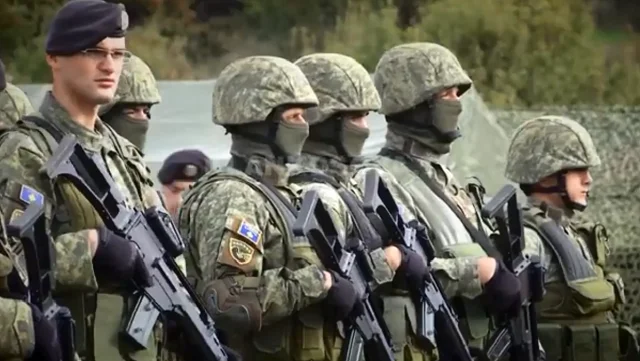
Kosovo missed a huge opportunity for soldiers, deputy officers and officers of the Kosovo Security Force to get a valuable experience from NATO states, says former KSF Commander Kadri Kastrati for Radio Free Europe.
Kastrati, who led the KSF from 2011 to 2015, cites three other significant losses for Kosovo: the loss of access to friendship bridges, the loss of access to military interactions, and the loss of opportunity to increase experience in the use of various weapons.
Kastrati says the KSF has been building a respectable authority among international partners, in particular with the US.
From this partnership, he recalls, members of the KSF, in some cases, have been sent on peacekeeping missions abroad.
He says the United States, consistently, has been Kosovo's strategic partner, as in the planning, creation and development of KSF.
But if this goes on, I doubt it will be the same from now on”, Kastrati says.
The exercises “Defender Europe æ23” started on 21 May in Kosovo and it was the first to last until 2 June.
Kosovo's Defence Minister did not directly comment on the suspension of Kosovo's participation in the “Defender Europe ão23” exercise, but said its goal has been achieved.
According to a post by Minister Armend Mehaj on Facebook, on 30 May, 1,348 KSF military officers showed high professionalism among the 25 participating states of this exercise, as well as willingness to serve alongside allies on every NATO mission, <x0 with the goal of preserving peace and stability in the country, the region and the wider”.
What phase was the “Defender Europe ago?
This was the second year Kosovo participated in this multinational exercise and was its host.
Twenty-five countries, including the US, France, Germany, Spain, the United Kingdom, as well as other non-member and non-member states of NATO, participate in this exercise.
The total number of soldiers participating in the exercise was around 20,000.
The “Defender Europe æ23” exercise is being held at several locations across Europe, while in Kosovo it took place at two locations, in Boka's Father and in Gjakova Airport.
At the time that Kosovo's participation by the United States was announced, Kosovo's activities under “Defender Europe <23x1> were nearing its end.
For 30 May it was an open day for visitors, and this is the main activity that was not held as a result of the suspension proclaimed by the American ambassador, Havenier. For days until the end of the exercise on June 2nd, mainly activities of preparation for the delocation of participating troops and formal final activities were envisioned.
At the same time as in Kosovo, exercises were held in Albania, Northern Macedonia, Croatia, Slovenia and others. The KSF had participation in other states, including 160 soldiers of an infantry unit in northern Macedonia and another 60 involved in the intelligence and intelligence sector, as well as in demining, in Croatia. In Albania, meanwhile, another 60 KSF members were involved in the unit for dangerous materials.
Exercise “Defender Europe 23”, which is headed by the US, aims to create readiness and interoperability between the United States, NATO and partner countries.
The “Defender Europe 23” exercise is said to be designed to demonstrate the capabilities of the US Army, rapidly dislodge troops and powerful combat devices, secure Allies and prevent anyone who threatens peace in Europe, as well as protect the continent from aggression.
US Importance in KSF Development
The Kosovo Security Force was established in 2009, when the Kosovo Protection Corps was extinguished.
In 2014, efforts were launched to transform the Kosovo Security Force mission, which meant expanding competencies even in defending the territory.
This process was not possible through constitutional changes, and transformation began through legal changes in 2018.
NATO rejected the Kosovo Assembly's decision to convert the KSF into the country's military, but the US backed this process, especially capacity development.
When the KSF's transformation into the military was opposed by NATO, then US Ambassador to Kosovo Philip Costett said that “is more than natural for Kosovo, as a sovereign and independent country, to have self-defense capabilities”.
In partnership with the United States, in 2021, the first container of The KSF went on peacekeeping mission abroad, and continued American support was promised to this institution.
But after the KSF's suspension from participation in “Defender Europe 23” there are numerous concerns if American support for the Kosovo Army continues.
Ambassador Havenier said the US is looking into other measures for Kosovo and that, currently, “has no enthusiasm” to help it gain greater international recognition or progress towards membership in the European Union and NATO. / REL