17 minutes ago
Future full of questions for Kosovo youth
Periskopi(3 years ago)
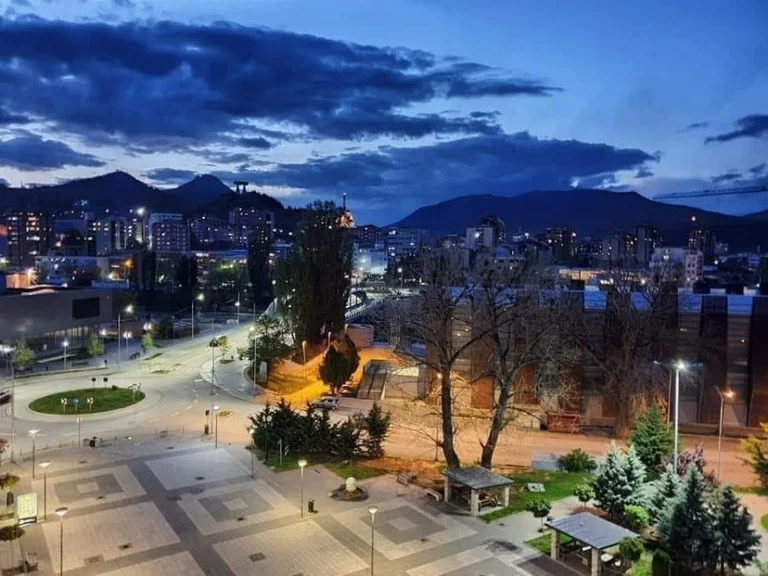
(3 years ago)For Ariana Rudari, with a little “just a little support” for young people, anything is possible. Kosovo's integration into the European Union is the future towards which this 24-year-old Albanian from Lipjan, not far from Pristina, believes Kosovo should go. For Milan Dobric, from North Mitrovica, obstacles to a more future [...]
For Milan Dobric, from Northern Mitrovica, obstacles to a better future are inexorable. This young man from the Serb-run northern part of Kosovo dreams of a larger <x0market”, but he doesn't see it in Kosovo.
Various views of the future were discussed with young people this week within Europe's Day, which marks the anniversary of Germany's surrender at the end of World War II. Such an event is organised in Pristina and North Mitrovica, from the EU Office in Kosovo.
What do young people in Pristina say?
Kosovo will always be on Ariana Rudari's plans.
My future is still not defined, but wherever I am, I know for sure, that I will always work for Kosovo and for the good of Kosovo...”, she says.
In a proposal for Radio Free Europe, it estimated that it views Kosovo as a very potential country, because 70 per cent of the population make up people under the age of 35.
Twenty-six-year-old Andrew Tasholli from Pristina also sees potential for a better future for young people in Kosovo. This activist and student of internal design says young people should not be afraid to step forward.
There is a lot of potential [for the future of Kosovo], especially now the potential is huge, but with that potential comes the responsibility to absorb those possibilities that are coming to us”, he says.
What do they say in North Mitrovica?
Young people from North Mitrovica, one of the four Serb majority municipalities in the north, were generally not interested in the idea of discussing their future at an event organised by the EU Office in Kosovo.
REL then surveyed the young people in the city itself, between Nenad and Nemanja. They did not want to mention the surnames, but said they are both students in northern Mitrovica.
I don't know how much future there is. The whole political situation, instability, unrest...”, Nenad said.
Kosovo's north has been a symbol of unrest or tensions for years. Local populations in some cases set up barricades on the road to undermine the power of Kosovo authorities in the region, where the main political forces are close to official Belgrade.
Recent tensions occurred late last year when members of the Serb community left all institutions in Kosovo.
Nemanja said about REL that most of his friends do not see their future in Kosovo. He personally plans to go to one of Serbia's cities.
The future of young people is mostly influenced by politics, whether we want it or not. Young people are generally apolitical, but this is not enough for political policymakers and policymakers not to touch them and their lives”, he praised.
Where do they see the obstacles?
Andrit Tasholli from Pristina says there are always obstacles to a better future, but young people have to deal with them.
He also estimates that young people are uninterested and says they should know to approach a problem or a situation for the sake of a better future, that is, to get more involved.
As an example, he cites the event organised by the EU Office in order to allow young people to talk about their wishes and needs.
We don't always have to say something, we don't always have to talk about something, the idea is to be present and understand that I'm not knowing, [so I'm] here and I'm ready to learn”, he says.
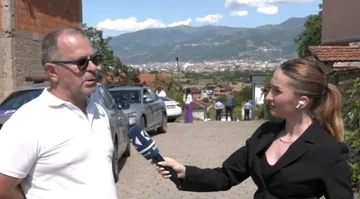
Milan Dobric, a conversationist from the beginning of this confession, refers to his experiences. He explains that he has been involved in various things in life from running a private business in the field of photography and design to involvement in the civil sector. Yet, as he says, there has never been a prospect.
And if you have the opportunity, say, to open a small business, on the other hand, you don't see the future, you don't see that you're going in the desired direction, so you have to invest more money in business. The reason is that there is no bigger market”, he says.
What do international organizations' data say?
In 2022, U n The NICEF in Kosovo presented research he did with young people between the ages of 10 and 24 on the subject of their education, social inclusion, participation in decision-making processes and other issues affecting their lives.
Among other things, the results showed that young people want to get more involved in decision-making processes, become makers of changes in their communities, and get involved in public policy interpretation and contribution.
Previously, German nongovernmental organisation Friedrich ch-Ebert-Stiftung, in her 2019 research, had found that young people in Kosovo are optimistic about their future and Kosovo's future, but that they are very pessimistic about the real situation on the ground when it comes to education, labour market or political situation.
This organisation has its representatives in more than 100 countries of the world and supports the policy of peaceful co-operation.
The results of their research show that young people mostly want to migrate for economic reasons.