21 minutes ago
Financial Times: Why does the West have difficulty ending the Kosovo- Serbia
Periskopi(3 years ago)
(3 years ago)Balkan veteran politicians well know that enthusiasm over agreements reached under pressure in diplomatic background is not worth it. But the March 18th events gave him reason to be optimistic Wisar Ymer, the former leader of the party currently in power in Kosovo. We have a deal. Kosovo and Serbia have agreed on [...]
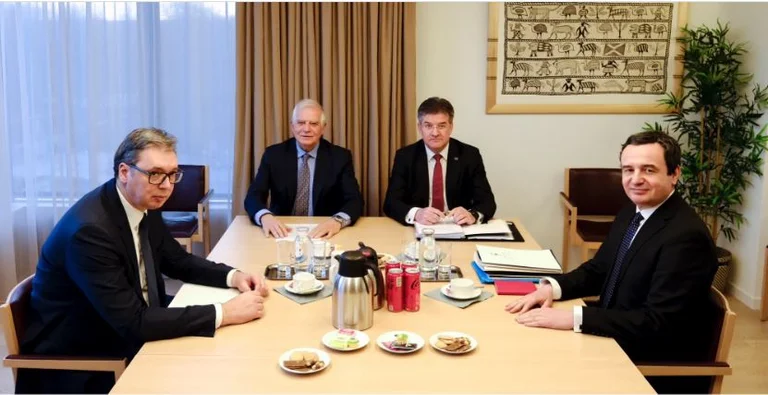
We have a deal. Kosovo and Serbia have agreed to normalising relations between them”- EU foreign affairs chief Josep Borrell said after the end of a marathon summit in Ohrid, North Macedonia.
Umer thinks he was very happy. Such an agreement had called for a decade of negotiations, and through it Serbia will finally recognise its homeland as a sovereign nation, a goal Kosovo had had since its ethnic Albanian leaders declared the republic more than three decades ago, causing years of conflict and tension.
This recognition would create the possibility of numerous foreign investments, much needed in one of Europe's poorest areas. But most importantly, it would pave the way for Kosovo, Serbia and the rest of the Western Balkans to join Euro-Atlantic alliances like the EU and NATO, stabilising the entire unstable region at a really crucial moment.
The Russian invasion of Ukraine revived the spotlight of the Western Balkans, the region where Serbia dominates. Belgrade has refused to join European sanctions against Russia, its traditional Slav ally. Meanwhile, a vocal Serb minority has openly expressed sympathy for Moscow's war.
The US fears Serbia's regional influence could cause metastase that would destabilise the region. Therefore Western diplomats have tried to oust Serbia
from Vladimir Putin's gravitational withdrawal, promising money and a faster EU membership in exchange for compatibility with Western access, and threatening isolation if it acts in the opposite direction.
France, a once hesitant country for EU enlargement in the Western Balkans, changed its approach and joined Germany with a powerful diplomatic pair, which will lead the process along with the rest of the EU and the US. Serbia began to move according to the direction shown, expanding ties with non-Russian energy sources, which could potentially deprive Moscow of its most important channel of influence.
But the Kosovo-Serbia report issue remains unresolved. Russia has lured Serbia in part by supporting Belgrade against Pristina at international forums as the UN. If the West could help alleviate these tensions, it would remove this leverage from Moscow's hands.
German Chancellor Olaf Scholz told Kosovo Prime Minister Albin Kurti and Serbian President Aleksandar Vucic that “this is the moment when leadership must be shown”, a German diplomat says. The Ohrid summit suggested that moment had come at least for Ymer.
“I was one of the few enthusiastic in Pristina. Everyone was very cynical about the deal. But I hoped that the EU and the US had really restored their interest in the region due to security issues and that we can see an improvement of the” situation -- he says.
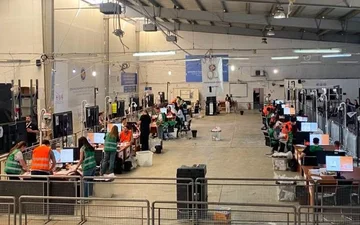
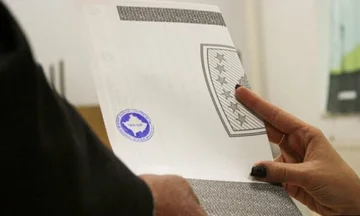
Within a month, however, Ymer joined the Cynics. The main elections in Kosovo's north by Serb majority, which were seen as the first test of the agreement, went wrong. Instead of making peace with its former province, Serbia would hold Kosovo politics hostage as long as it could, he was convinced. Kosovo itself was not ready to compromise.
The next time Vuci and Kurti met in Brussels on 2 May, the deal looked dead. Kurti rejected the resolution proposal and presented an alternative vision with a non territorial representation of Serbs and under Pristina's strict financial supervision.
But Vucic said he couldn't keep up. A day after those talks, US chief negotiator in the region, Deputy Assistant Secretary of State Gabriel Escobar, called for patience. “has only been a month and we are now discussing implementation. We've had a small level of progress. . The EU must continue mediation. . . to unite both sides and start searching for compromise solutions”- he told FT.
Escobar insists that the Ohrid Agreement is legally binding for both sides and adds that the US, along with the EU, are fully committed to reaching a compromise. EU foreign affairs spokesman Peter Stano told reporters that Brussels will continue to work on reaching an agreement, adding that Kurti “violated the letter and spirit of the dialogue agreement”.
This development was not a surprise for Jovana Radosavljevic, executive director of the New Social Initiative, a group protecting human rights in northern Kosovo. The deterioration of relations between Serbia and Kosovo has a long history of zigzag that challenges easy progress, despite pressure coming from the West.
The locals coveted more than they could chew. The relationship is so complex that it cannot be achieved immediately”- it says.
Serbs in Kosovo say they are willing to talk, but feel that Pristina and Belgrade are exempting them from discussions about their future. Nenad Rasic, an ethnic Serb who serves as minister for communities in Kurti's government, says he has been calling for years to be part of the talks, but to no avail.
Rassic thinks that the international community wants to iron out disputes in the region by reducing them under carpet”. “Stabilocracy replaced democracy. Especially now with the war in Ukraine, the West wants only stability and Vucic will continue to calm them for years if it stays in power. He will never stop using Kosovo Serbs for his policy”- he emphasises.
The new generation is angry with Western powers, says Aleksandar Arsenijevic, a local politician in the ethnically divided town of Mitrovica. They don't listen to the needs of Serbs. This is not a good time for such choices. Now there's no democracy. The system is broken. If they want to participate in democracy, citizens first need financial stability”- he says.
Without normalising ties with Kosovo, perhaps Serbia will never gain membership in the bloc. “It's all or nothing”- says an official involved in negotiations. For Kosovo, the EU is more open in terms of its leverage. “They have no choice but us”- says another official. Therefore, in the long-term plan, both Belgrade and Pristina can see the smoothing of their positions as logical.