19 minutes ago
EP approves Commission's Kosovo Report again calls on 5 EU member states to recognise it
Periskopi(3 years ago)
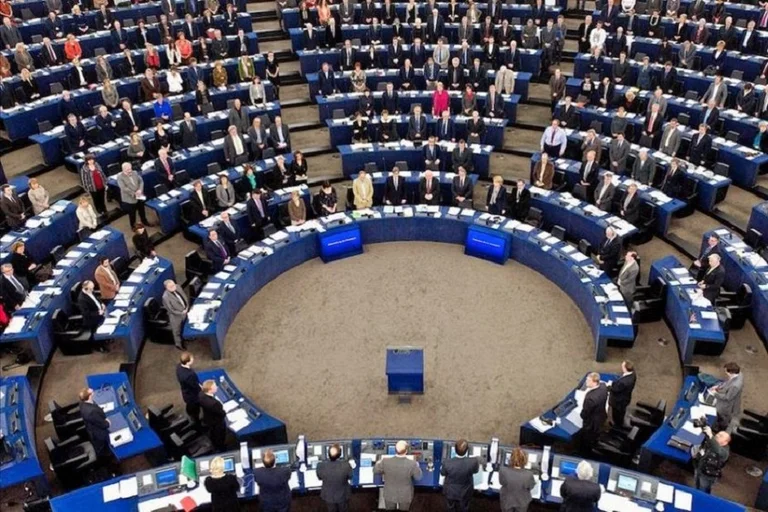
(3 years ago)The European Parliament has adopted two annual resolutions for Kosovo and Serbia, the “through which both countries are invited to be constructive in the dialogue for normalisation of reports, and this normalisation should include mutual recognition”. For the report for Kosovo voted 452 MPs, 87 opposed and 76 abstained. These are [...]
For the report for Kosovo voted 452 MPs, 87 opposed and 76 abstained.
These are the latest annual reports for Kosovo and Serbia by the current composition of the European Parliament, as in late May or early June 2024 European elections will be held.
Texts of reports for Kosovo and Serbia had been approved in advance by the Commission for Foreign Policy, meanwhile, were now added to several proposed amendments, which received the majority of European deputies' votes.
The Kosovo report repeats the invitation for five EU states that do not recognise Kosovo's independence, to do so.
Spain, Greece, Romania, Cyprus and Slovakia still do not recognise Kosovo's independence.
Kosovo's application for EU membership is also welcomed in the report text. In addition, the closure of the visa liberalisation process for Kosovo is welcomed. All these orders are part of the proposed resolution and were also heard by many MPs during the debate that took place Tuesday evening at the Parliament's plenary session.
Kosovo rapporteur Violet von Cremon, who has compiled the proposed text, has expressed satisfaction with completing the visa liberalisation process.
“Since 2019 I compiled reports on Kosovo, consistently expressing hope that free movement will be secured. Now I can say that Europe finally opened the doors for Kosovo”, she said during the debate.
In the Resolution for Serbia, it has expressed regret over this country's incompatible positions in EU foreign policy, especially in terms of EU sanctions on Russia.
During the debate over Serbia, there were many deputies who ask Belgrade to express clearly about aspirations for EU integration and to testify with support of sanctions against Russia. It was heard by some deputies that Serbia is making the opposite, that instead of increasing adaptation to EU positions in foreign policy, it is reducing it.
Croatian MP Zeljana Zovko underlined that out of 65 per cent last year, Serbia's adaptation to the European bloc's foreign policy has dropped by 45 per cent.
As for dialogue between Kosovo and Serbia, mediated by the EU during the debate, rapporteur for Kosovo Violet von Cromon demanded that the parties implement all agreements and that the visa normalisation process include mutual recognition.
She also demanded that Serbs in northern Kosovo return to Kosovo institutions.
Serbs in the four municipalities in the north -- inhabited by Serb majority -- left Kosovo institutions late last year in disappointment with a Kosovo Government decision seeking reregisterment on Kosovo's legal license plates carrying illegal Serb license plates.
The Serbian list ʹ the main party of Serbs in Kosovo, which enjoys official Belgrade's support, has said the condition for returning Serbs to institutions is the establishment of the Association of Serb majority municipalities, but also the withdrawal of Kosovo Police Special Units from the north of the state.
Otherwise, the European Parliament resolutions have political significance, but they are not binding on member states. / REL